



When a green building material production line supports project goals
A green building material production line supports project goals only when it improves the outcomes that the project is actually measured against: reliable supply, compliant material quality, resource efficiency, predictable operating cost, and a workable construction schedule. Buying equipment because it is described as “green” is not enough. The line must fit the raw materials, product specification, output plan, site utilities, and quality-control capability of the operation.
For building-material projects, sustainability is usually not a separate equipment feature. It is the result of how the whole production system handles materials, energy, water, waste, rejected products, and maintenance. A well-matched line can reduce avoidable losses while producing blocks, panels, quartz stone slabs, or concrete products with stable dimensions and strength. A poorly matched line can create the opposite result: excess consumption, frequent stoppages, high reject rates, and delayed delivery.
Start with the project outcome, not the equipment list
The first question is not “Which production line is the most advanced?” It is “What problem must this line solve for the project?” The answer changes the appropriate configuration.
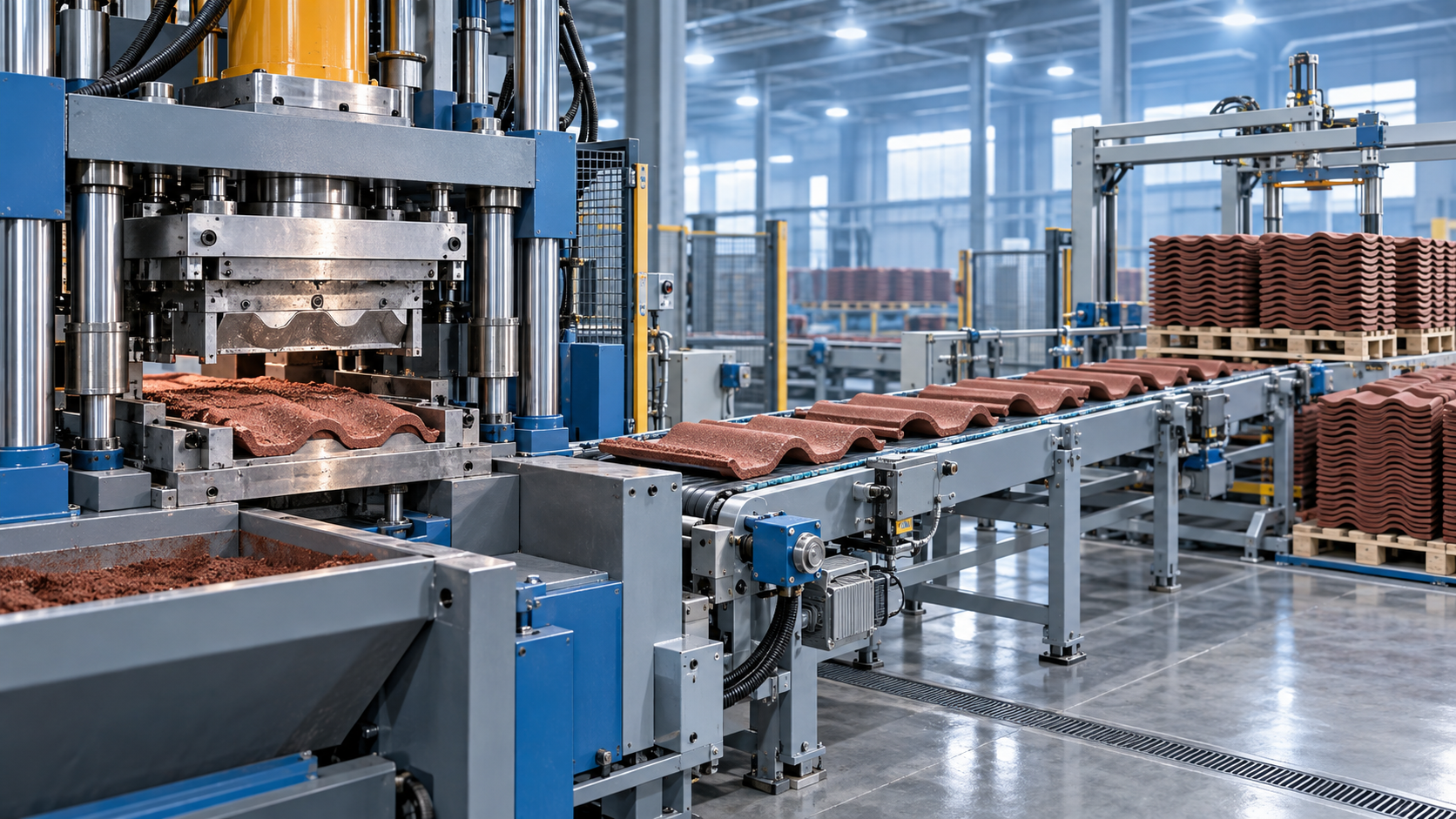
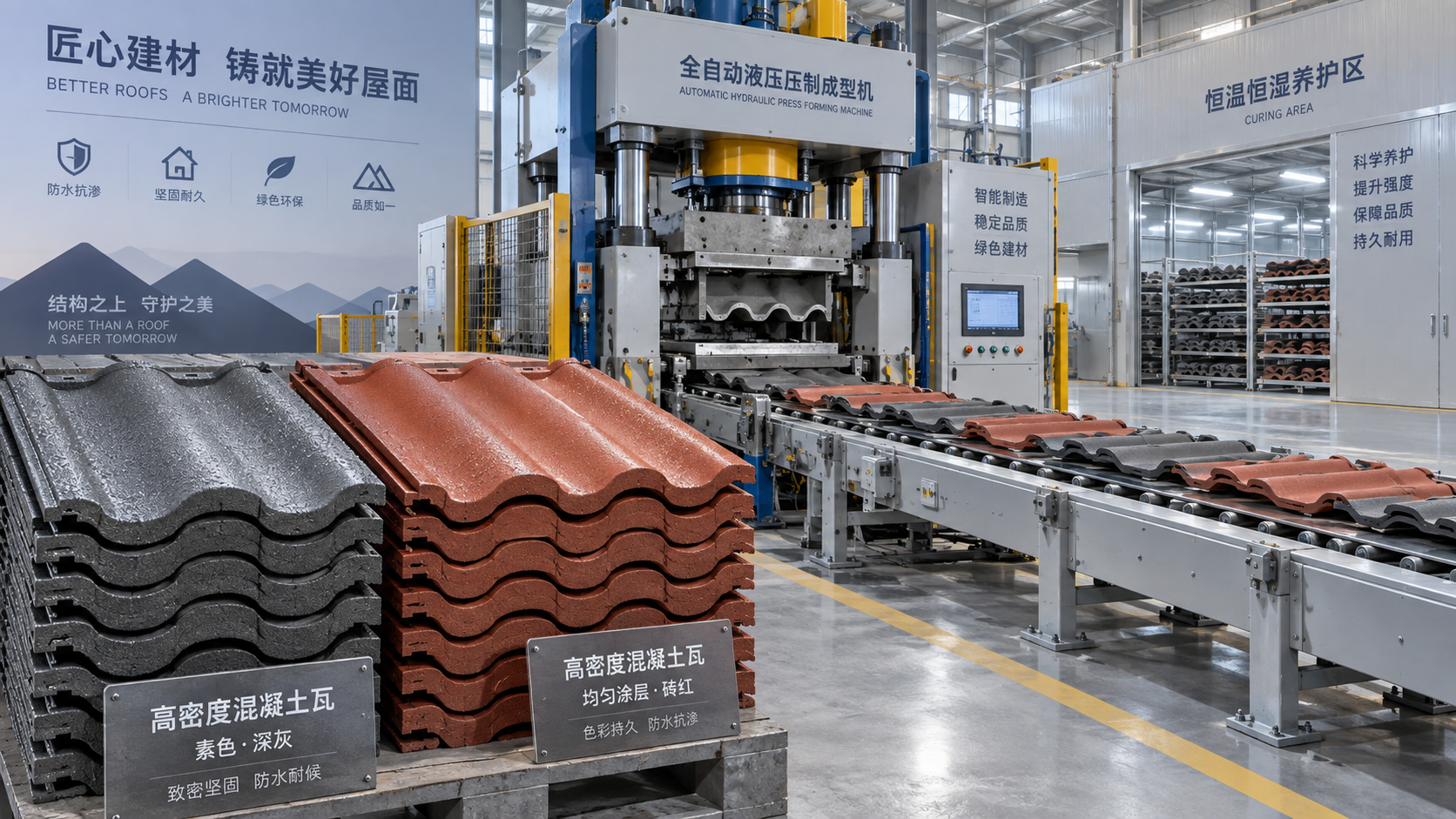
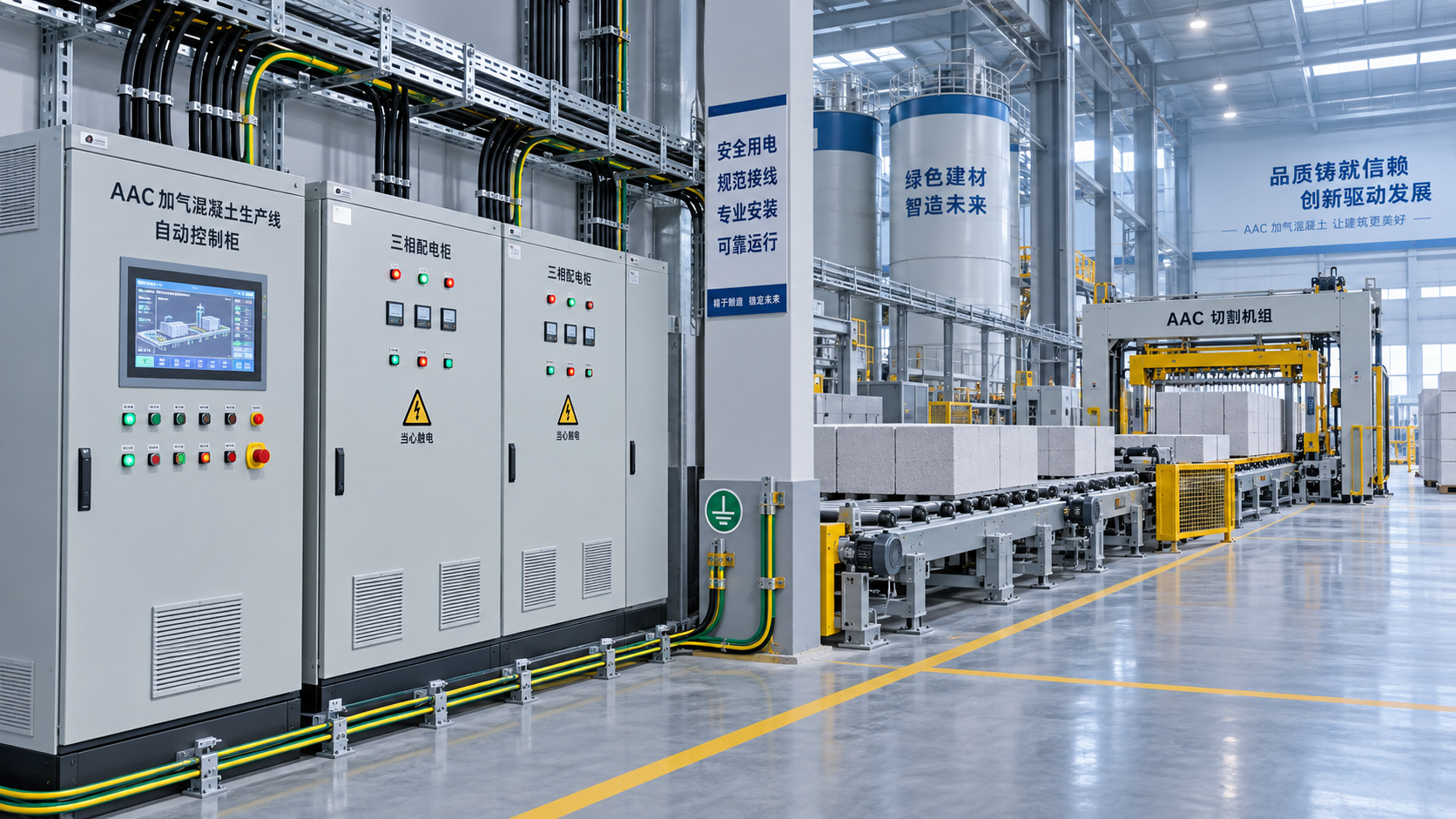
A project producing aerated concrete blocks may be focused on lightweight wall materials, thermal performance, and consistent block geometry. A concrete block operation may need high-volume output near a construction market, with fast mold changes for several product sizes. A quartz stone production project may place more emphasis on surface appearance, slab consistency, resin handling, and finishing yield. These are all building-material applications, but their production priorities are different.
Before comparing suppliers, define the required product range and the conditions that cannot be compromised. This usually includes:
- Required product types, dimensions, and quality grades.
- Expected demand pattern, including seasonal peaks and phased project delivery.
- Available raw materials and how much their quality may vary.
- Local power, water, fuel, compressed air, drainage, and material-handling conditions.
- Labor availability, operator skill level, and maintenance resources.
- Whether the line will serve one project, a regional supply operation, or future expansion.
This definition prevents a common mistake: selecting a line around a headline capacity figure while ignoring the daily conditions that limit real output. A line may be capable of a certain theoretical capacity, but practical production depends on material preparation, curing or finishing time, mold availability, changeovers, maintenance, and downstream handling.
Where the environmental value is actually created
In a green building material production line, the most meaningful improvements usually come from controlling losses rather than making broad environmental claims. The line should help the operator use inputs more consistently and recover from variation without turning good material into waste.
Material dosing and preparation
Inconsistent batching is expensive in more than one way. If cement, aggregates, additives, pigments, binders, or other ingredients are not dosed accurately, the result may be weak products, surface defects, inconsistent color, unnecessary consumption, or rejected batches. Better control at the beginning of the process protects quality throughout the line.
Raw-material variation deserves particular attention. Moisture content, particle size, contamination, and storage conditions can change the behavior of a mix. A production line should therefore be evaluated not only for its normal operating condition, but also for how operators can monitor, adjust, and clean it when material conditions change. A system that is easy to tune and inspect can be more valuable than one that appears highly automated but is difficult to correct during real production.
Reduced rejects and rework
Reject rates are one of the clearest links between quality control and sustainable production. Every rejected block, slab, or component represents material, labor, energy, and production time already consumed. Rework can also disrupt delivery planning because it uses capacity that was expected to produce saleable output.
Consistent forming, pressing, vibration, curing, cutting, and finishing help reduce this risk. The relevant equipment features vary by product, but the project-level question is the same: can the line hold the agreed product specification over repeated production cycles? Stability matters more than occasional peak performance.
Energy use in the complete process
Energy evaluation should cover the entire process rather than a single machine. Mixing, conveying, compression, curing, cutting, polishing, dust collection, and product transfer may all affect the operating profile. In some projects, the greatest gains come from avoiding unnecessary idle running, reducing repeated starts, improving material flow, or preventing a bottleneck that forces other equipment to wait.
This is why line layout matters. If materials travel too far, products accumulate between stages, or a curing area cannot absorb the output of the forming section, the operation may consume more energy and labor without increasing usable production. A compact layout is not automatically better, but a logical flow with accessible service areas is usually easier to operate efficiently.
Capacity should protect the schedule, not create excess capacity
Schedule certainty is often more valuable than maximum nameplate output. An oversized production line can tie up capital, add unnecessary complexity, and operate inefficiently when demand is below its design level. An undersized line may force overtime, create inventory shortages, and leave construction teams waiting for materials.
The right capacity is based on the delivery requirement after realistic deductions. Consider maintenance windows, product changeovers, curing or finishing constraints, quality inspections, and reasonable production contingency. The required daily output should be calculated from the project’s actual consumption plan, then checked against the line’s ability to maintain that output over time.
A staged expansion plan can be sensible where demand is uncertain. It allows the initial line to support current output needs while preserving space, utilities, and handling routes for future equipment. This approach only works when expansion is considered in the original layout. Adding equipment later without preparing foundations, controls, or logistics routes can create a new bottleneck instead of adding useful capacity.
Automation helps when the process around it is ready
Automation can improve consistency, reduce manual handling, and make production data easier to follow. It is particularly useful where repetitive dosing, forming, transfer, or packing tasks affect both quality and labor exposure. But automation is not a substitute for clear material flow, competent operators, preventive maintenance, or a sensible product plan.
A highly automated line may be unsuitable where power quality is unreliable, technical support is limited, product changeovers are frequent, or the operating team has not been prepared to troubleshoot controls and sensors. In those conditions, maintainability and clarity of operation may deserve more weight than the highest level of automation.
Ask practical questions during equipment evaluation. Can operators see where a fault occurred? Can routine cleaning and inspection be completed without excessive disassembly? Are wear parts identifiable and accessible? Does the control system record useful production information, such as batch consistency, downtime categories, and reject causes? The answers influence daily uptime more than a long feature list.
Do not treat quality control as the final inspection stage
Final inspection catches defects, but it does not prevent the resources used to make defective products from being wasted. A stronger approach places quality checks at the points where defects begin: incoming materials, batching, forming, curing, cutting, and finished-product handling.
For example, dimensional variation in blocks may originate in mold condition, moisture variation, mix consistency, vibration settings, or curing behavior. Surface defects in engineered stone may stem from material distribution, vacuum treatment, pressing, curing, calibration, or polishing. The production line should make these stages observable and manageable rather than leaving operators to diagnose problems after a large quantity has already been produced.
Equipment suppliers should be assessed partly on whether they understand this process relationship. A supplier that only offers individual machines may leave the purchaser responsible for solving interfaces between batching, conveying, forming, curing, and handling. A line provider with relevant process knowledge can help align those stages from the planning phase, which reduces commissioning uncertainty.
Evaluate the supplier as part of the production system
The line will operate for years after installation, so equipment selection should include engineering support, documentation, commissioning capability, training, parts availability, and response to quality issues. These are operational requirements, not secondary service benefits.
Shandong Hongfa Scientific Industrial & Trading Co., Ltd. has produced construction machinery since 1990 and offers equipment for aerated concrete block production, block-making lines, concrete batching plants, and quartz stone machinery. For projects in these categories, its product scope can be relevant because line performance depends on how upstream and downstream equipment work together. The company also states that its Hongfa-branded machinery is produced under an ISO9001-2008 quality management system and that it uses point-based quality tracking. Those practices are relevant to purchasers looking for traceability and controlled manufacturing, but the equipment configuration should still be assessed against the specific project process.
When discussing a proposal, request a clear boundary of supply. Confirm who is responsible for process design, civil-interface requirements, utility loads, installation support, operator training, commissioning, and acceptance criteria. Ambiguity at these interfaces is a frequent source of cost overruns and delayed startup.
A practical decision sequence before placing an order
- Map the material flow. Follow the path from raw-material delivery through storage, preparation, forming, curing or finishing, inspection, packing, and dispatch. Identify where material waits, changes form, or is handled repeatedly.
- Set acceptance criteria for the finished product. Define the dimensions, appearance, density, strength, surface quality, or other properties that the operation must consistently achieve.
- Test the production assumptions. Check raw-material supply, utility conditions, staffing, maintenance capability, and delivery demand before fixing capacity and automation level.
- Review the layout with operations in mind. Leave room for maintenance, safe access, material storage, quality checks, rejected-product handling, and future expansion where needed.
- Clarify lifecycle support. Establish training, commissioning responsibilities, recommended spare parts, routine inspection requirements, and communication routes for technical issues.
The most useful green building material production line is not the one with the broadest sustainability language. It is the one that produces the required materials consistently, limits preventable waste, fits the operating environment, and keeps the construction supply plan dependable. When those conditions are built into the equipment decision early, environmental goals become part of normal production control rather than a promise attached to the project.
Recommend
 Sep 30, 2026
When does an automated building material production line pay off?
Automated building material production line ROI explained: assess capacity, quality, labor, waste, and total costs to make a profitable investment.
- Oct 01, 2026
How a green building material production line reduces material waste
Discover how a green building material production line cuts waste through precise batching, controlled forming, stable curing, and smart material recovery.
- Oct 02, 2026
What to confirm before finalizing AAC factory planning
AAC factory planning: confirm product mix, raw materials, capacity, utilities, layout, automation, and supplier scope before investing in a reliable, efficient AAC plant.