



How hydraulic brick making machines affect brick density consistency
Brick density consistency is not determined by maximum pressing force alone. A hydraulic brick making machine improves consistency when its pressure, material feed, mold restraint, and cycle timing remain stable from one cavity to the next and from one production shift to another. If any of these conditions changes, the machine may still produce visually acceptable units while delivering uneven density, variable compressive strength, unpredictable water absorption, and a higher risk of cracking during handling or service.
For quality control, density should be treated as a process indicator rather than an isolated finished-product measurement. A stable density range usually indicates that raw material condition, filling volume, compaction energy, and moisture control are working together. A widening range is an early warning that one or more of those controls has drifted.
Density begins as a filling and compaction problem
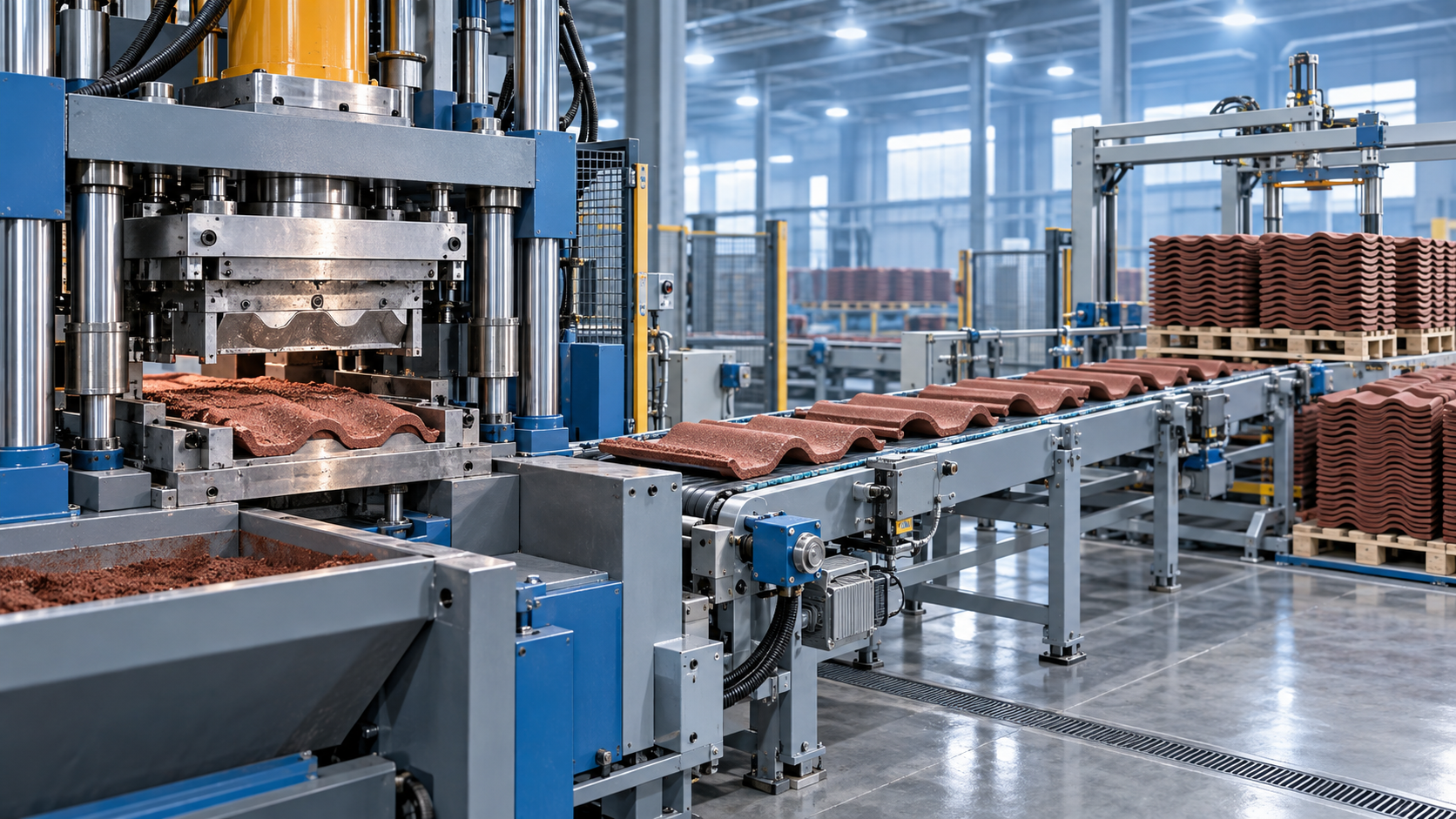
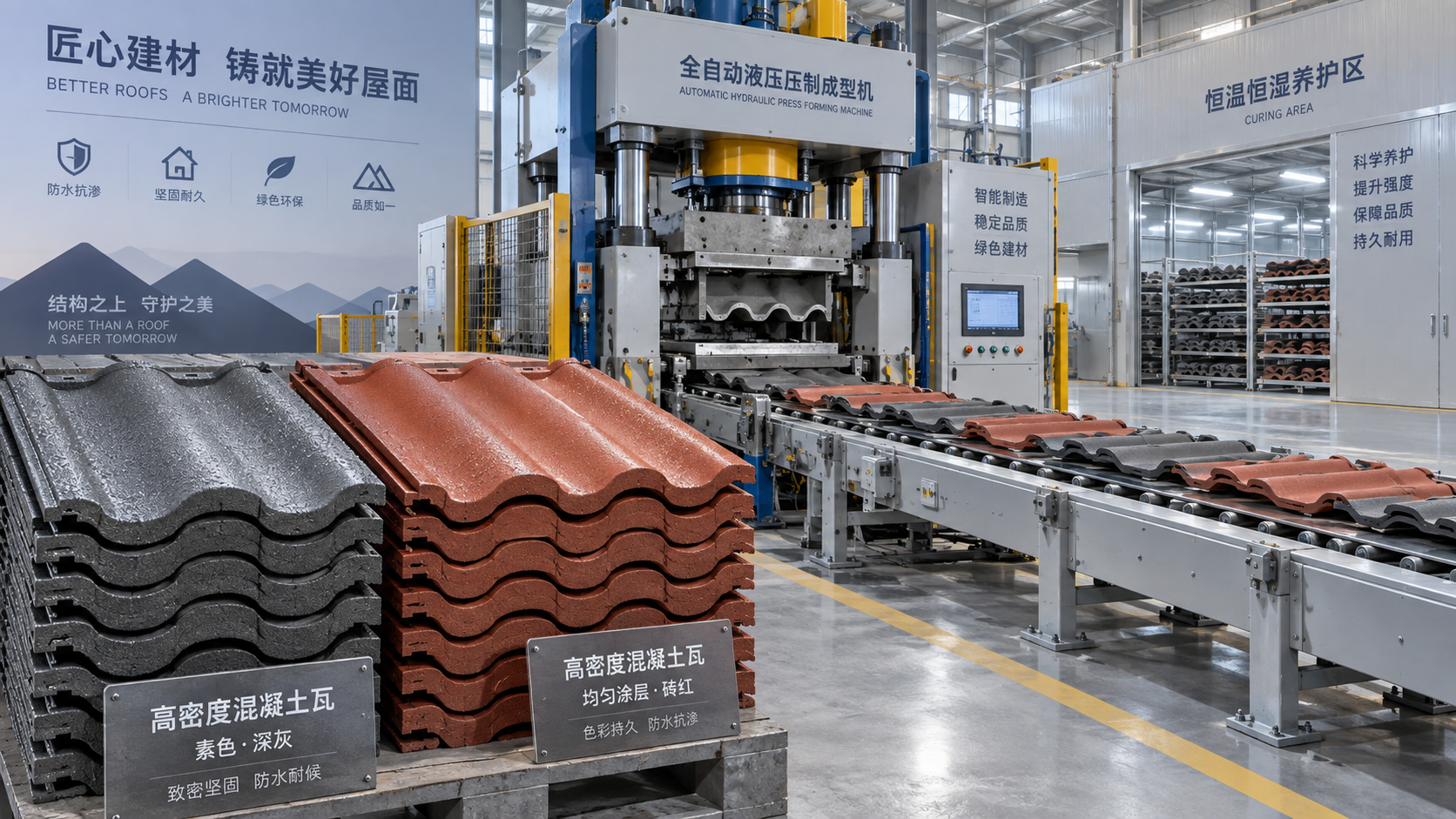
In a hydraulic brick making machine, material enters the mold cavity as a loose granular or semi-dry mix. Its initial bulk condition is affected by particle-size distribution, moisture, binder content, mixing uniformity, and segregation during transfer. The hydraulic system then applies force through the press head or upper mold, reducing void space and bringing particles into closer contact.
The relevant question is not simply how much force the hydraulic cylinder can generate. The relevant question is whether the same effective compaction condition reaches every brick. Effective compaction depends on:
- the mass or volume of material entering each cavity;
- the uniformity of the material layer before pressing;
- the pressure profile during the cycle;
- the time held at pressure;
- the rigidity and alignment of the mold set;
- the ability of trapped air to escape during compaction; and
- the condition of the raw mix at the exact time it is pressed.
A brick with insufficient fill can reach the programmed press pressure because the press head travels farther, yet still have lower mass and lower final density. Conversely, overfilled cavities can produce excessive local stress, dimensional variation, edge damage, or difficulty in demolding. Pressure readings alone therefore cannot verify density consistency.
Why hydraulic control is important
Hydraulic presses are well suited to brick and block molding because they can apply high force in a controlled manner and maintain that force for a defined dwell period. Compared with a system that relies mainly on impact or uncontrolled mechanical travel, a properly managed hydraulic circuit can reduce variation caused by fluctuating load resistance in the material.
The control benefit comes from repeatability. A hydraulic brick making machine can regulate pressing through pressure settings, cylinder position, press speed, dwell time, and, in some designs, proportional or servo-hydraulic valves. These functions allow the machine to follow a repeatable compaction sequence rather than merely closing the mold until a fixed mechanical stop is reached.
Pressure must still be interpreted carefully. Hydraulic pressure measured in the line is not identical to pressure acting on the brick surface. Actual mold pressure depends on cylinder area, press geometry, friction, load distribution, and the total area being compacted. Where multiple cavities are used, the load also has to be distributed evenly across the mold table. A stable gauge reading can coexist with uneven cavity density if the press platen is not parallel, the mold is worn, or material is distributed unevenly.
A controlled sequence often matters more than a single peak-pressure value. Rapid pressure application may trap air, especially in fine or moisture-sensitive mixes. A staged cycle can allow material to settle, air to vent, and particles to rearrange before final compaction. The appropriate sequence depends on the product formulation and mold geometry; it cannot be defined by a universal pressure number.
Material moisture is often the largest hidden source of variation
Hydraulic force can compensate for only part of a raw-material inconsistency. In semi-dry concrete mixes, clay blends, fly ash formulations, or aggregate-based units, moisture affects particle lubrication, flow into the cavity, green strength, and compaction response.
When a mix is too dry, it may not flow evenly beneath the feed box and may resist particle rearrangement during pressing. The result can be unfilled corners, internal voids, weak edges, and density differences between the top and bottom of the unit. A dry mix may also generate misleadingly high resistance during pressing without achieving good particle packing.
When moisture is too high, the material may compact readily at first but can lose shape stability after mold release. Excess water increases the distance between solid particles and can create pores after curing or drying. In cement-based units, this can raise water absorption and reduce strength. In fired-clay products, moisture variation affects drying shrinkage and can produce cracking before firing.
Moisture control should therefore be linked to density control. Batch moisture checks are useful, but they should be interpreted alongside brick mass, dimensions, green density, and finished dry density. If finished density changes while hydraulic settings remain unchanged, raw material moisture and grading should be investigated before pressure is increased.
Feed-box performance determines whether pressure can work evenly
Many density problems originate before the hydraulic press starts its stroke. A feed box must deliver a repeatable charge into every mold cavity. Segregation during conveying is particularly damaging: coarse particles may collect in one area, fines in another, and moisture may not be evenly distributed through the mix.
Uneven fill produces localized density variation that is difficult to correct with higher pressing force. The center of a cavity may be dense while corners remain underfilled, or one cavity in a multi-cavity mold may consistently produce lighter units. These defects can remain invisible until destructive testing, water absorption checks, or field complaints reveal them.
Useful controls include monitoring charge mass, checking feeder travel and scraper condition, maintaining consistent hopper head pressure, and inspecting whether material bridges or accumulates above individual cavities. The feed system should also be assessed after recipe changes. A mix with a different proportion of fines, recycled material, pigment, or lightweight aggregate can flow differently even when its nominal moisture is unchanged.
Mold condition and alignment directly affect density distribution
The mold is not only a shape-forming component; it is part of the compaction system. Wear in mold walls, liners, punches, guide columns, or press-head contact surfaces can change cavity volume and alter the way force is transferred into the material.
Uneven mold clearance can allow material to escape or shift during pressing. A tilted press head may compact one side of the cavity earlier and more heavily than the other. A worn punch can produce a unit that meets nominal dimensions but has a lower local density near an edge or face. Such defects are important because fracture initiation commonly occurs at corners, webs, and other stress-concentrating areas.
Maintenance checks should include mold-table flatness, platen parallelism, guide wear, fastener condition, punch-to-die clearance, and cavity dimensions. The purpose is not only to prevent mechanical failure. It is to preserve the geometric conditions under which hydraulic force produces repeatable compaction.
Green density and finished density are related, but they are not the same measurement
A common control error is to judge density only after curing, drying, or firing. Finished density is the property that matters for product compliance and end-use performance, but it is too late to correct the production cycle once the product has reached that stage.
Green density provides an earlier signal. It can be calculated from unit mass and known mold volume, or assessed through a controlled weight-and-dimension method where the product geometry allows it. Consistent green density suggests stable filling and pressing; deviations can trigger timely checks of mix moisture, feed volume, or machine settings.
Finished dry density adds another layer of information because curing, drying, and firing can change mass and volume. For cementitious units, hydration and moisture conditioning affect test results. For fired clay bricks, drying shrinkage, firing temperature, and vitrification influence final porosity and density. A stable green density does not guarantee stable finished density if downstream thermal or curing conditions are uncontrolled.
Quality records should distinguish between:
- fresh mix moisture and batch composition;
- green unit mass and dimensions;
- press pressure, travel position, and dwell time;
- curing, drying, or firing conditions where applicable; and
- finished dry density, absorption, and compressive strength.
Linking these records makes it easier to identify whether a density deviation originated in material preparation, molding, or post-molding processing.
Density variation affects more than compressive strength
Higher density does not automatically mean a better brick. Excessive compaction can impair permeability needed for certain curing processes, increase tooling wear, create lamination defects, or cause damage during ejection. The target is a controlled density range appropriate to the specified product, raw materials, and intended application.
Within that target range, lower-density units often have greater pore volume. This may increase water absorption, reduce resistance to freeze-thaw exposure where that property is required, and lower compressive strength. Density variation within one production lot can also create differential drying or curing behavior, which contributes to warpage and cracking.
For structural masonry, inconsistent density creates uncertainty in the relationship between declared compressive strength and actual in-service behavior. For paving units or load-bearing blocks, localized low-density zones can accelerate abrasion, chipping, and breakage. For handling operations, weak green or early-age units increase the chance of collapse on conveyors, pallets, or curing racks.
Testing must match the product standard and the manufacturing route
There is no single global density requirement for all bricks. Requirements depend on whether the unit is fired clay, concrete masonry, calcium silicate, autoclaved material, paver, facing brick, or another masonry product. The applicable market standard, contract specification, and declared product classification determine which tests are relevant.
In markets using ASTM specifications, requirements may refer to product categories and test methods such as those associated with clay brick, concrete masonry units, or sampling and testing of brick and structural clay tile. In European markets, the EN 771 series addresses specification requirements for masonry units, while related testing standards define methods for determining properties. These references should not be treated as interchangeable: the correct standard depends on the unit type and destination market.
Density testing also requires a defined conditioning state. A unit weighed after production, after curing, at ambient moisture, or after oven drying will not necessarily produce the same result. Test procedures should state specimen conditioning, drying temperature where applicable, dimensional measurement method, sample size, and acceptance rule. Without those controls, density data can appear inconsistent even when the molding process is stable.
What should trigger investigation on the production line
Quality teams should investigate trends rather than wait for a single failed compression test. A shift in average brick mass, an increasing spread in cavity-to-cavity weight, changes in press-head position at the same programmed pressure, more frequent corner damage, or variation in demolding behavior can all indicate density control is weakening.
Hydraulic-system signals also deserve attention. Pressure instability may result from pump wear, valve response issues, oil contamination, internal leakage, temperature-related viscosity changes, or sensor calibration drift. However, a stable hydraulic system does not rule out density problems caused by the feeder, mold, or raw mix. Process diagnosis should follow the material path: mixing, transport, filling, pre-compaction if used, final pressing, ejection, and curing or drying.
Control limits should be based on the plant’s validated product specification and demonstrated process capability, not on arbitrary machine settings. A practical approach is to trend unit mass and dimensions at defined intervals, compare results by mold cavity, and correlate deviations with batch records and press data. Cavity-specific tracking is valuable because it separates a machine-wide change from a localized mold or feed defect.
Safety is part of density control
Attempts to correct low density by manually adding material to cavities, reaching into the feed area, or adjusting molds during operation create serious pinch, crush, and unexpected-motion hazards. Hydraulic presses retain stored energy, and a pressure drop or control fault does not make the system safe to access.
Density-related adjustments should be made through controlled setup procedures, with isolation and lockout arrangements appropriate to the equipment and site rules. Guarding, interlocks, emergency stops, safe mold-change methods, and verified pressure release are essential. Maintenance work on hydraulic lines or cylinders should also account for hot oil, injection hazards from high-pressure leaks, and unsupported moving components.
The strongest outcome is not the highest measured density. It is a repeatable density profile that remains within the product’s specified range, supports reliable strength and durability, and is achieved without compensating for process instability through unsafe intervention. A well-controlled hydraulic brick making machine provides the force and repeatability needed for that outcome, but consistency ultimately depends on the full system: material preparation, feeding, tooling, hydraulic control, measurement discipline, and safe operating practice.
Recommend
 Sep 30, 2026
When does an automated building material production line pay off?
Automated building material production line ROI explained: assess capacity, quality, labor, waste, and total costs to make a profitable investment.
- Oct 01, 2026
How a green building material production line reduces material waste
Discover how a green building material production line cuts waste through precise batching, controlled forming, stable curing, and smart material recovery.
- Oct 02, 2026
What to confirm before finalizing AAC factory planning
AAC factory planning: confirm product mix, raw materials, capacity, utilities, layout, automation, and supplier scope before investing in a reliable, efficient AAC plant.