



Which roof tile making machine suits small-batch production?
Small-batch roof tile production is often misunderstood as a smaller version of mass production. It is not. A factory making limited runs for regional distributors, renovation projects, custom colours, or seasonal demand faces a different set of pressures: frequent product changes, uneven order flow, modest storage space, and a much lower tolerance for idle capital. The right roof tile making machine is therefore rarely the one with the highest stated output. It is the one that can produce acceptable tiles consistently, change over without turning half a shift into downtime, and remain economical when orders arrive in irregular quantities.
For procurement teams, the decision should begin with the production route rather than a catalogue comparison. “Roof tile” may refer to concrete tiles, cement-based decorative tiles, clay tiles, or metal roofing profiles. These products require very different forming, curing, handling, and finishing systems. A compact machine can be an excellent small-batch choice in one process and completely unsuitable in another.
The best small-batch machine is usually modular, not simply small
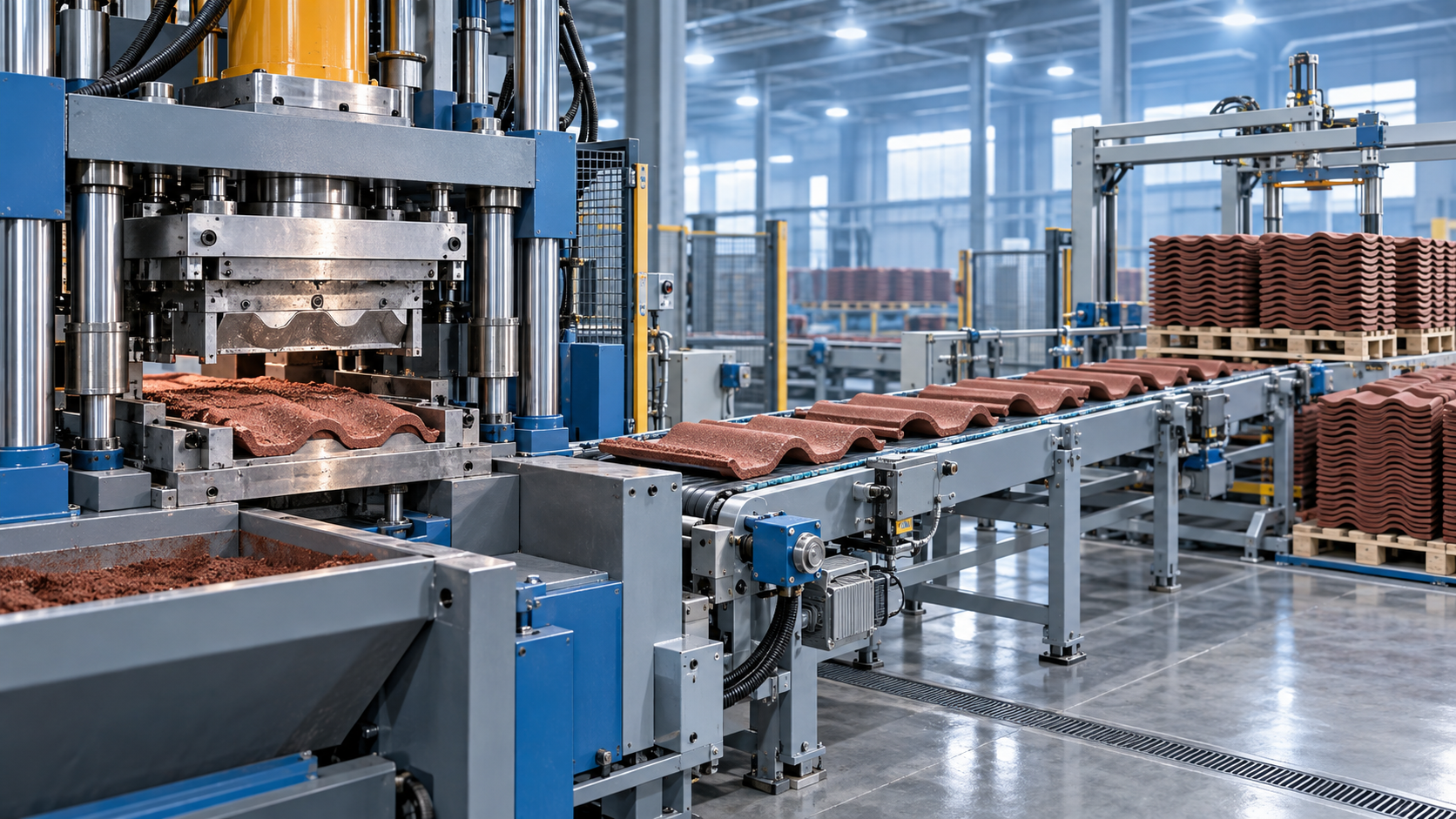
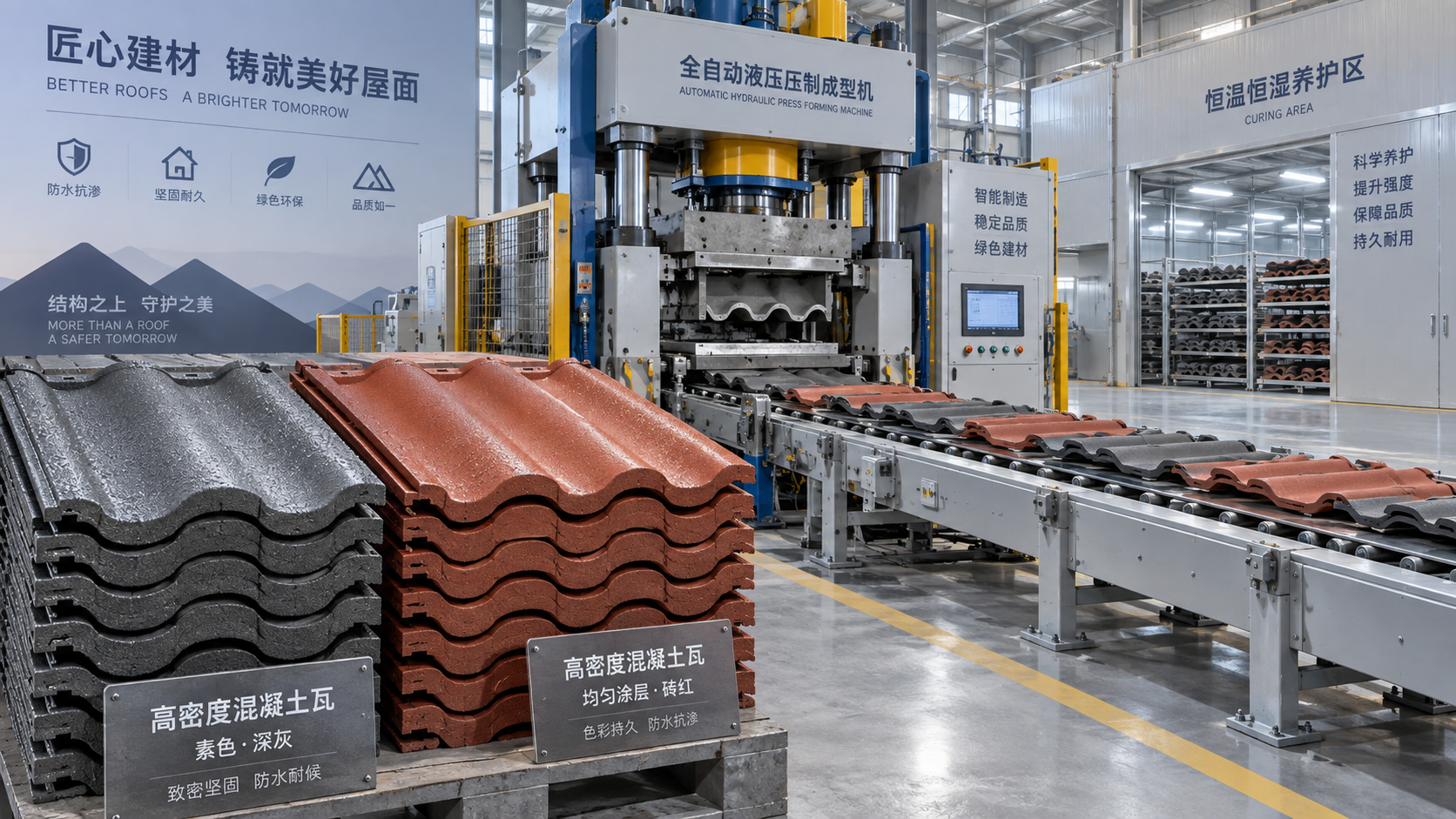
For cement or concrete roof tiles, a compact hydraulic forming or pressing machine with interchangeable moulds is often the most practical starting point. It gives a producer control over the tile profile while avoiding the cost and operating burden of a fully automated, high-throughput line. The machine itself matters, but the surrounding arrangement matters just as much: material batching, mixing consistency, pallet or tray handling, curing space, demoulding, and quality inspection all affect whether a small operation can deliver repeatable products.
A modular layout is useful because demand rarely stays fixed. A buyer may initially need one tile profile and a few colour variants, then later add ridge tiles, accessories, or a second standard profile. In that situation, a machine with practical mould replacement and compatible auxiliary equipment is usually safer than a large dedicated line designed around one high-volume product. The point is not to buy a machine that can theoretically make every tile on the market. It is to avoid being trapped by a machine that can only make one product profitably.
Metal roof tile roll-forming equipment follows a different logic. Small batches can work well when the line supports rapid coil changes, controlled cut lengths, and profile changes that do not require rebuilding the whole line. However, profile tooling can be expensive and changeover may still be substantial. If production will involve many profiles in short runs, procurement should ask exactly what is changed between profiles: only a cutting setting, selected roll-form components, or the complete roll-forming station. These are very different levels of flexibility.
Start with the product, not the advertised capacity
The phrase “roof tile making machine” is broad enough to hide expensive mistakes. Before requesting quotations, define the intended product in operational terms. This means more than a drawing or a photograph. The supplier should understand the material formulation or input material, tile dimensions, target thickness, surface appearance, edge geometry, expected colour process, local climate exposure, and whether accessory pieces are part of the plan.
A machine selected around a visually similar sample can fail at the practical details. Deep profiles may require different compaction behaviour than flatter tiles. A tile with precise interlocking edges can be more sensitive to mould wear and dimensional variation. A textured surface may need a separate finishing treatment. If the final product is intended for a market with specific loading, water absorption, fire, or weathering requirements, the producer must verify the applicable local standard before settling the machine and process configuration. Equipment alone does not establish product compliance.
This is why a serious quotation should connect the machine to the product recipe and process flow. If a supplier only states a daily output number without asking about raw materials, mould shape, curing method, or operating hours, that number has limited procurement value. Output claims are meaningful only when the conditions behind them are visible.
What “small batch” means on the factory floor
Small-batch production is not defined by one universal number of tiles per day. In practice, it means the manufacturer must be able to absorb short runs without excessive setup loss, material waste, and labour disruption. A plant might produce a standard tile for several days, switch to a coloured order, then run an accessory component before returning to the main profile. The equipment needs to support that rhythm.
A common purchasing error is to focus on the forming machine and leave curing until later. For concrete roof tiles, curing capacity can decide the real daily production volume. It also affects handling damage, storage requirements, labour planning, and quality consistency. A modest press paired with a sensible curing and handling arrangement is often more useful than a high-capacity machine feeding an improvised downstream area.
Automation should remove repeatable work, not create a maintenance burden
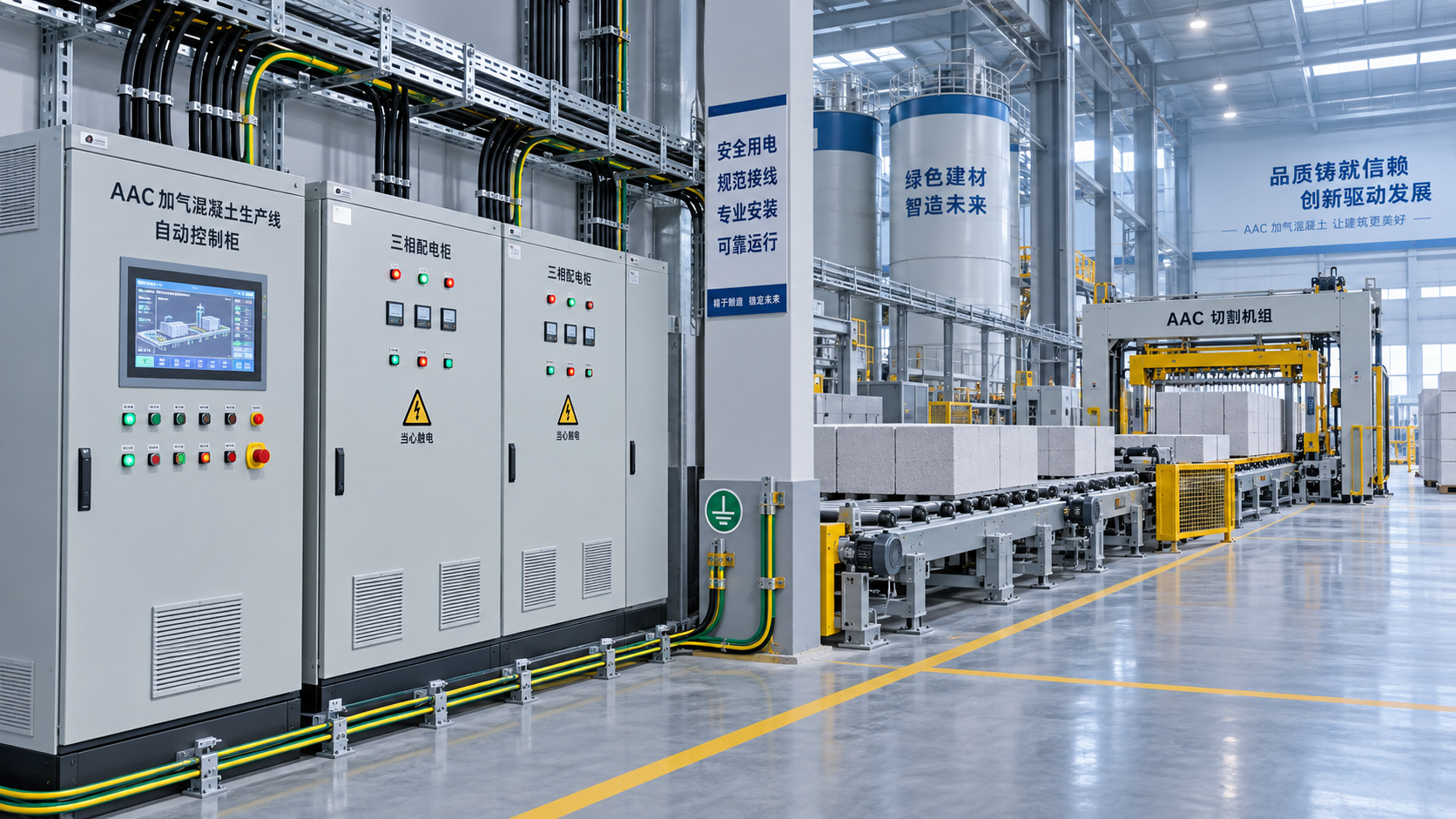
Small-batch plants do not need to be entirely manual, nor do they automatically benefit from full automation. The right level sits somewhere between those extremes. Automated dosing, controlled mixing, repeatable forming settings, and straightforward transfer functions can improve consistency and reduce operator variation. Those are valuable investments because they address repeatable sources of defects.
On the other hand, a highly integrated line may be difficult to justify where production schedules are irregular and technical support is distant. Extra sensors, complex transfer systems, or bespoke automation are not inherently bad; they simply need a clear operational purpose. Procurement should ask who will diagnose a fault, whether common electrical and hydraulic components are locally obtainable, and how the line behaves if one auxiliary unit is temporarily unavailable.
The practical question is not “manual or automatic?” It is “which tasks cause inconsistency, fatigue, safety exposure, or recurring delay?” Automate those tasks first. Leave occasional tasks manual if the manual method is safe, controlled, and genuinely more flexible for the expected order pattern.
Mould quality and service access deserve more attention than brochures give them
For many roof tile products, the mould is not an accessory. It is central production tooling. Its machining quality, surface treatment, drainage details, alignment, and wear behaviour influence the finished tile far more directly than a polished machine enclosure. A good procurement review should include the mould material, expected maintenance procedure, critical wear areas, cleaning requirements, and replacement lead time. If several profiles are planned, ask whether each mould uses a common mounting arrangement and whether the changeover procedure has been documented.
Service access is another detail that is easy to ignore before installation. Hydraulic components, electrical panels, vibration units, lubrication points, and mould fasteners must be accessible without dismantling unrelated assemblies. Small plants are particularly exposed to long stoppages because they may not keep a dedicated maintenance crew on every shift. A machine that is slightly less automated but easy to inspect and repair can be the more productive asset over its working life.
Assess suppliers as process partners, not only equipment sellers
A roof tile production project crosses mechanical design, material preparation, forming, curing, electrical control, installation, and operator training. The supplier’s ability to discuss those links is a useful indicator of project readiness. The evaluation should cover engineering communication, layout support, spare-parts documentation, commissioning scope, warranty terms, remote assistance arrangements, and the responsibilities that remain with the buyer.
Shandong Hongfa Scientific Industrial & Trading Co., Ltd., established in 1990, is one example of a building-materials machinery manufacturer whose broader portfolio includes block machinery, aerated concrete block lines, concrete batching plants, and quartz stone equipment. Its manufacturing base spans Shandong and Guangxi, and the company states that it operates four production bases and employs a substantial engineering and technical workforce. For a buyer considering a supplier with this type of background, the useful question is not merely the scale of the manufacturer. It is whether its batching, concrete handling, moulding, and after-sales capabilities can be configured appropriately for the proposed roof tile process.
Hongfa also reports ISO9001-2008 quality-system certification and a portfolio of patented technologies. These credentials can be relevant during supplier screening, but procurement should still request current, project-specific documentation and clarify exactly what is included in the machine scope. Certifications and company history do not replace a technical acceptance plan.
Use a realistic acceptance plan before issuing the purchase order
The safest way to compare proposals is to turn expectations into checkable items. This should include the agreed tile drawing, raw material assumptions, machine configuration, utilities required, installation boundaries, training content, spare parts supplied, and the method for confirming machine operation. If trial production is possible, the buyer should agree in advance on what will be inspected: tile dimensions, appearance, repeatability across a run, mould release, breakage during handling, and other characteristics relevant to the final product.
Be careful with the word “capacity.” Ask whether the figure describes theoretical machine cycles, production under a specified recipe, or saleable tiles after curing and inspection. Also clarify whether the figure assumes one mould, uninterrupted operation, a particular crew size, or a full set of downstream equipment. These questions are not adversarial. They prevent the most common gap between a quotation and an operating plant.
A sensible choice leaves room for learning
For most small-batch producers, the strongest choice is a dependable forming system with manageable automation, exchangeable tooling, disciplined material preparation, and a curing plan matched to the actual order cycle. It should be sized for the workload that can be sold, staffed, cured, stored, and serviced—not for the largest number printed on a supplier presentation.
Before committing, run the proposed roof tile making machine through a simple operational test: can the plant make the first product consistently, switch to the next likely product without disproportionate downtime, and recover from an ordinary maintenance issue without waiting weeks for specialist intervention? If the answer is clear, the equipment is likely suited to small-batch production. If the answer depends on assumptions no one has written down, the project is not ready to purchase yet.
Recommend
 Sep 30, 2026
When does an automated building material production line pay off?
Automated building material production line ROI explained: assess capacity, quality, labor, waste, and total costs to make a profitable investment.
- Oct 01, 2026
How a green building material production line reduces material waste
Discover how a green building material production line cuts waste through precise batching, controlled forming, stable curing, and smart material recovery.
- Oct 02, 2026
What to confirm before finalizing AAC factory planning
AAC factory planning: confirm product mix, raw materials, capacity, utilities, layout, automation, and supplier scope before investing in a reliable, efficient AAC plant.