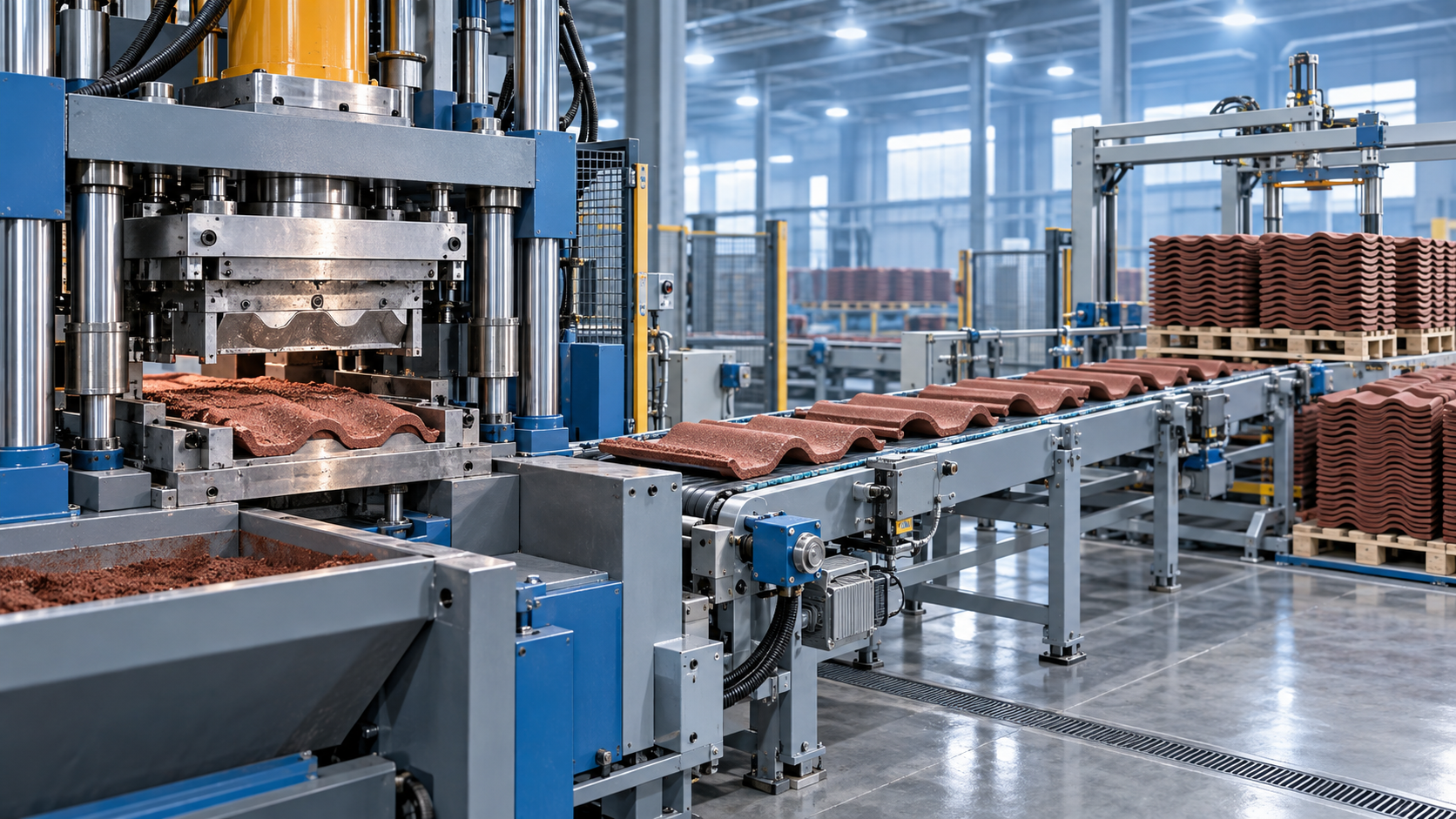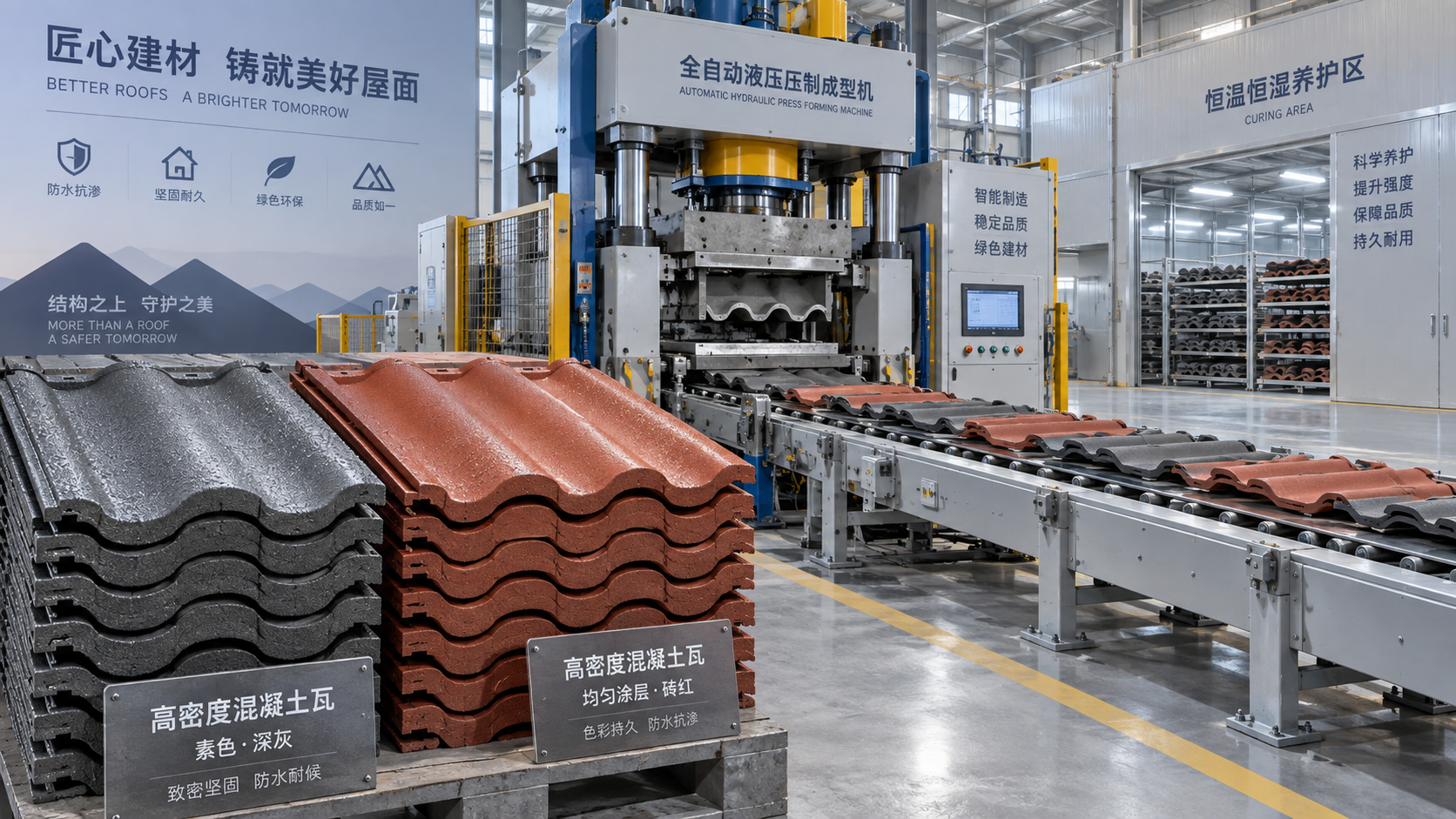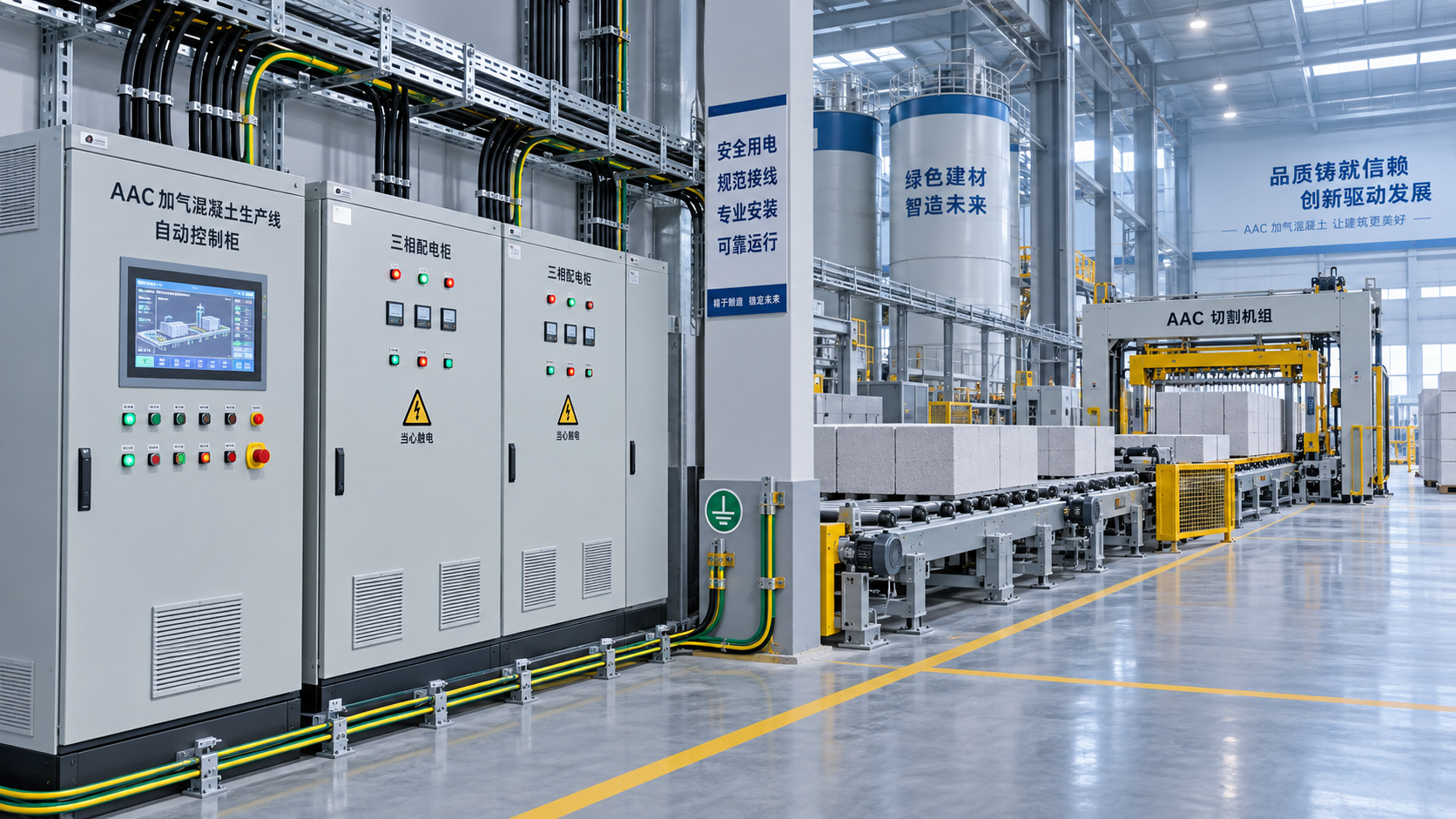




How to Choose a Color Tile Making Machine for Export Markets
For export sales, a color tile making machine should be selected from the market backward: start with the tile formats, surface appearance, durability expectations, and compliance requirements of the destination market, then determine the machine configuration needed to produce them consistently. A machine with an impressive output figure can still be a poor investment if its molds do not fit local demand, its color-feeding system is difficult to control, or its electrical components cannot be supported after installation.
The most suitable equipment is rarely the most automated or the lowest-priced option. It is the machine whose output, changeover capability, quality-control features, and service arrangement match the exporter’s order pattern and the conditions at the receiving factory.
Define the export product before comparing machine capacity
“Color tile” covers several products with very different production requirements: concrete roof tiles, interlocking paving tiles, terrazzo-style pavers, split-face products, and decorative landscape tiles may all be described this way in commercial discussions. Their mold structures, feeding methods, compaction requirements, curing needs, and acceptable visual variation are not interchangeable.
Before requesting quotations, the buyer should establish a practical product brief for the intended export market. It should include dimensions, thickness range, edge profile, surface texture, color pattern, strength expectations, packing method, and the number of designs likely to be offered. This avoids a common mismatch: purchasing a high-volume machine configured for a narrow product range, then discovering that the sales market demands frequent changes in size, pattern, or color.
Capacity should also be judged by sellable output rather than nominal cycle time. A supplier may state output based on one standard mold, a stable material mix, a short transfer distance, and continuous operation. Export production introduces more variables. Color changes require cleaning and adjustment; decorative surfaces may need more careful handling; rejected pieces may be harder to sell across borders than in a local market.
Ask for capacity calculations based on the specific tile dimensions and mold cavities under consideration. The calculation should identify whether it refers to pieces per cycle, square meters per shift, or annual output, and whether curing, stacking, and packaging are included in the production flow. Comparing “tiles per hour” without this context often produces misleading procurement decisions.
Color consistency depends on the feeding system as much as the press
Export buyers often judge colored concrete tiles first by appearance. Variation between batches, exposed gray spots, uneven pigment distribution, and inconsistent face thickness can lead to claims even when the tile is structurally sound. The forming machine matters, but the color layer and material-feeding arrangement usually determine whether the visual result can be repeated from one production day to the next.
A color tile making machine for export market should therefore be assessed as part of a coordinated system. The buyer needs to understand how face mix and base mix are stored, weighed, conveyed, and fed into the mold. A machine designed for a single-layer product may not provide the control needed for a distinct decorative face layer. Conversely, a complex multi-color system may be difficult to justify when the product program consists mainly of solid-color tiles.
Useful questions during technical evaluation include:
- Can the machine control the feed of face material and base material separately?
- How is the thickness of the colored surface layer maintained across the mold area?
- Can pigment-containing mixes be changed without excessive material loss or lengthy cleaning?
- Does the feeding arrangement support blends, borders, or variegated patterns where these are part of the target product range?
- Which process settings are recorded so that an approved color can be reproduced later?
Machine suppliers can provide sample tiles, but samples alone are insufficient. A buyer should request samples from more than one production run where possible, including tiles produced after a color or mold change. The purpose is not to demand perfect visual uniformity from concrete, which naturally has some variation, but to see whether the machine and process can stay within a commercially acceptable appearance range.
Material compatibility deserves equal attention. Cement source, aggregate grading, sand moisture, pigment type, and admixtures all affect color and compaction. An imported machine cannot compensate for unsuitable local raw materials. Where the factory will use locally sourced aggregate, the equipment specification should allow adjustment of vibration, fill depth, pressure, and mixing time rather than relying on a fixed recipe developed elsewhere.
Choose automation for the operating model, not for the brochure
Automation can improve repeatability, reduce dependence on manual handling, and support higher production volumes. It also adds controls, sensors, pneumatic or hydraulic components, and software interfaces that must be understood and maintained in the destination country. The right level depends on labor availability, operator capability, product variety, and the cost of downtime.
For a plant producing a limited range of standard pavers in long runs, automated batching, material handling, pallet circulation, and stacking can have a clear operational value. For a business that expects shorter export orders, frequent sample development, and several decorative formats, quick mold change and accessible adjustment points may matter more than maximum automation.
The control system should be reviewed in practical terms. Operators need a clear interface for selecting recipes, adjusting vibration stages, monitoring alarms, and recording production settings. Maintenance personnel need access to electrical drawings, component lists, program backups, and fault descriptions. A machine that cannot be diagnosed without remote intervention can become a production risk when it is installed far from the manufacturer.
Electrical configuration is particularly important for export projects. Confirm the voltage, frequency, phase arrangement, cabinet protection level, and the availability of replacement components in the operating region. Buyers should also clarify the language of the interface and technical documents before contract confirmation. Retrofitting controls after shipment is more expensive and disruptive than specifying them correctly at the start.
Mold flexibility should reflect sales uncertainty
Molds are often treated as accessories during initial negotiations, yet they determine much of the machine’s commercial usefulness. In export markets, demand may shift between sizes, edge treatments, and surface styles as distributors test different product lines. A machine that accepts only proprietary or difficult-to-source molds can restrict the producer’s ability to respond.
Check the mold fixing method, mold dimensions, changeover procedure, wear parts, and expected lead time for replacement sets. The buyer should understand whether future molds can be manufactured from approved drawings and whether the machine’s vibration and feeding system can support different cavity arrangements without compromising fill quality.
There is also a tradeoff between flexibility and output. A large mold with many cavities may be efficient for a proven high-volume item, but it can be less suitable when order quantities are uncertain. A more adaptable setup may produce fewer pieces per cycle while reducing the commercial risk of holding slow-moving inventory. The decision should be based on expected order repetition, not only the first customer’s requirement.
Look beyond the forming machine to the full production chain
A tile press cannot create stable export-grade output by itself. The production line also includes aggregate handling, mixing, color-material preparation, transfer equipment, curing, inspection, and packing. Weakness in any of these stages can erase the benefit of a capable main machine.
Mixing is especially important for colored products. The mixer must disperse pigment and fine materials evenly without creating inconsistent moisture conditions. Transfer equipment must move fresh tiles without damaging edges or disturbing decorative surfaces. Curing must be compatible with the production rhythm and local climate. Finally, packing must protect tiles through inland transport, container loading, sea freight, unloading, and distribution.
During line planning, map the physical route of a tile from raw material to container. Identify points where products are handled manually, where pallets wait, where color batches can become mixed, and where damaged tiles are likely to accumulate. This simple exercise often reveals that a proposed line has sufficient pressing capacity but inadequate curing space, pallet supply, or packaging throughput.
For exporters, packing should be treated as a quality issue rather than an afterthought. Decorative tiles can be damaged by pallet movement, inadequate separation, moisture exposure, or poor load restraint. The equipment supplier may not provide the final packaging system, but the chosen machine layout should leave room for inspection, sorting, labeling, and reliable pallet preparation.
Assess quality control through repeatability and traceability
Export orders leave less room for informal judgment. Once tiles have crossed a border, replacing a disputed shipment is costly, and visual complaints can be difficult to resolve without production records. The selected equipment should support a disciplined quality process, even if the factory begins with a modest automation level.
Production records should connect each batch to material inputs, mix settings, machine parameters, mold identification, curing conditions, and inspection results. This is particularly useful when a later shipment needs to match an approved sample. It also helps distinguish whether a defect originated in raw materials, machine setup, mold wear, curing, or handling.
Buyers should discuss the tests expected by their target customers before finalizing the line. Depending on the tile type and destination, concerns may include dimensions, water absorption, load performance, abrasion resistance, freeze-thaw behavior, color durability, or slip characteristics. The machine supplier does not replace product certification or local testing obligations, but its equipment must be capable of producing tiles within the required quality window.
A useful procurement approach is to specify the acceptance process in advance: approved tile samples, documented machine configuration, training requirements, commissioning criteria, and the method for verifying output after installation. This creates a clearer basis for both sides than relying on broad statements about quality.
Service, spares, and shipping details belong in the purchase decision
For export-oriented equipment purchases, reliability is partly a logistics question. Components that wear or fail during normal operation should be identifiable, stocked in reasonable quantities, and easy to ship. A low initial equipment price loses its advantage quickly if production stops while the factory waits for an ordinary sensor, seal, valve, vibration component, or mold part.
Request a recommended commissioning and first-year spare-parts list with part numbers and quantities. Separate critical electrical and hydraulic items from ordinary consumables. It is also sensible to clarify which parts are standard industrial components and which are proprietary to the machine builder. Standard components may be easier to source locally, while proprietary parts may require a planned inventory.
Shipping preparation deserves similar scrutiny. The quotation should define what is included in the supply scope, how major sections are packed, whether export crating is needed, and which parts must be assembled on site. Large machines may be shipped in several units, so the receiving factory must be ready with foundations, lifting equipment, utilities, and storage space before arrival. Delays at this stage can affect commissioning more than the machine’s mechanical complexity.
The strongest choice is usually a machine proposal that makes its limits visible: defined product scope, realistic production figures, documented utility requirements, clear mold arrangements, and a workable service plan. That level of detail gives an exporter a better foundation than a broad promise of high capacity. When color control, mold strategy, line balance, and support are evaluated together, the equipment becomes a production asset built for repeat orders rather than a machine selected only for its headline specification.
Recommend
 Sep 30, 2026
When does an automated building material production line pay off?
Automated building material production line ROI explained: assess capacity, quality, labor, waste, and total costs to make a profitable investment.
- Oct 01, 2026
How a green building material production line reduces material waste
Discover how a green building material production line cuts waste through precise batching, controlled forming, stable curing, and smart material recovery.
- Oct 02, 2026
What to confirm before finalizing AAC factory planning
AAC factory planning: confirm product mix, raw materials, capacity, utilities, layout, automation, and supplier scope before investing in a reliable, efficient AAC plant.