



What Technical Training Do Overseas AAC Plant Operators Need?
An AAC line can be mechanically complete, commissioned, and still struggle to produce stable blocks or panels when the operating team has not been trained for the actual process decisions behind each machine. A shift may see inconsistent green-cake strength, cutter wire breakage, poor dimensional accuracy, rising autoclave steam use, or damaged finished products. These are not always equipment faults. They often result from operators reacting to symptoms without understanding the relationship between raw materials, slurry behavior, cutting timing, pressure control, and maintenance conditions.
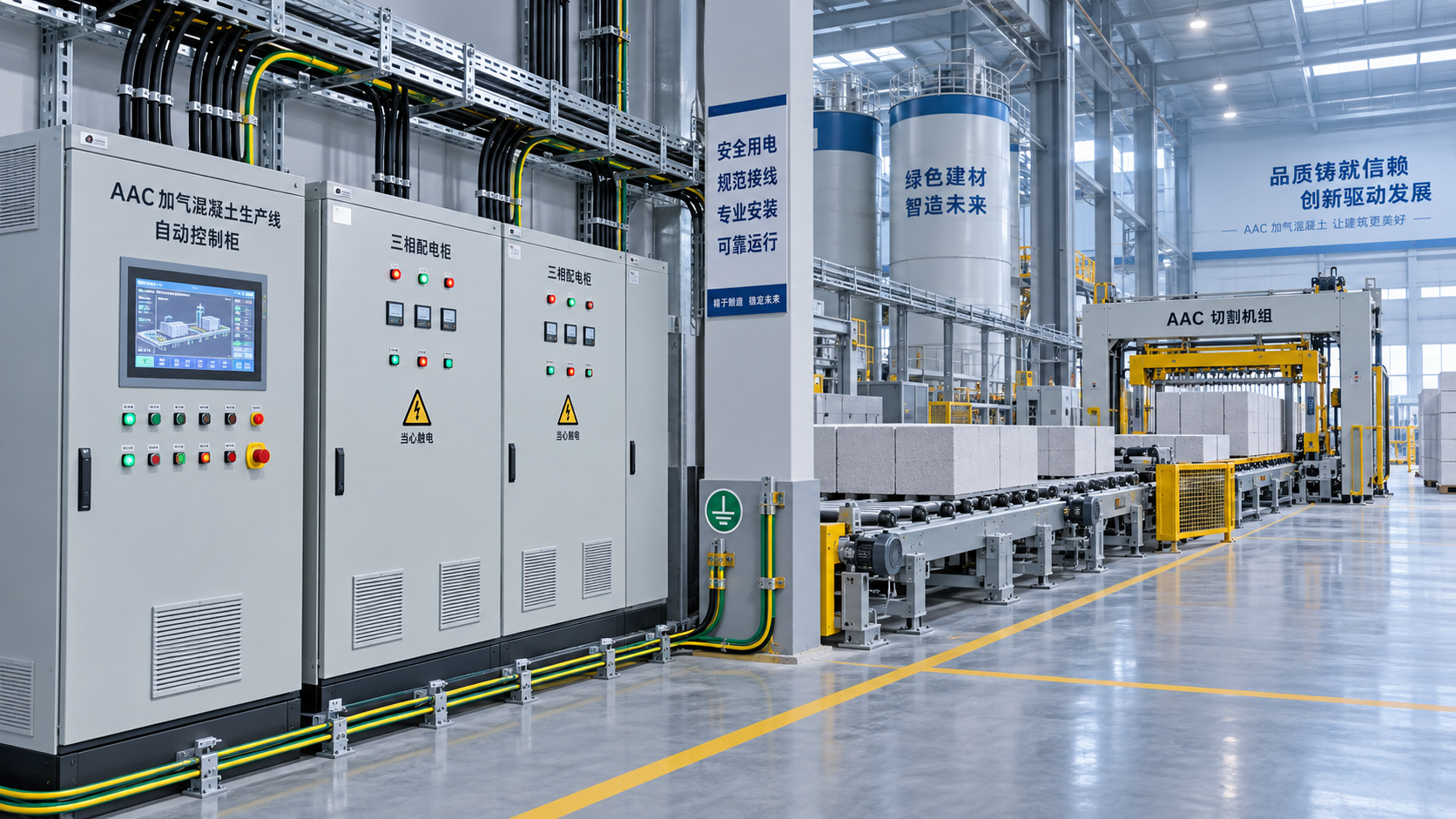
Overseas AAC plant operators need technical training that combines process knowledge with hands-on operating discipline. The core requirement is not simply learning which buttons to press. Effective AAC plant technical training for overseas operators should prepare teams to run the full production sequence safely, recognize abnormal conditions early, make approved adjustments within defined limits, and know when an issue requires engineering or maintenance intervention. Training should cover raw-material preparation, batching, pouring, pre-curing, cutting, autoclaving, product handling, quality inspection, equipment maintenance, and safety management.
Training must follow the production flow, not only the machine layout
A new operator can memorize the location of a mixer, cutting machine, autoclave, and control panel without understanding how one stage affects the next. In AAC production, process errors frequently travel downstream. A slurry with unsuitable density or temperature may not rise properly. The resulting cake may be too weak for clean cutting, and the final product may show dimensional variation, cracking, or insufficient strength after autoclaving.
For this reason, training should be organized around the material and product flow. Operators need to understand what the material should look like, how it should behave, what measurements are meaningful, and what changes are acceptable at each stage. The team should not treat every station as an isolated task.
Raw-material preparation and storage
Operators responsible for the front end of the plant need practical instruction on cement, lime, gypsum, sand or fly ash, aluminum powder or paste, water, and any other materials included in the approved mix design. The purpose is not to turn every operator into a laboratory technician. It is to make sure the operating team can identify conditions that will affect batching accuracy and slurry consistency.
- How moisture variation in sand, fly ash, or other fine materials changes the actual water-to-solid ratio.
- Why material segregation in silos, blocked discharge points, and irregular feeder flow can create batch-to-batch variation.
- How to confirm that weighing devices, water meters, and dosing equipment are working within the plant’s established limits.
- How aluminum agent preparation, storage time, mixing method, and dosing sequence influence gas generation.
- How to keep raw materials dry, clean, and protected from cross-contamination.
One common operating mistake is to compensate for a poor slurry condition by changing several ingredients at once. That makes the cause of the problem difficult to trace. Training should establish a controlled adjustment method: verify the measurement system first, check the actual material condition, review the latest batch records, and change only the authorized variable according to the plant’s operating procedure.
Batching and slurry control require more than recipe entry
The batching station is where disciplined work has the greatest influence on later production stability. Operators need to understand that a stored recipe is a starting point, not a substitute for checking real operating conditions. Material temperature, moisture, fineness, slurry temperature, mixing time, and agent dispersion can all affect the expansion and setting behavior of the green cake.
Training at this stage should include the purpose of each ingredient, the sequence of addition, mixer loading limits, mixing duration, and the importance of recording deviations. Operators should be able to compare actual values with the approved process window rather than relying on visual judgment alone.
Control-room personnel should also be trained to distinguish between an alarm and a process trend. An alarm may signal that a limit has been reached, but a gradual shift in mixing current, material consumption, slurry temperature, or mould filling time can reveal a developing problem before production is affected. This is especially important when a plant uses automated weighing and PLC-based control. Automation improves repeatability only when operators understand what the data represents and respond correctly.
Pre-curing and green-cake handling are critical operating skills
After pouring, the slurry needs appropriate conditions to expand and develop sufficient green strength before cutting. Operators should know the target condition for demoulding and cutting, rather than making decisions only by elapsed time. A fixed waiting period may not be reliable when ambient conditions, raw-material temperature, or slurry behavior has changed.
Training should explain the practical signs of an unsuitable cake. A cake that is cut too early may deform, collapse at the edges, or stick to equipment. One cut too late may become difficult to process cleanly and can increase cutting resistance. Uneven rising, surface cracking, insufficient strength, or unusual adhesion to mould surfaces should be recorded and linked back to the earlier batching and curing conditions.
Mould preparation also deserves careful attention. Operators need instruction on cleaning, release-agent application where applicable, mould alignment, filling level, and safe movement by the handling system. Poor mould condition can be mistaken for a chemical or cutting problem. When operators know the distinction, unnecessary recipe changes can be avoided.
Cutting-machine training should connect product quality and equipment condition
The cutting area is often where upstream inconsistency becomes visible. Operators need to learn how cutting parameters, wire tension, wire condition, cake position, and synchronization of moving components affect the final block or panel geometry. They should be trained to inspect the first acceptable product after a setup change and to monitor cutting quality throughout the shift, not only after a defect has accumulated.
Technical instruction should cover normal adjustment and clear boundaries. Operators may be authorized to clean cutting residues, inspect wire condition, verify guides, confirm alignment, and make approved setup corrections. They should not bypass guards, alter protected motion settings, or continue operating a machine with damaged wires, abnormal vibration, or unreliable positioning feedback.
Defects that operators should be able to identify
- Rough or torn cutting surfaces that may indicate weak green cake, contaminated wires, unsuitable cutting timing, or incorrect wire movement.
- Uneven block dimensions that may be linked to alignment, positioning, guide wear, or unstable cake dimensions.
- Wire breakage that may result from excessive resistance, incorrect tension, worn guides, accumulated material, or mechanical interference.
- Edge damage during transfer, often related to insufficient green strength, improper handling sequence, or impact from transfer equipment.
Training should also explain the value of traceability. When a quality issue is found after cutting, the team should be able to identify the batch, mould, approximate pre-curing period, cutting conditions, and relevant equipment status. A simple and consistently used record system is more useful than a detailed form that operators cannot complete during normal production.
Autoclave operation is a safety and process-control responsibility
Autoclaving is not merely a heating step. Temperature, pressure, steam supply, condensate handling, loading arrangement, and the selected curing cycle affect product strength, dimensional stability, and energy use. Because autoclaves operate under pressure, operator training must combine process awareness with strict safety practice.
Every authorized autoclave operator should understand the approved loading pattern, door interlock function, rail and trolley movement, pressure-release sequence, condensate drainage practice, and the conditions required before a door can be opened. They should never rely on a visual assumption that pressure has been released. The plant’s confirmed isolation and pressure-verification procedure must be followed every time.
Process training should explain why rapid or uncontrolled pressure changes can damage products and why an abnormal steam trend may point to a supply, valve, trap, sealing, or condensate issue. Operators need to monitor the cycle record and compare it with the approved curing schedule. Where a deviation occurs, the correct response is to document it, protect personnel, and escalate according to responsibility levels rather than attempting an improvised correction.
Maintenance training should focus on early detection and safe handover
Plant reliability depends on the boundary between operator care and maintenance work being clearly defined. Operators should carry out routine inspections and basic cleaning, but they should not be expected to perform electrical, hydraulic, pressure-system, or mechanical repairs beyond their authorization and competence.
Useful operator-level maintenance training includes lubrication-point awareness, visual inspection of guards and fasteners, detection of air or hydraulic leaks, listening for unusual noise, recognizing overheating, checking sensor cleanliness, and identifying material buildup before it obstructs moving equipment. They also need to understand lockout and isolation requirements before cleaning or entering a restricted machine area.
A good shift handover is part of maintenance control. The outgoing team should communicate current production status, batch abnormalities, alarms, temporary restrictions, equipment sounds or leaks, materials waiting for use, and any action already taken. A maintenance team can respond more effectively when the operating record describes when the issue began, under what condition it appeared, and whether it is continuous or intermittent.
Quality training should be practical at the production floor
Operators do not need to perform every laboratory test, but they should know what quality indicators matter and how their work influences them. Training should cover visual inspection, dimensional checks, handling damage, density-related observations, moisture condition, packaging requirements, and the need to separate suspect products from confirmed acceptable output.
The important habit is to stop treating defects as a finishing-area problem. For example, a chipped edge may originate during transfer; dimensional variation may begin at cutting; poor strength may be associated with batching or autoclaving. Teams should be trained to report the defect where it is observed while investigating the stage where it likely began.
How to structure training for an overseas operating team
Language, terminology, local work habits, and previous experience can affect how quickly a new team becomes independent. Training should therefore use clear operating instructions, labeled controls, visual process references, and supervised practice on the actual installed line. A translated manual alone is rarely enough for a complex AAC plant.
A practical program normally progresses from basic safety and process orientation to station-specific instruction, supervised operation, fault recognition, and competency verification. Training materials should use the same equipment names, control-screen terms, alarm descriptions, and operating sequences found in the plant. This reduces confusion between classroom explanations and live production work.
- Start with the complete process: explain how raw materials become finished AAC products and where each operator’s work affects the next stage.
- Train by operating position: provide detailed instruction for batching, mould preparation, cutting, autoclaving, transfer, and control-room duties.
- Use normal and abnormal scenarios: teach operators what stable operation looks like, then show how to respond to common deviations without bypassing safety rules.
- Require supervised practice: an operator should demonstrate the correct sequence, inspection points, and response to alarms before working independently.
- Review early production records: use actual batch sheets, downtime notes, and quality observations to reinforce the connection between actions and results.
Technical training should not end on the day the plant begins production. The first operating period often reveals gaps that were not visible during classroom instruction: misunderstood alarms, inconsistent handovers, unclear authority for parameter changes, or difficulties keeping records during busy shifts. Refresher training is particularly valuable after a major maintenance event, equipment modification, recipe change, or repeated quality deviation.
Questions plant managers often raise before training begins
Is general experience with concrete equipment enough for AAC operation?
No. Experience with batching plants or block-making equipment is useful, but AAC has its own material reactions, green-cake handling requirements, wire-cutting conditions, and pressure-curing controls. Operators need training specific to the AAC process and the installed equipment configuration.
Should all operators be trained on every station?
Cross-training can improve staffing flexibility, but it should be introduced after each person is competent in a primary role. Pressure-system operation, electrical troubleshooting, and maintenance tasks should remain restricted to properly authorized personnel.
What shows that additional training is needed?
Repeated manual parameter changes, recurring product defects, unexplained downtime, incomplete shift logs, bypassed alarms, frequent wire failures, or inconsistent cleaning standards usually indicate that operating knowledge or procedure discipline needs reinforcement.
Recommend
 Sep 30, 2026
When does an automated building material production line pay off?
Automated building material production line ROI explained: assess capacity, quality, labor, waste, and total costs to make a profitable investment.
- Oct 01, 2026
How a green building material production line reduces material waste
Discover how a green building material production line cuts waste through precise batching, controlled forming, stable curing, and smart material recovery.
- Oct 02, 2026
What to confirm before finalizing AAC factory planning
AAC factory planning: confirm product mix, raw materials, capacity, utilities, layout, automation, and supplier scope before investing in a reliable, efficient AAC plant.