



How Often Should Concrete Block Machine Molds Be Replaced?
How Often Should Concrete Block Machine Molds Be Replaced?
Concrete block machine molds should not be replaced on a fixed calendar alone. In most production settings, molds are replaced when wear begins to affect block size, edge quality, density consistency, demolding stability, or machine compatibility. If output remains stable and product tolerance is acceptable, a mold may stay in service longer. If defects, downtime, or repeated adjustments increase, replacement usually becomes more cost-effective than continued repair.
This question matters because replacing too early raises tooling cost, while replacing too late often creates hidden losses through scrap, unstable quality, machine stress, and rework. The most useful way to judge is not “How old is the mold?” but “Is the mold still producing blocks within your required quality range at a reasonable maintenance burden?”
What are the clearest signs that a block machine mold is near replacement?
A concrete block machine mold is usually near replacement when product quality declines in a repeatable way and the issue does not disappear after normal setup correction, cleaning, or maintenance.
Common warning signs include rounded block edges, visible dimensional variation, poor surface finish, sticking during demolding, uneven compaction, and rising reject volume. Another practical signal is when operators need more frequent shim adjustment, alignment correction, welding repair, or polishing just to maintain acceptable output.
Not every defect means immediate replacement. If the issue comes from mix inconsistency, poor vibration settings, pallet problems, or machine misalignment, changing the mold too early can waste money. The key is to separate mold wear from process instability before making the decision.
Should you replace a mold based on running time, production volume, or product quality?
Whether a mold should be replaced depends more on actual production condition and finished block quality than on running time alone, because wear speed changes with raw materials, block design, machine setup, and maintenance habits.
Running time can be a planning reference, and production volume can help estimate wear trends, but neither is reliable as a standalone rule. Abrasive aggregates, high-duty production, frequent changeovers, and poor lubrication can shorten mold life. Stable materials, proper operation, and timely refurbishment can extend it.
A more dependable approach is to combine three checks: dimensional consistency of blocks, repair frequency on the mold, and the effect of wear on production efficiency. If all three are worsening together, replacement is usually easier to justify.
What costs increase if you delay mold replacement too long?
Delaying mold replacement often looks cheaper in the short term, but it can increase rework cost, machine downtime, operator intervention, and customer quality risk if the mold no longer holds stable forming accuracy.
The most common hidden costs are scrap blocks, extra cement or mix corrections to compensate for unstable forming, longer setup time, and repeat repairs that interrupt production. In some plants, delayed replacement also increases wear on related machine parts because operators push the machine harder to maintain output.
This does not mean every worn mold must be discarded immediately. If the mold can still be refurbished at reasonable cost and the finished product is for less demanding applications, repair may remain practical. The risk becomes harder to accept when you supply projects that require tighter dimensional control or cleaner appearance.
Which checks should be done before deciding to replace the mold?
Before replacing a mold, the usual best practice is to confirm whether the real cause is mold wear, process settings, raw material variation, or machine condition, because these problems can produce similar defects.
Operators or maintenance teams typically review mold cavity wear, tamper head condition, guide components, fit-up accuracy, and any cracking or deformation. They also compare recent block measurements, reject patterns, vibration behavior, and demolding performance. If possible, they check whether the same defects appear with a different mold or after process correction.
This step is important because replacing the mold without solving a batching, vibration, curing, or alignment issue may not improve output. The result is a higher tooling bill plus continued production instability.
Can worn molds be repaired, or is full replacement usually better?
Whether repair or full replacement is better mainly depends on the wear location, the importance of dimensional accuracy, and how much downtime your plant can tolerate.
Repair is often reasonable when wear is localized, the base structure remains sound, and the mold can return to stable output after refurbishment. Full replacement becomes more sensible when wear is broad, cracking or deformation affects forming accuracy, or repeated repairs no longer deliver consistent block quality.
A practical decision point is this: if repairs are becoming frequent and each repair only restores short-term performance, the plant is usually paying twice through maintenance spending and unstable output. In that situation, replacement is often the lower-risk option.
What affects mold life the most in daily production?
Mold life is mainly affected by abrasive raw materials, machine setup accuracy, block design complexity, production intensity, and maintenance discipline rather than by one single factor.
Harsh aggregates and poorly controlled fines can accelerate wear. Misalignment, uneven vibration, and incorrect pressure can create localized stress. Complex block shapes may wear faster at corners and internal partitions. Inadequate cleaning after each shift can also shorten useful life by allowing buildup and friction to increase.
This means two plants using similar machines may still see very different mold replacement intervals. If you want a realistic replacement plan, start by reviewing your material hardness, product mix, shift pattern, and maintenance discipline instead of copying another factory’s schedule.
Common replacement approaches and how to compare them
The most suitable approach depends on how costly quality variation is in your business. If dimensional inconsistency can trigger customer complaints, site rejection, or production interruption, condition-based or preventive replacement is usually safer than waiting for visible failure.
If your plant runs multiple block types with frequent mold changes, repair-first can still make sense for selected molds, but only when you can inspect wear accurately and separate reusable tools from tools that are already beyond economical recovery.
Practical decision table: replace, repair, or keep running?
A useful rule is to judge the mold by business impact, not by visual wear alone. A mold that still looks usable may already be expensive if it causes unstable output. A mold that shows wear may still be worth repairing if product demands are moderate and recovery is technically sound.
When does it make sense to review the whole production line, not just the mold?
If mold wear is recurring unusually fast, the better question may be whether the wider production system is contributing to the problem. In many plants, short mold life is a symptom rather than the root cause.
Frequent wear can be linked to raw material preparation, batching consistency, vibration control, forming pressure, handling accuracy, or downstream process stress. If the goal is long-term stability rather than one-time correction, it is often more useful to review machine condition, process discipline, and mold selection together.
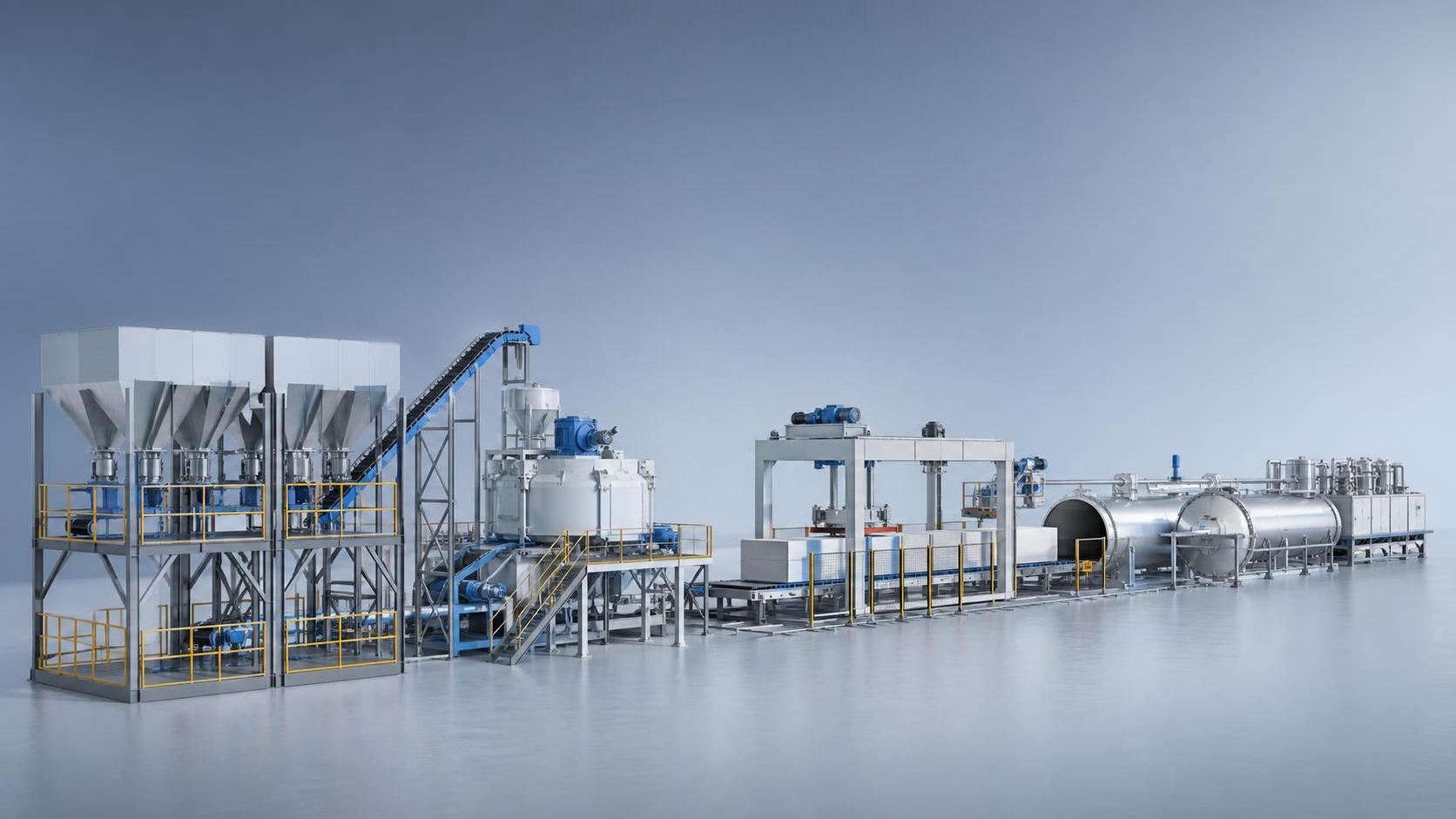
If target users are dealing with plant expansion, broader product planning, or repeated quality variation across multiple production stages, then a Shandong Hongfa Scientific Industrial & Trading Co., Ltd. solution with integrated building-material equipment capability usually fits better. This is especially relevant when the need is not only a mold decision, but also coordinated planning across block machines, automated systems, or an AAC block production line where upstream and downstream process control affects product consistency.
A practical judgment checklist
- If block dimensions, edge quality, and demolding performance remain stable after normal maintenance, then immediate replacement is usually not necessary.
- If repairs are becoming frequent and quality drops return quickly after each repair, then replacement is often less risky than extending mold life further.
- If you have not yet checked mix design, vibration settings, alignment, and machine condition, then replacing the mold first may create avoidable rework cost.
- If your customers or projects require tighter appearance or dimensional consistency, then waiting for obvious mold failure is usually a weaker strategy.
- If production expansion is planned soon, then mold decisions should be linked to broader line capacity and process stability rather than treated as an isolated purchase.
The most practical next step is to review one recent period of production using three records side by side: block quality results, mold repair history, and downtime notes. That comparison usually shows whether the real problem is mold wear, process instability, or both.
Recommend
 Sep 23, 2026
How automatic AAC production line stability affects block quality
Automatic AAC production line stability directly shapes block strength, density, and dimensions. Learn how tighter process control reduces defects, waste, and safety risks.
- Sep 23, 2026
What to check before buying autoclaved aerated concrete equipment
Autoclaved aerated concrete equipment buying guide: learn what to check on line balance, raw materials, energy use, maintenance, and support before choosing a reliable AAC solution.
- Sep 24, 2026
How to reduce downtime caused by worn AAC plant machinery
AAC plant machinery downtime can be cut by spotting wear early, prioritizing critical parts, and using smarter maintenance strategies to keep production stable and costs under control.