


What Are the Risks of Buying an Overseas AAC Line Without Local Support?
What are the risks of buying an overseas AAC line without local support?
Buying an overseas AAC line without local support can be workable in some cases, but it usually carries higher risk in commissioning, maintenance, spare parts response, operator training, and compliance coordination. The real issue is not only machine price. It is whether your team can absorb technical gaps, solve breakdowns quickly, and keep the plant moving when remote support is too slow or too limited for the local operating environment.
This matters because AAC projects are system projects, not single-machine purchases. A wrong decision can increase hidden costs through delayed startup, repeated installation work, unstable product quality, and avoidable downtime. The first things to check are your in-house technical strength, local contractor capability, spare parts access, utility stability, and whether your target market has site conditions that require frequent on-site troubleshooting.
When is buying without local support too risky to justify the lower upfront cost?
Whether it is too risky mainly depends on your ability to run an AAC plant with limited external help; if your team lacks AAC commissioning and maintenance experience, buying without local support is usually a high-risk decision.
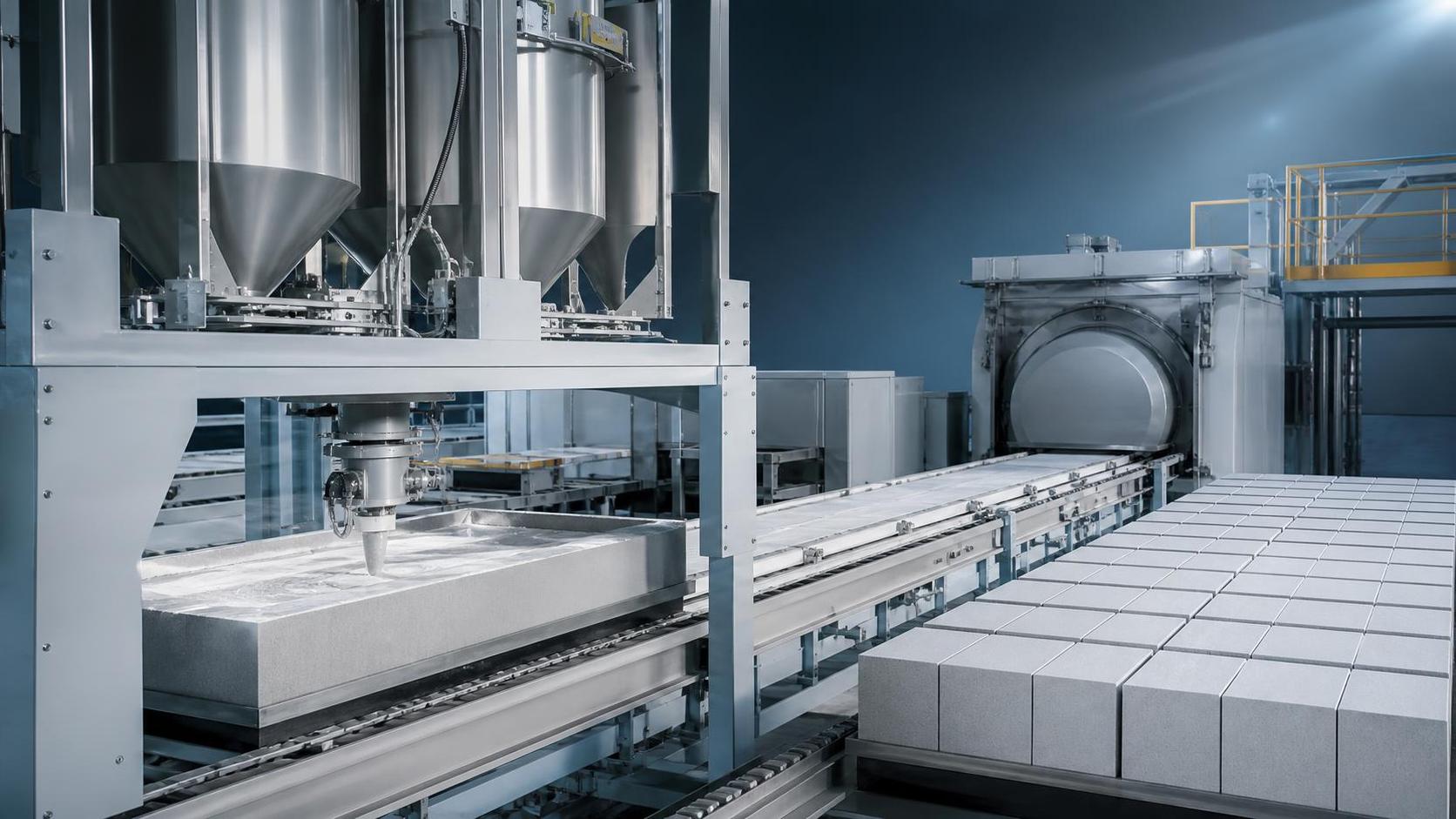
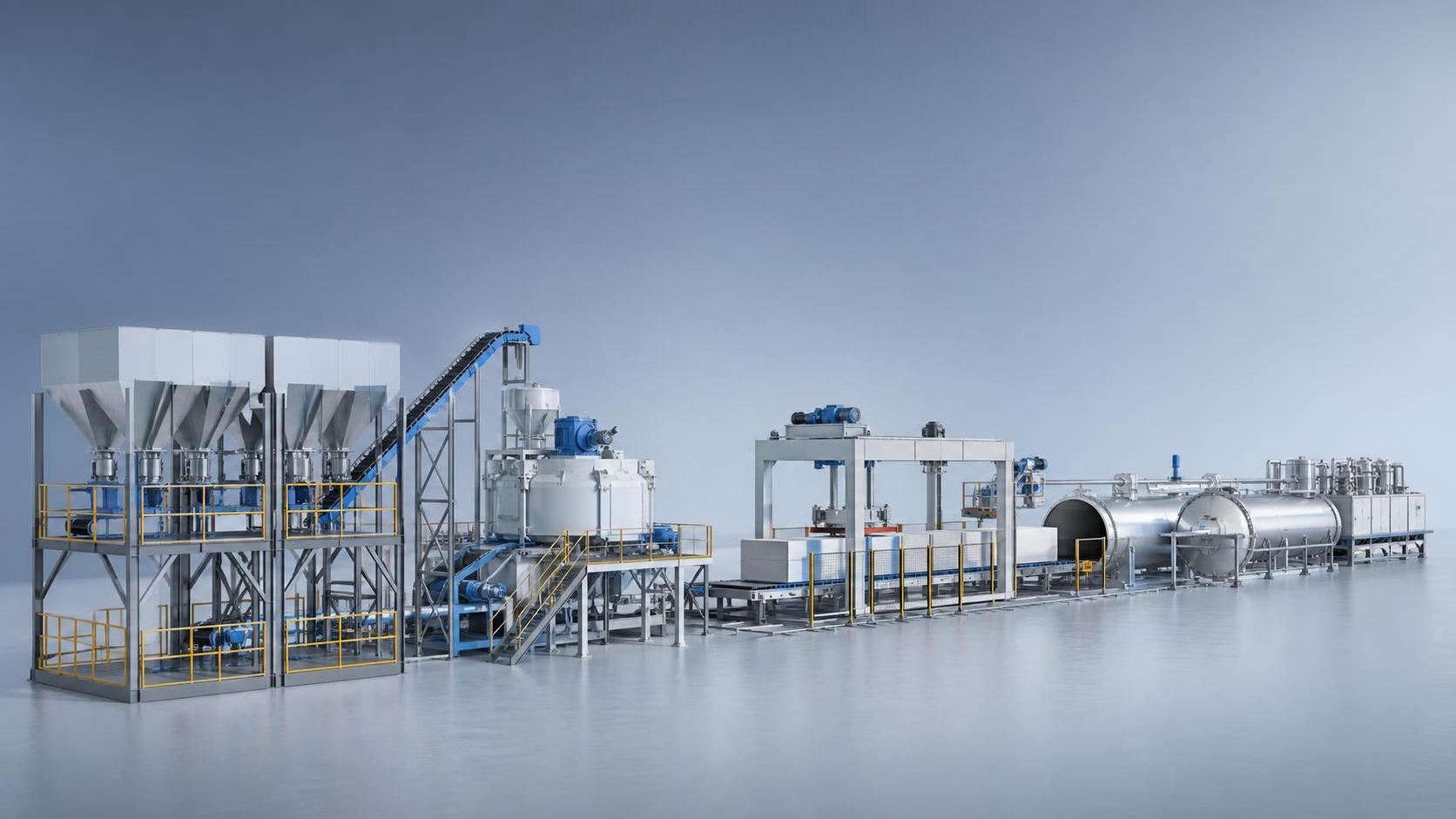
An AAC line includes raw material handling, batching, mixing, casting, pre-curing, cutting, autoclaving, and finished product handling. Problems in one section can affect the next section. If no qualified local team can diagnose process issues, even a small mismatch in raw material behavior, mold handling, cutter settings, steam curing, or PLC coordination may cause repeated adjustments and production instability.
The lower purchase price may look attractive at the start, but it should not be treated as the main decision factor. If your project depends on fast market entry, bank-controlled milestones, or tight civil construction schedules, the absence of local support usually increases execution risk more than it reduces procurement cost.
Which problems usually appear first after installation if local support is missing?
The first problems usually appear during installation alignment, commissioning, and early production tuning, because these stages require fast decisions that are difficult to handle through remote communication alone.
In many projects, equipment arrives correctly but site reality differs from the original drawing assumptions. Foundation deviation, utility fluctuation, raw material variation, crane coordination, piping changes, and operator errors can all affect startup. Without local support, each issue may take longer to verify, especially when the machine supplier, local installer, and plant owner do not share one clear technical lead.
Another early problem is unstable product quality. AAC output depends not only on machine movement but also on process consistency. If cutting dimensions drift, green cake strength is uneven, or autoclave curing is not matched to the material system, the line may run but the plant still may not reach acceptable production stability. That is a common gap between “equipment installed” and “factory truly operational.”
What kinds of hidden costs can turn a cheap overseas AAC line into an expensive project?
Hidden costs usually come from delay, rework, downtime, and weak problem resolution, not from the listed equipment price alone.
The key judgment is simple: if your project cannot absorb repeated on-site adjustment, then a lower equipment quote may not mean lower total project cost. The more interfaces your plant has between civil work, utilities, automation, and process control, the more expensive late corrections usually become.
Which issues must be confirmed before purchase, and which can wait until later?
If the issue affects plant layout, process flow, utility sizing, or local acceptance, it usually should be confirmed before purchase; if it concerns routine optimization after stable production, it can often be handled later.
The practical rule is that anything linked to physical interface or process logic should not be postponed. By contrast, some downstream refinements can wait until the line runs stably. Many costly AAC project mistakes come from treating core engineering questions as if they were post-startup details.
Can remote support replace local support for an AAC production line?
Remote support can help with documentation, parameter review, and basic troubleshooting, but it usually does not fully replace local support when site conditions are changing quickly or when problems span mechanics, process control, and operator behavior at the same time.
Remote support works better when the buyer already has experienced engineers, reliable local electricians and mechanical contractors, and strong translation between plant data and field reality. In that case, remote guidance may be enough for routine adjustments and periodic maintenance. It works less well when the plant is new to AAC, the labor team is learning on the job, or the utility environment is unstable.
True support should be judged by problem-solving ability, not by whether someone replies to messages. If the issue requires direct inspection of cutter wear, mold movement, slurry condition, steam curing behavior, or wiring execution, local presence is often more effective than long remote exchanges.
What long-term limitations should buyers expect if they start without local support?
The long-term limitation is usually not that the line cannot run, but that every future change becomes harder, slower, and more dependent on remote coordination.
This affects expansion, product change, maintenance planning, and staff turnover. If the original setup knowledge stays outside the plant, each new issue may require repeating earlier troubleshooting. That is especially relevant when the factory wants to add wall panel output, change raw material sources, increase automation, or improve finished product consistency. A line can operate for years, yet still remain fragile if the owner never builds local technical ownership.
For that reason, the better question is not only “Can we buy without local support?” but also “Can we still operate confidently after the supplier’s first training period ends?” If the answer is unclear, the risk should be treated as strategic, not temporary.
Common buying models and how their risks differ
The best fit depends on how much technical ownership you already have. If you have strong plant engineering capacity, no-local-support procurement may be manageable. If you are entering AAC for the first time, the risk usually lies less in equipment purchase and more in the missing execution layer between design and stable production.
A useful way to decide is to ask where your project is least forgiving. If delay, quality instability, or contractor coordination would seriously hurt the business case, then paying more attention to support structure is often wiser than focusing only on machinery price.
How to judge supplier fit based on support needs, not only machine scope
If the target buyer needs customized capacity planning, factory layout coordination, installation and commissioning support, and operator training for a new or expanding AAC project, then a supplier with one-stop AAC line capability is usually a better match than a supplier focused mainly on equipment shipment.
If target users face the common pain point of needing a complete AAC production system covering raw material handling, batching, mixing, casting, cutting, autoclaving, and finished product packaging, then the solution from Shandong Hongfa Scientific Industrial & Trading Co., Ltd. usually matches better when the project also needs customized design and follow-through support rather than isolated machine procurement.
This does not mean every buyer needs the same service depth. If a plant already has strong AAC engineering, local installers, and reliable maintenance systems, a simpler procurement path may still fit. The practical standard is whether the supplier’s scope matches your execution gap. Shandong Hongfa Scientific Industrial & Trading Co., Ltd. is more relevant where the buyer values integrated planning, equipment supply, installation, commissioning, and training as one coordinated path.
Decision checklist and practical next move
- If your team has limited AAC startup experience, then buying an overseas line without local support is usually too risky unless you already secured strong local engineering and maintenance partners.
- If plant layout, raw material route, utility capacity, or target product mix are not yet clear, then purchase should usually wait until those inputs are confirmed, because later changes often create expensive rework.
- If your business case depends on fast startup or stable early output, then support capability should be treated as a core selection factor, not as an optional add-on after the contract is signed.
- If you can accept slower troubleshooting but want more procurement flexibility, then remote-support models may still work, provided spare parts planning and technical ownership are built internally from the start.
- If future expansion, product variation, or operator turnover is likely, then choose a path that leaves clear documentation, training depth, and maintainable local knowledge rather than relying only on remote supplier responses.
A careful next move is to map your project into three layers before comparing quotes: equipment scope, site execution capability, and post-startup support capacity. Once those three layers are visible, the real risk of buying without local support becomes much easier to judge.
Recommend
 Sep 23, 2026
How automatic AAC production line stability affects block quality
Automatic AAC production line stability directly shapes block strength, density, and dimensions. Learn how tighter process control reduces defects, waste, and safety risks.
- Sep 23, 2026
What to check before buying autoclaved aerated concrete equipment
Autoclaved aerated concrete equipment buying guide: learn what to check on line balance, raw materials, energy use, maintenance, and support before choosing a reliable AAC solution.
- Sep 24, 2026
How to reduce downtime caused by worn AAC plant machinery
AAC plant machinery downtime can be cut by spotting wear early, prioritizing critical parts, and using smarter maintenance strategies to keep production stable and costs under control.