



How to Choose AAC Wall Panel Production Line Capacity
Choosing among AAC wall panel production line capacity options starts with one practical question: how many saleable panels need to leave the factory within a defined shift pattern, not how much slurry or how many molds can be processed in theory. Capacity figures often look clear on paper, but AAC wall panel output depends on the slowest part of the line, the curing cycle, the panel size mix, reinforcement handling, mold turnover, and the time lost in cutting, demolding, and maintenance. A line that appears large in brochure terms may operate like a mid-range line if autoclaves are undersized, mold circulation is tight, or panel specifications vary too much.
The first distinction to make is between nominal capacity and usable capacity. Nominal capacity is usually based on stable raw materials, repeatable panel dimensions, full mold utilization, and continuous scheduling. Usable capacity is shaped by daily conditions: moisture changes in sand or fly ash, variation in lime reactivity, delays in cage placement, steam availability, crane traffic, and the rate of rejected panels after cutting or autoclaving. When selecting an AAC wall panel production line capacity, the safer reference point is the output that can be maintained without pushing equipment into constant overload.
Capacity is tied to product mix, not only to tonnage or cubic meters
AAC wall panels are not identical to standard AAC blocks in production behavior. Once steel reinforcement, anti-corrosion treatment, cage assembly, and panel-specific cutting tolerances are involved, the line must carry more process steps and tighter coordination. A plant focused on long wall panels, roof panels, or floor panels may need a different balance of equipment than a plant producing mostly partition panels with a narrower thickness range.
Two lines with the same rated annual output can behave very differently if one runs a limited set of panel lengths and the other accepts frequent specification changes. Frequent switching affects mold arrangement, side plate preparation, reinforcement placement, cutting setup, and packing rhythm. If the expected order structure includes many custom dimensions, a slightly lower rated line with smoother internal flow may be more practical than a larger line that loses time to changeover.
At this stage, it helps to define the expected panel matrix in real terms:
- common thickness range, such as thin interior panels versus thicker load-bearing or enclosure panels;
- typical length distribution rather than only the maximum producible length;
- whether reinforced panels dominate output or only occupy a smaller share;
- surface quality expectations, because tighter appearance standards can slow cutting, stacking, and final inspection.
Without this matrix, comparing AAC wall panel production line capacity options becomes misleading because the same base line may perform differently under different product combinations.
The bottleneck is often outside the mixer
Many capacity discussions focus too early on batching and pouring, yet AAC panel plants are frequently constrained elsewhere. The mixer can finish a batch quickly, but if molds are not returning on time, if pre-curing does not reach the required green-cake strength, or if autoclaves are fully occupied, upstream speed adds little value.
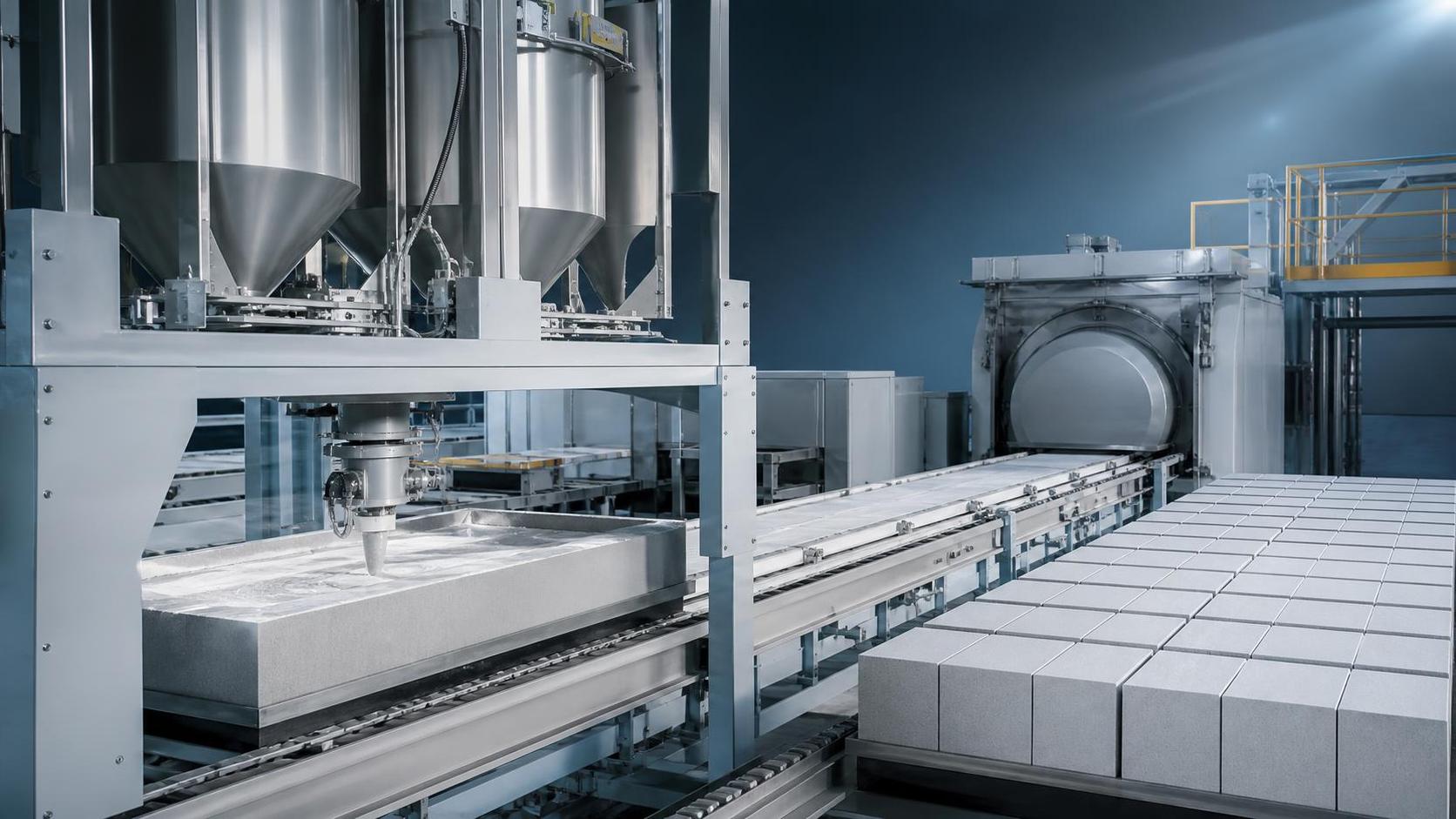
Autoclave arrangement deserves close attention because it usually determines the production rhythm. The number of autoclaves, their internal dimensions, steam pressure stability, loading pattern, and cycle duration all shape real output. A line with aggressive batching capacity but limited autoclave volume may create work-in-process accumulation rather than finished goods. That can increase yard congestion, crane waiting time, and handling damage.
Cutting is another frequent constraint. AAC wall panels require dimensional consistency, especially when reinforced elements and installation accuracy matter. If the cutting machine, tilting table, or cake conveying section cannot maintain stable tolerances at the pace set by casting, higher front-end capacity may only increase scrap or rework. In some layouts, reinforcement cage positioning and insertion can also become the limiting factor, especially when cage preparation is partly manual.
Small, medium, and large capacity options behave differently in practice
Smaller capacity lines usually offer lower initial infrastructure pressure and may be easier to fit into constrained sites. They can be suitable where panel sizes are relatively standardized and local demand develops in stages. Their weak point is usually sensitivity to downtime. When there are fewer molds, fewer autoclaves, and less buffering between sections, a short interruption in one area can affect the whole day’s output.
Medium-capacity lines often provide the most balanced operating window. They generally allow more mold circulation, better autoclave scheduling flexibility, and enough room to separate reinforcement preparation from casting pressure. This range can also leave space for maintenance without immediately collapsing the production plan. In many comparisons, medium capacity is easier to keep stable than a very compact line pushed to full load.
Large-capacity lines can reduce unit cost under stable demand and disciplined raw material control, but they create stricter requirements for utilities, internal transport, finished goods yard space, and dispatch organization. If shipping rhythm is inconsistent or if the market absorbs several panel types unevenly, large lines may spend too much time carrying inventory in the yard. Capacity then exists physically but not commercially.
For that reason, the largest option is not automatically the most efficient. An oversized line can tie up capital in molds, autoclaves, cranes, steam systems, and land while still operating below its balanced point. An undersized line, on the other hand, may appear economical at purchase stage but later suffer from overtime pressure, excessive mold turnover, and limited room to absorb maintenance stoppages.
Plant space changes the right answer
Space is often treated as a layout issue after equipment selection, but for AAC wall panels it should be considered at the same time as capacity. Panel production needs room not only for core machines but also for reinforcement processing, mesh or cage storage, anti-corrosion drying if used, mold circulation, green-cake transfer, autoclave loading tracks, finished panel stacking, and forklift or crane movement.
A line selected only by output target may become awkward to install if the site has narrow transport aisles, irregular building columns, or limited expansion room near the autoclave area. Long panel products are especially demanding because handling paths need to stay straight and collision risk rises when space is compressed. In a restricted workshop, theoretical capacity can be reduced by simple traffic conflicts between cranes, carts, and forklifts.
Transportation outside the workshop also matters. If finished panels are loaded onto standard trucks or containers, line capacity should be compared with realistic dispatch capacity at the gate. A plant able to produce quickly but unable to stage, protect, and load panels efficiently can face breakage, weather exposure, and yard blockage.
Raw material behavior can support or undermine planned output
AAC panel capacity is closely linked to the consistency of sand, fly ash, cement, lime, gypsum, aluminum paste or powder, and water control. Even when the equipment is correctly sized, unstable raw material behavior can slow the line. For example, if lime activity fluctuates, pre-curing time may need adjustment. If fineness of ground silica varies, slurry reactivity and cake structure may shift. If aluminum dosage drifts, pore formation and expansion height may become difficult to control.
These effects matter when comparing capacity options because larger lines usually expect steadier feed conditions. A compact or medium line may absorb moderate variation with less disruption simply because fewer parallel operations must stay synchronized. A high-output line, by contrast, can become vulnerable to small deviations repeated over multiple molds and cycles.
Before deciding on line size, it is useful to consider whether raw materials are likely to be sourced from one stable supplier or from several sources with variable quality. Storage design also plays a role. Limited silo capacity, poor moisture control in aggregate storage, or inadequate weighing precision can reduce the practical output of an otherwise adequate line.
Utilities are part of capacity selection
Steam, power, water, compressed air, and wastewater handling are not secondary details. AAC wall panel production line capacity options should be judged against the utility system that can be built and operated reliably. Steam shortage can stretch autoclave cycles. Power instability can disrupt cutting accuracy, mixer timing, crane movement, and reinforcement processing. Water quality may affect slurry consistency or cleaning efficiency in specific conditions.
Capacity should therefore be matched with boiler output, steam distribution losses, condensate recovery arrangement, transformer sizing, cable routes, backup strategy for critical equipment, and drainage design around slurry-intensive zones. A line can look technically compatible on equipment drawings while remaining difficult to sustain in daily production if the utility backbone is marginal.
Do not treat mold quantity as a simple multiplier
One common misjudgment is assuming that adding more molds automatically raises output in direct proportion. More molds help only if the rest of the line can support them: mixing pace, casting station rhythm, pre-curing slots, cutting throughput, autoclave positions, demolding space, and return circulation all need to stay aligned. Otherwise molds turn into waiting inventory inside the factory.
This is particularly relevant for AAC wall panels because reinforcement installation can slow mold turnaround. If cage placement accuracy is strict and panel types vary, mold preparation may take longer than expected. A balanced capacity study should look at the full circulation time of each mold, from cleaning and assembly to final release and return, rather than counting molds as static assets.
Installation and commissioning affect early capacity more than expected
Two lines with similar design capacity may reach stable operation at different speeds depending on installation complexity and local construction conditions. Heavy autoclaves, rail alignment, crane commissioning, mold matching, cutting calibration, steam pipe insulation, and slurry system sealing all influence the startup period. If the site has weak foundation conditions, long utility connection distances, or difficult lifting access, a very large line may introduce more commissioning risk than its output advantage justifies.
Panel lines also require careful synchronization between mechanical equipment and process control logic. Level sensors, weighing systems, temperature monitoring, timing sequences, and interlocks need stable tuning before the line can approach normal output. A capacity choice that leaves no tolerance for commissioning adjustments may create unrealistic startup expectations.
Maintenance capacity should be considered alongside production capacity
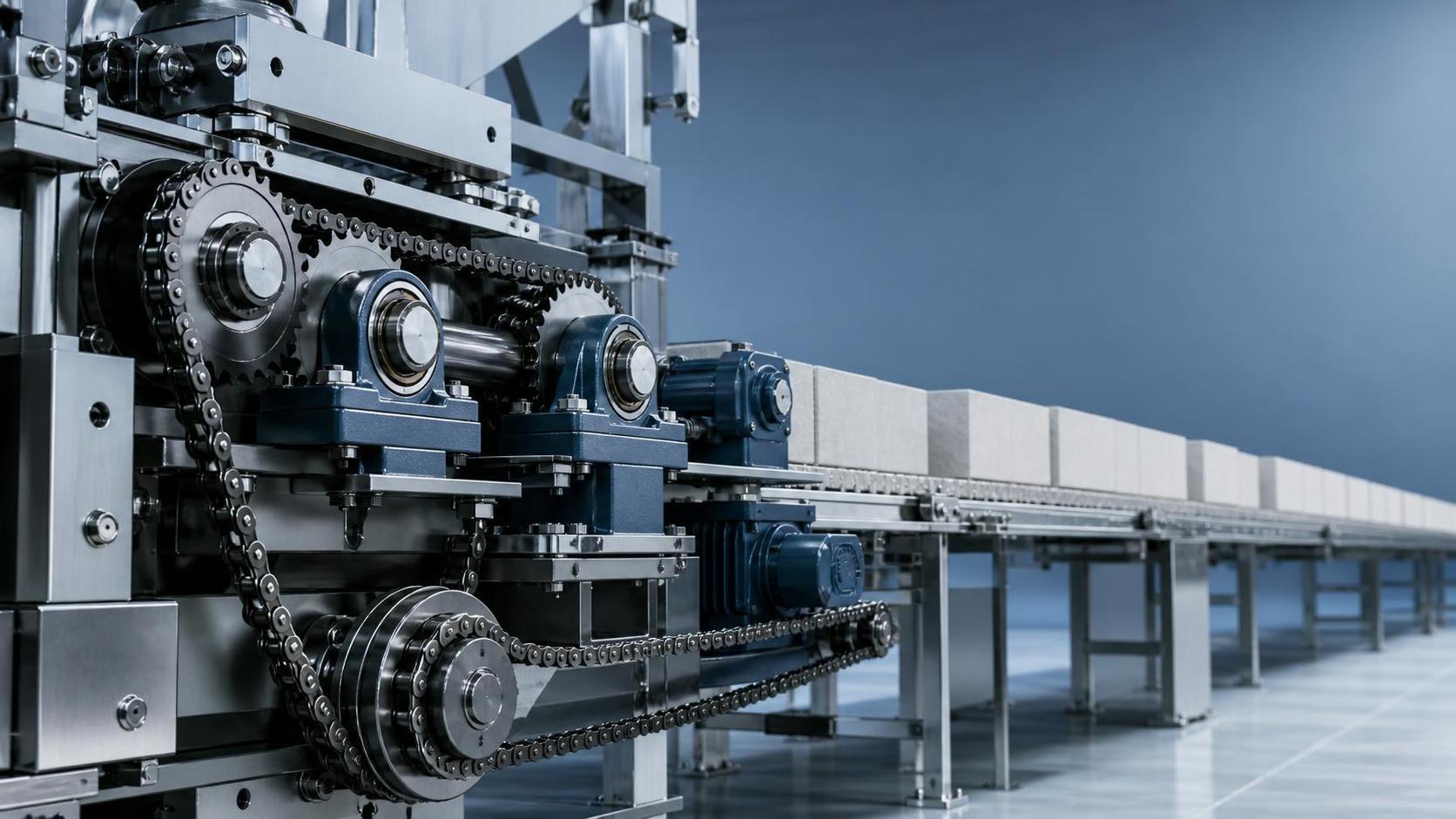
High output equipment imposes a heavier maintenance rhythm on mixers, cutting wires or blades, slurry pumps, bearings, reducers, molds, autoclave door seals, cranes, and rail systems. If spare parts lead times are uncertain or if maintenance access around key machines is poor, a larger line may experience longer recovery time after failures. In AAC wall panel plants, even small alignment issues can influence dimensional accuracy or panel edge quality.
It is useful to compare capacity options with the likely maintenance regime rather than with ideal continuous operation. Questions worth resolving include whether wear parts can be changed without long shutdowns, whether autoclave valves and seals are easy to service, whether mold cleaning is straightforward, and whether reinforcement processing equipment can be maintained independently from casting operations.
A line that can be maintained predictably often delivers better yearly output than a line with a higher nominal rating but complicated service interruptions.
When capacity comparisons become meaningful
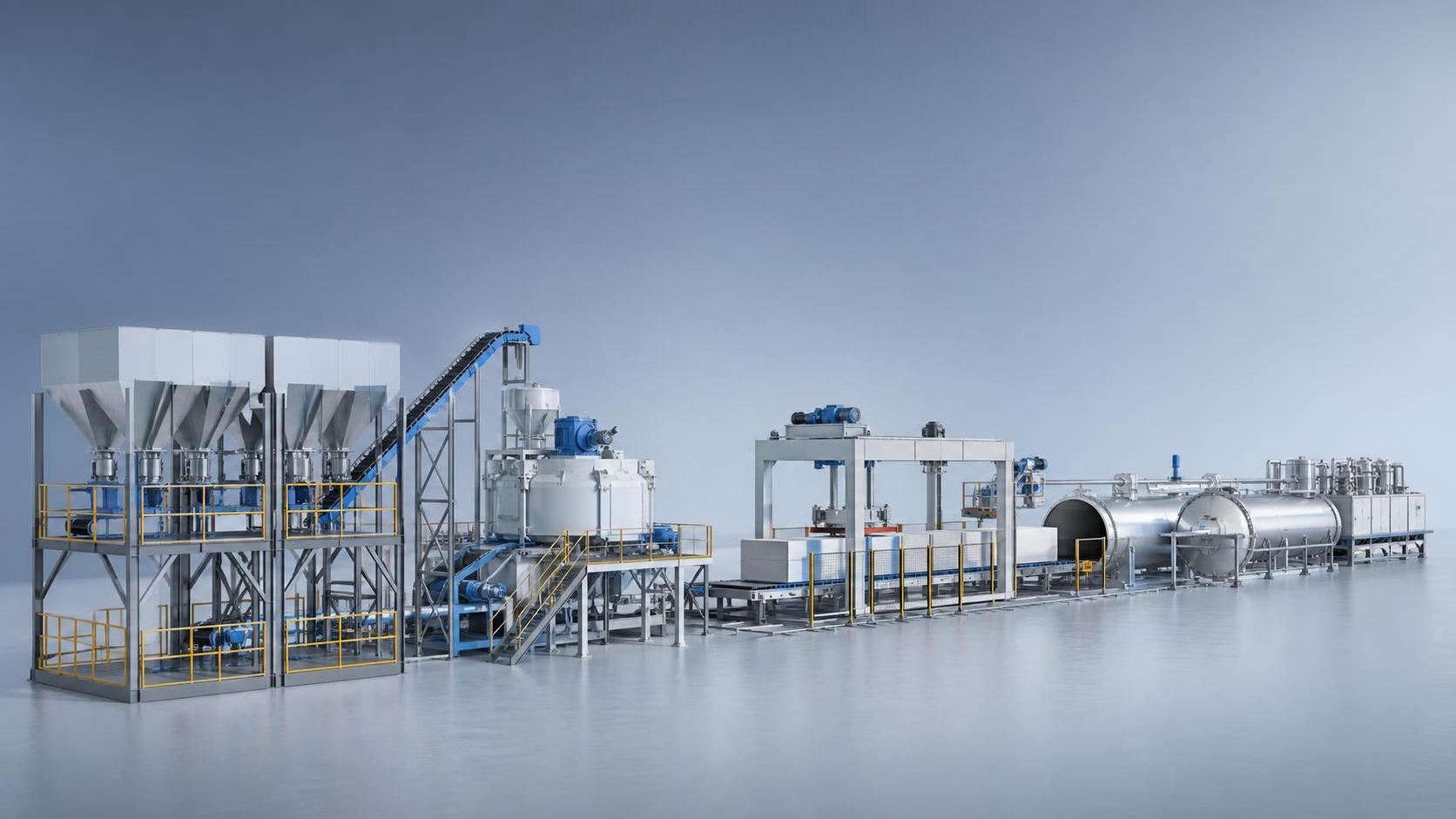
A useful comparison between AAC wall panel production line capacity options usually combines several linked views instead of a single output figure. One view looks at process balance: batching, casting, pre-curing, cutting, autoclaving, demolding, and packing. Another looks at product structure: dimensions, reinforcement ratio, and order variability. A third examines site realities: land, workshop shape, utilities, loading routes, and storage. Once these are placed together, line size decisions become less abstract.
In many situations, the right capacity is the one that can maintain orderly flow with the intended panel mix, available utilities, and realistic maintenance intervals. If future expansion is likely but near-term demand is still uncertain, modular planning may be preferable to selecting a very large line from the beginning. If orders are already concentrated around a stable set of panel specifications, a larger and more specialized arrangement may be easier to justify.
The final choice should leave room for process stability. AAC wall panel manufacturing rewards balance more than headline numbers. A line that keeps molds circulating smoothly, cures consistently, cuts accurately, and moves finished panels without congestion will usually outperform a mismatched line that looks larger on paper.
Recommend
 Sep 23, 2026
How automatic AAC production line stability affects block quality
Automatic AAC production line stability directly shapes block strength, density, and dimensions. Learn how tighter process control reduces defects, waste, and safety risks.
- Sep 23, 2026
What to check before buying autoclaved aerated concrete equipment
Autoclaved aerated concrete equipment buying guide: learn what to check on line balance, raw materials, energy use, maintenance, and support before choosing a reliable AAC solution.
- Sep 24, 2026
How to reduce downtime caused by worn AAC plant machinery
AAC plant machinery downtime can be cut by spotting wear early, prioritizing critical parts, and using smarter maintenance strategies to keep production stable and costs under control.