

What Are the CE Certification Requirements for AAC Equipment
What Are the CE Certification Requirements for AAC Equipment
Understanding the autoclaved aerated concrete equipment CE certification requirements is essential for manufacturers and buyers aiming to enter the European market with confidence. From safety standards and technical documentation to conformity assessment and machine compliance, CE certification directly affects market access, project reliability, and long-term operational performance. This article explains the key requirements and what AAC equipment suppliers should prepare to meet them efficiently.
For AAC equipment, CE marking is not just a label attached before shipment. It is a legal declaration that the machine or production line meets applicable European requirements. In practice, that means the manufacturer has identified the relevant EU legislation, assessed risks, prepared technical documentation, and issued the required conformity documents. For buyers, this matters because an incomplete CE file can delay customs clearance, site commissioning, insurance approval, or later plant audits.
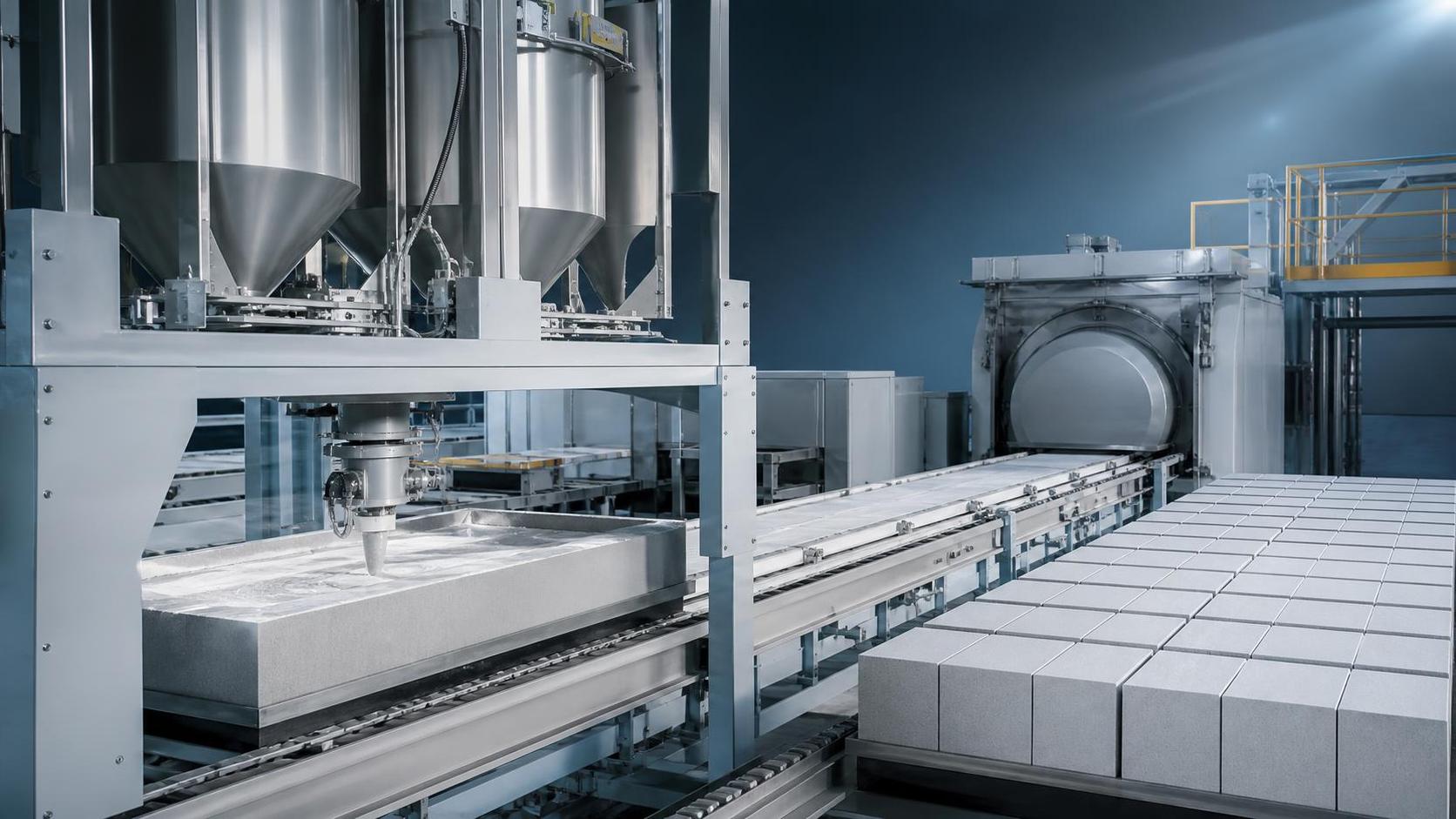
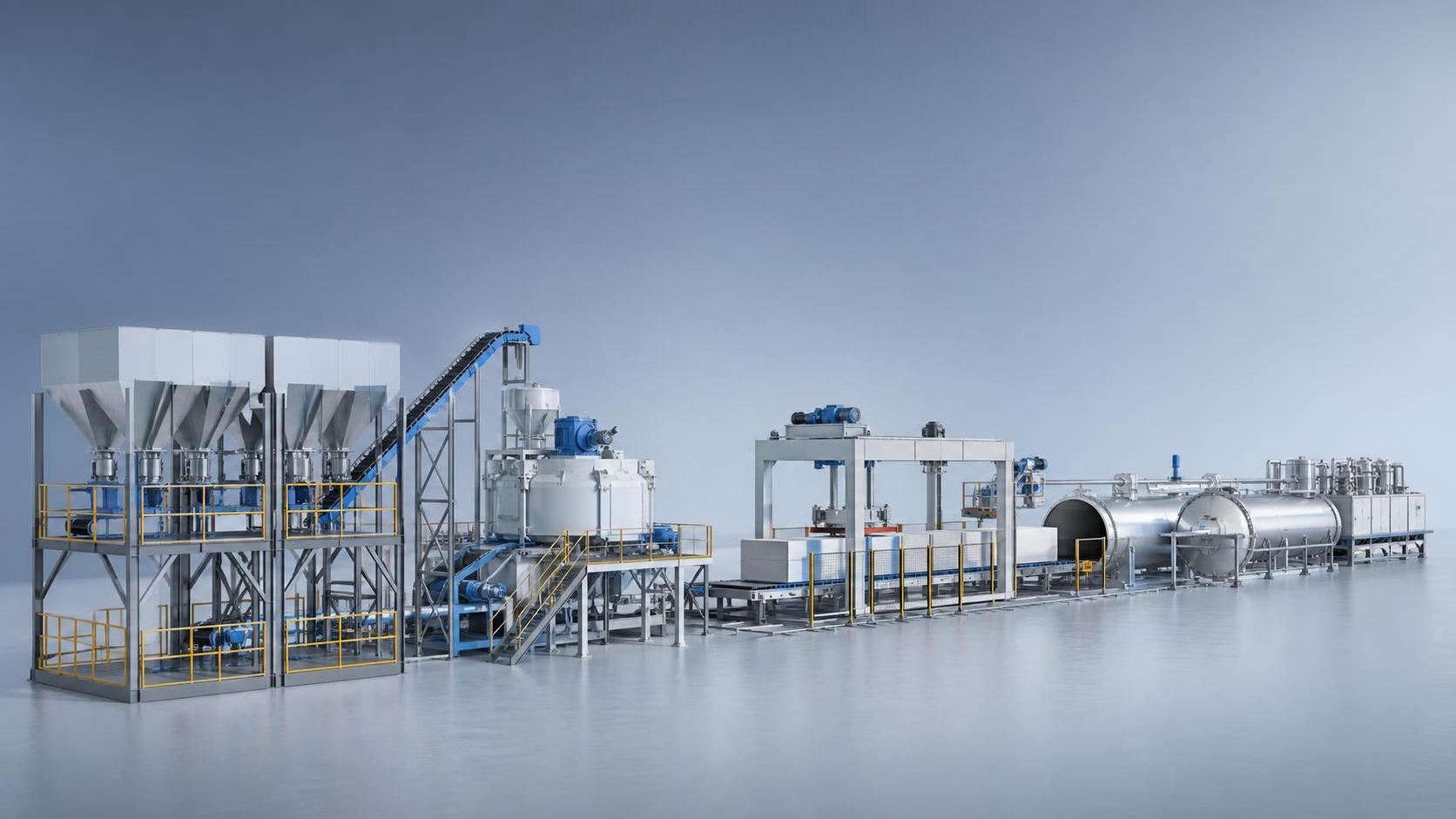
AAC plants are rarely a single machine. A typical line may include batching, mixing, pouring, pre-curing, cutting, autoclaving, conveying, packing, electrical control systems, and sometimes auxiliary systems for dust collection or steam handling. That complexity is why CE compliance for AAC machinery is usually less about one certificate and more about how the full equipment scope is defined.
The starting point: which EU rules apply
When people ask about CE certification for AAC equipment, they often expect a single checklist. The reality is more technical. The applicable requirements depend on machine design, power systems, automation architecture, and whether the supply is a stand-alone machine or an integrated line.
In many AAC projects, the core legislation usually includes the Machinery framework, along with rules related to electrical safety, electromagnetic compatibility, and in some cases pressure-related components. If the line includes pressure vessels, steam systems, or specific safety devices, additional directives or regulations may come into play. This is one reason experienced suppliers define equipment boundaries early: where the supplier’s responsibility starts and stops can affect the CE route.
That distinction is especially important for modular deliveries. A cutting machine, a mold circulation section, and an autoclave handling system may each be assessed as separate assemblies, but once they are integrated into one operating line with shared controls and interlocks, the conformity approach may need to reflect the complete system behavior.
Risk assessment is the backbone, not paperwork after the fact
A common mistake in industrial equipment export is treating CE as a documentation task at the end of production. For AAC equipment, that approach creates problems quickly. These lines involve moving cutters, lifting systems, molds, high-temperature autoclaving areas, wet-process zones, and operator access points that change during maintenance. The manufacturer is expected to perform a structured risk assessment and then reduce risks through design, safeguarding, controls, warnings, and instructions.
In practical terms, the CE file should show that foreseeable hazards were considered. Typical concerns include crushing and shearing points on conveyors and mold transfer equipment, hot surfaces and steam exposure near autoclave sections, electrical hazards in control cabinets, unexpected restart after emergency stops, and access risks during cleaning or blade replacement. It is not enough to say that operators should be careful. The design itself needs to show appropriate protective measures.
For serious buyers, this is often one of the best indicators of supplier maturity. A supplier that can clearly explain safety circuits, interlock logic, guarding philosophy, lockout provisions, and residual risks usually understands machine compliance better than one that only promises a CE sticker.
Technical documentation: what should exist behind the CE mark
The CE mark must be supported by a technical file. That file is not always handed over in full to the buyer, but the manufacturer must have it available if authorities request it. For AAC equipment, the documentation package commonly includes general arrangement drawings, electrical schematics, control descriptions, bills of key safety components, risk assessment records, applicable standards list, operating instructions, maintenance instructions, and the EU Declaration of Conformity.
The operating manual matters more than many purchasers expect. It should not read like a sales brochure. For complex building materials machinery, the instructions should cover intended use, prohibited use, operator roles, installation conditions, emergency procedures, maintenance intervals, residual risks, spare parts affecting safety, and commissioning prerequisites. If the equipment is supplied to Europe, language requirements also need attention. Manuals and safety information generally need to be available in the language required by the destination market.
Another overlooked area is traceability. If a production line is delivered in sections over time, serial identification, drawing revision control, and document consistency become important. A mismatch between the installed control cabinet and the schematic in the file can become a real problem during inspection or troubleshooting.
Harmonized standards help prove compliance
CE marking is based on legal requirements, but harmonized standards are the usual engineering route for demonstrating conformity. For AAC equipment, there may not be one single product standard covering every section of the line. Instead, manufacturers often work with a combination of machinery safety standards, electrical standards for industrial machines, and standards related to guards, emergency stops, safety distances, and control system design.
That means buyers should ask a practical question: which standards were actually used in the design review? A serious supplier should be able to identify them, explain how they were applied, and clarify any limitations. If some parts of the line were sourced from third parties, the integrator should also show how those subsystems were incorporated into the overall safety concept.
This is where established machinery manufacturers tend to have an advantage. A company with long experience in heavy building materials equipment usually has stronger internal coordination between design, fabrication, control engineering, testing, and service. Shandong Hongfa Scientific Industrial & Trading Co., Ltd., for example, has been producing construction machinery since 1990 and works across multiple product lines including aerated concrete block production lines, block machines, and concrete batching plants. With four production bases in Shandong and Guangxi, a large engineering and technical team, and long-term quality system practice, it reflects the kind of manufacturing environment where compliance work is more likely to be embedded into process control rather than handled as an export formality.
Does a notified body need to be involved?
Not always. Many industrial machines can be self-declared by the manufacturer when the applicable conformity route allows it and the required technical evidence is in place. However, whether notified body involvement is necessary depends on the equipment type, safety category, and applicable legislation. For standard AAC machinery configurations, manufacturers often issue the Declaration of Conformity on their own responsibility. But if the equipment includes particular regulated components or falls into a category requiring external assessment, the process changes.
This is exactly why buyers should be cautious with simple claims like “full CE approved.” The better question is: what is the conformity route, and what documents support it? In industrial procurement, precision beats vague reassurance.
Line integration creates real compliance risk
Many compliance problems do not originate in the individual machine. They appear at the interfaces. One vendor supplies the mixer, another the autoclave section, a third the packing line, and the site contractor modifies cable routing or adds local guarding. Once operating logic crosses equipment boundaries, someone must take responsibility for the integrated safety performance.
For AAC projects, typical interface issues include emergency stop chains not covering the full hazard zone, inconsistent safety PLC logic between sections, missing restart warnings after jams, and poor access protection in transfer areas. Buyers importing lines into Europe should clarify early whether the supplier is acting as machine manufacturer, line integrator, or component supplier only. That commercial definition affects the compliance burden later.
This is also why experienced manufacturers invest in design discipline. Hongfa’s emphasis on point-like quality tracking, engineering support, and internal technical development is relevant here. Its stated patent portfolio and research-based approach do not replace CE obligations, but they do suggest the kind of technical infrastructure needed for complex equipment standardization and document control.
What buyers should verify before placing an order
If CE compliance matters to your project, it should be discussed before contract signing, not after factory acceptance. A few checks can prevent expensive delays:
- Define the exact supply scope and identify whether the CE mark applies to a single machine, a sub-assembly, or the complete line.
- Request a list of applicable directives or regulations and the main harmonized standards used.
- Confirm what documents will be delivered: Declaration of Conformity, manuals, electrical drawings, spare parts lists, and safety-related instructions.
- Check whether local language documentation is included where required.
- Clarify responsibility for on-site integration, commissioning changes, and any modifications made after shipment.
These are not legal niceties. They affect installation schedules, operator training, spare parts management, and insurance discussions later on.
A final point that is easy to miss
CE certification for AAC equipment is often discussed as if it ends at shipment. It does not. If the line is modified on site, if guarding is removed, if control logic is changed during commissioning, or if independently sourced equipment is added into the operating sequence, the original conformity basis may need to be reviewed. In other words, compliance is partly a design issue and partly a change-management issue.
That is why experienced machinery suppliers are usually evaluated on more than manufacturing capacity alone. Their ability to maintain engineering records, coordinate across electrical and mechanical disciplines, and support documentation over the project lifecycle can be just as important. Companies such as Hongfa, with decades in building materials machinery, multiple production bases, ISO9001-certified quality management, and a large technical workforce, are relevant to this conversation not because experience guarantees compliance, but because CE for heavy industrial equipment is much easier to manage when the supplier already operates with process discipline.
If you are reviewing an AAC project for the European market, the safest next step is usually to verify three things in parallel: the exact equipment scope, the intended conformity route, and the documentation package that will exist before shipment and after commissioning. Those details tell you far more than a general promise of CE readiness.
Recommend
 Sep 23, 2026
How automatic AAC production line stability affects block quality
Automatic AAC production line stability directly shapes block strength, density, and dimensions. Learn how tighter process control reduces defects, waste, and safety risks.
- Sep 23, 2026
What to check before buying autoclaved aerated concrete equipment
Autoclaved aerated concrete equipment buying guide: learn what to check on line balance, raw materials, energy use, maintenance, and support before choosing a reliable AAC solution.
- Sep 24, 2026
How to reduce downtime caused by worn AAC plant machinery
AAC plant machinery downtime can be cut by spotting wear early, prioritizing critical parts, and using smarter maintenance strategies to keep production stable and costs under control.