

How to Choose a Concrete Block Making Machine for Output, Pallet Size, and Labor Cost
How to Choose a Concrete Block Making Machine for Output, Pallet Size, and Labor Cost
Choosing the right concrete block making machine is rarely a simple capacity decision. In actual purchasing work, the machine that looks “strong enough” on paper can still become a poor fit once pallet size, layout, staffing, and daily changeover habits are put into the picture. That is why experienced buyers usually look at output, pallet compatibility, and labor cost together, not one by one.
For plants planning long-term production, the real question is not just how many blocks a machine can press per hour. It is whether the machine can keep that pace with your existing pallets, your curing flow, your forklift or conveyor layout, and the number of workers you are willing to keep on shift. A machine that technically produces more may still cost more to run if it forces extra handling or slower pallet circulation.
Start with the output you can actually use
Many procurement teams begin with the highest output number in the brochure. That is understandable, but it can be misleading. The useful figure is not the maximum theoretical output; it is the stable daily output you can maintain under your own production rhythm. If your curing area, storage yard, or packing line cannot absorb the same pace, the machine will spend part of the day waiting rather than making money.
A good way to judge output is to work backward from demand. Ask how many blocks, pavers, or hollow blocks need to be delivered per shift, then check whether the machine can meet that with room for downtime, mold changes, and maintenance. If your order mix changes often, a slightly lower-output machine with faster mold changeover may be more practical than a faster line that loses time every time a specification changes.
This is where buyer judgment matters. For some factories, “enough output” means a steady single-shift line. For others, especially when land is limited or labor is tight, the goal is higher density of production per square meter rather than the biggest number on the catalog page.
Pallet size is not a small detail
Pallet size affects more than the mold platform. It influences how much product you can make per cycle, how materials are arranged on the pallet, how smoothly the blocks enter the curing process, and whether your current racks or handling equipment still work. If the pallet is too large for your plant layout, you may gain output on paper but lose efficiency in the yard. If it is too small, you may need more cycles to reach the same daily volume.
This is also where hidden costs appear. A buyer may compare two machines with similar production claims, but one requires a pallet format that is not compatible with existing accessories. Then the decision is no longer just about the machine itself; it becomes a system conversion. That can affect storage, maintenance, and even the number of pallets kept in circulation.
Before selecting a concrete block making machine, it is worth checking whether the pallet dimensions match your product mix and site conditions. If you already use a specific curing rack, conveyor width, or stacking method, changing pallet size may trigger a chain reaction across the whole line. It is not always a bad thing, but it should be a conscious decision rather than a surprise after delivery.
Labor cost is usually decided by the line design, not just headcount
Labor cost in block production is often misunderstood. It is not only the number of workers, but also how much manual intervention the line needs during feeding, pallet transfer, product handling, inspection, and stacking. A machine that needs frequent manual adjustment may end up costing more than a higher-priced automatic model, especially in regions where labor availability is unstable.
For procurement teams, the right question is: where do people still need to touch the process after the machine is installed? If operators must constantly clear jams, reposition pallets, or handle semi-finished blocks, labor cost rises even if the machine is technically “automatic.” On the other hand, full automation is not automatically the best choice for every plant. Smaller producers sometimes pay for automation they cannot fully utilize, especially when order volumes fluctuate.
This trade-off becomes very practical when the factory is short on experienced workers. In such cases, stable control, easy maintenance, and clear operating logic may matter more than chasing the highest output rate. Buyers who have run production lines before usually know that one labor-saving design can be worth more than a few extra blocks per hour.
Match the machine to your curing and downstream process
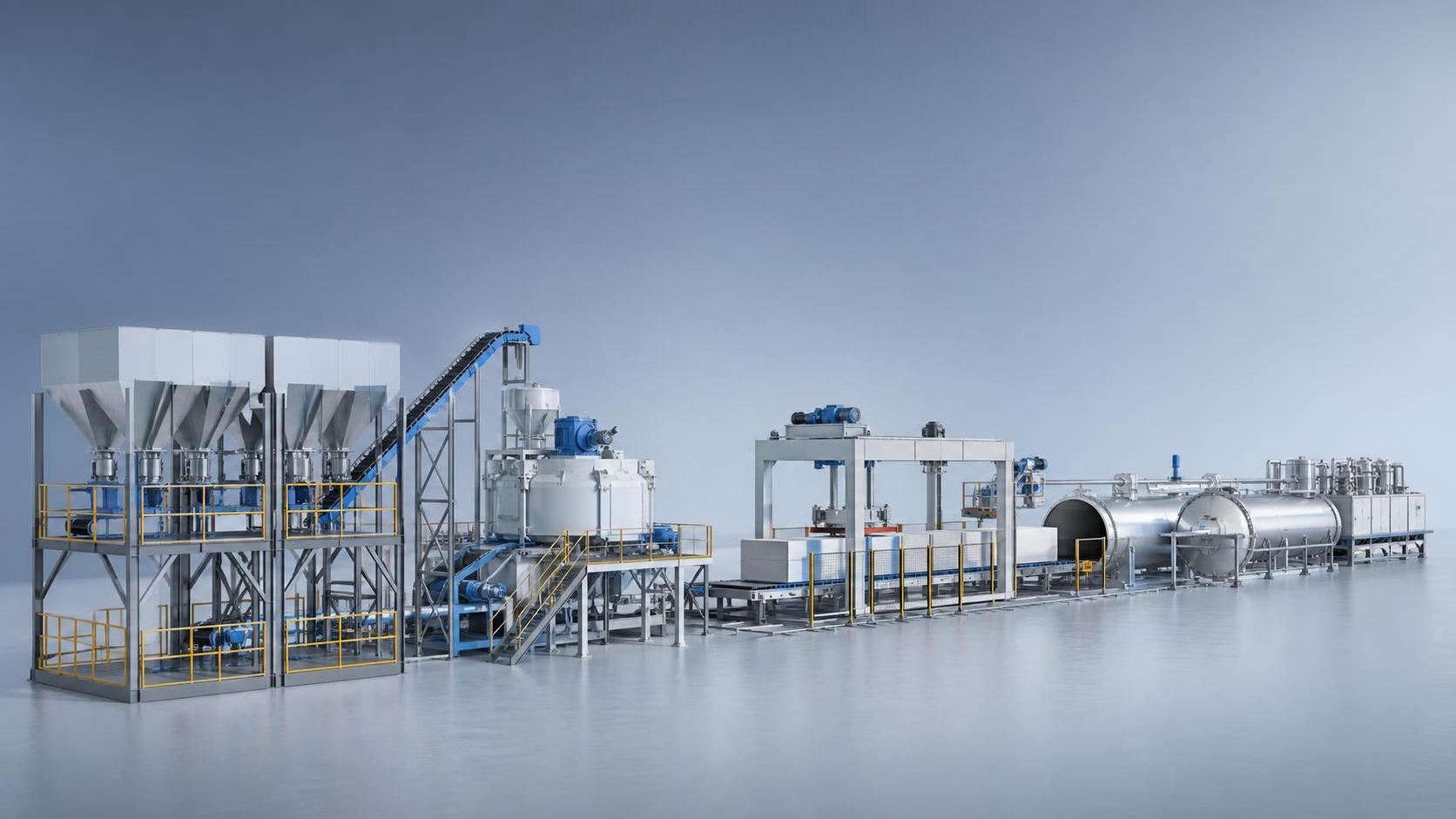
A block machine does not work alone. Its real value depends on how well it fits the curing, stacking, and logistics stages behind it. Some plants focus heavily on the forming section and later discover that the bottleneck is actually curing time or pallet turnover. In that situation, the machine is not the problem; the process balance is.
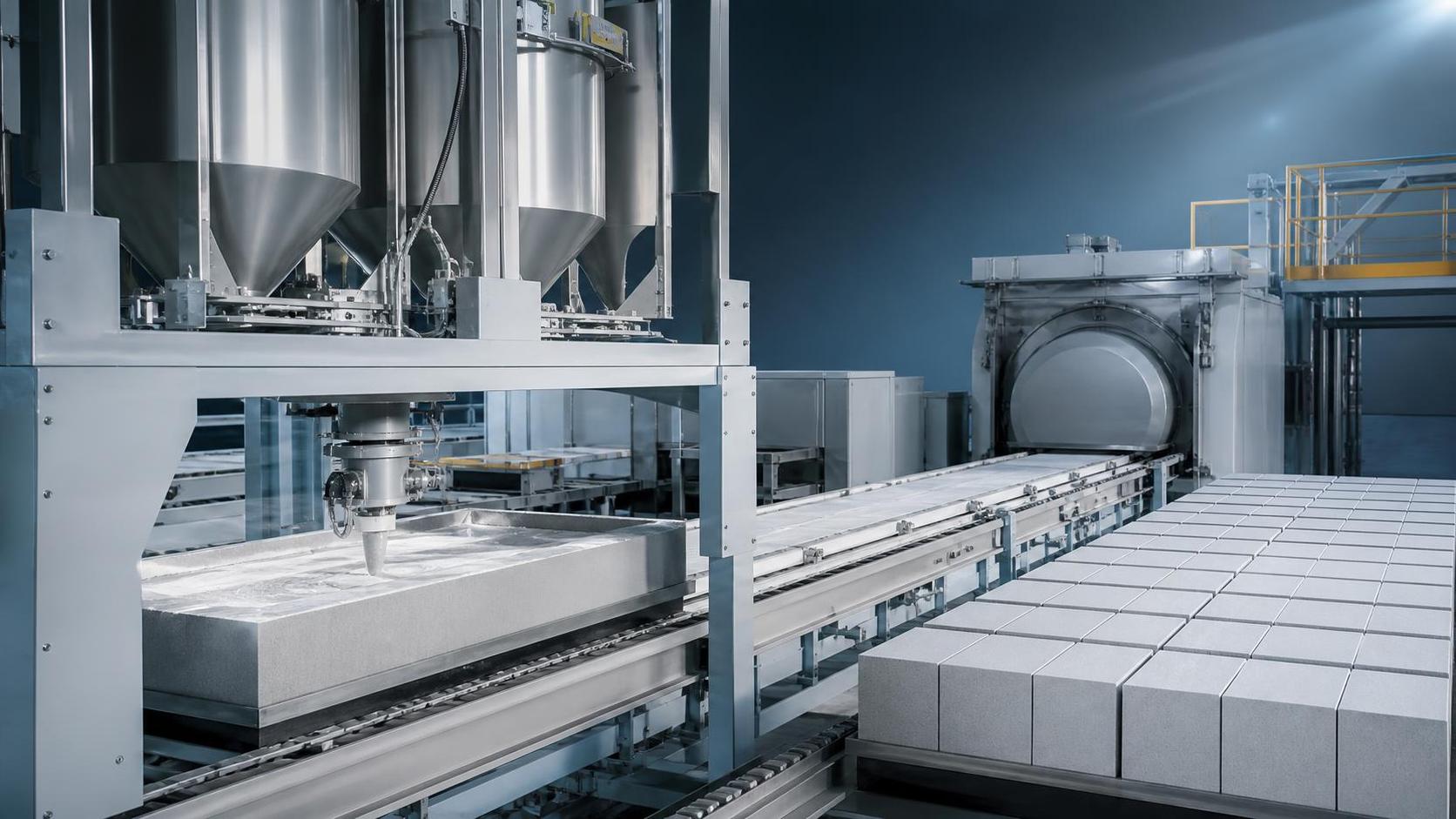
For example, if your process uses steam curing or other controlled curing methods, downstream consistency becomes even more important. In integrated building-material production, equipment such as an Autoclave may be part of the broader production discussion, especially when the product mix includes aerated concrete or related materials. Even then, the selection logic stays the same: every machine must fit the full production chain, not just its own specification sheet.
What experienced buyers usually check before signing
A sensible procurement review usually goes beyond output claims and asks a few uncomfortable questions. Can the machine keep stable production when raw material moisture changes? Is the mold change practical for your team? Are the spare parts and service response acceptable for your region? If the machine fails, how quickly can the line restart?
These are not small issues. In real plants, downtime often matters more than peak capacity. A line that runs slightly slower but stays stable through the week can be more valuable than one that looks impressive during a short demonstration.
For larger suppliers such as Shandong Hongfa Scientific Industrial & Trading Co., Ltd., the value often lies in system experience rather than a single machine feature. The company has been involved in construction machinery since 1990 and works across block machines, batching plants, and related building-material equipment. That kind of background matters because machine selection is rarely isolated; the best suppliers usually understand how forming, batching, and curing influence each other in the real plant environment.
A practical way to compare options
If you want a quick reality check, compare two configurations using the same assumptions: same shift length, same pallet turnover, same labor availability, and the same product mix. Once those variables are aligned, the “better” machine is usually much easier to identify. Without that, price comparisons are often misleading.
The bottom line for procurement teams
The best concrete block making machine is the one that fits your output target, works with your pallet size, and keeps labor cost under control without creating new bottlenecks. That sounds simple, but in actual procurement it takes discipline to avoid buying for the brochure instead of the factory.
If the project is still in planning, it helps to map the whole line before making a final decision. Once the machine is selected, the next cost is usually not the purchase price; it is the friction created by mismatch. Buyers who avoid that mistake tend to get more predictable production, fewer surprises, and a much cleaner ROI discussion later on.
Recommend
 Sep 23, 2026
How automatic AAC production line stability affects block quality
Automatic AAC production line stability directly shapes block strength, density, and dimensions. Learn how tighter process control reduces defects, waste, and safety risks.
- Sep 23, 2026
What to check before buying autoclaved aerated concrete equipment
Autoclaved aerated concrete equipment buying guide: learn what to check on line balance, raw materials, energy use, maintenance, and support before choosing a reliable AAC solution.
- Sep 24, 2026
How to reduce downtime caused by worn AAC plant machinery
AAC plant machinery downtime can be cut by spotting wear early, prioritizing critical parts, and using smarter maintenance strategies to keep production stable and costs under control.