



What Are the Risks of Buying an AAC Line Without Local Support
Buying an AAC line cheaply can become expensive very fast
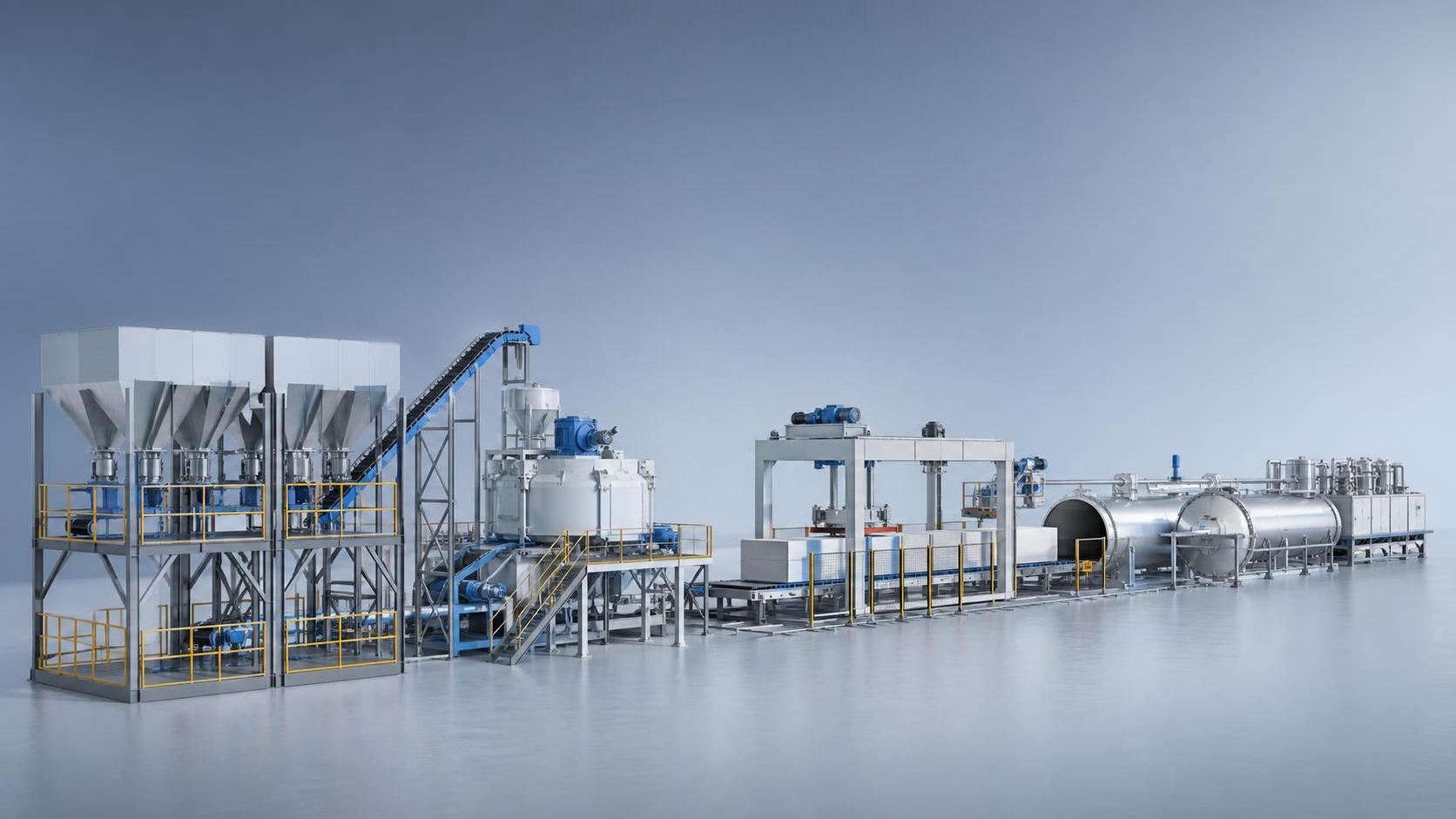
On paper, an AAC production line often looks like a straightforward equipment purchase: mixer, molds, cutting section, autoclaves, control system, and a promised output target. In actual operation, it is much closer to a coordinated industrial system where installation quality, recipe adjustment, steam matching, operator habits, and maintenance response all affect whether the plant runs smoothly or keeps stopping for “small issues” that are never really small.
That is why buying an AAC line without local support carries more risk than many first-time investors expect. The machine itself may be solid. The drawings may look complete. Remote communication may seem enough before shipment. But once the equipment lands on site, local conditions begin to matter: civil foundation tolerance, power stability, steam source quality, raw material variation, crane arrangement, local labor skill, even climate. If no one can respond quickly on the ground, delays and misjudgments tend to multiply.
A related question often comes up from smaller investors: Is tile making machine suitable for small scale construction material business? In many cases, that question is really about operational complexity. A tile making machine may be easier to install, train for, and maintain than a full AAC line. AAC can be profitable and technically mature, but it is not a casual plug-and-play investment. The higher the system complexity, the more local service starts to matter.
The biggest risk is not breakdown. It is slow problem solving.
Most buyers worry about major equipment failure. In reality, long production downtime is more often caused by slow diagnosis of ordinary problems. A cutting section that loses dimensional consistency, a slurry density that is not being controlled properly, a mold circulation bottleneck, or a control logic mismatch between design and actual site sequence can stop output just as effectively as a motor failure.
When there is no local support team, every issue becomes a remote troubleshooting exercise. Videos are sent. Operators describe symptoms in broad terms. The supplier asks for electrical readings, photos of parts, or process records that may not be available. Time zone differences make it worse. What could have been identified in two hours by an experienced field engineer can turn into three lost production days.
For an AAC plant, this is especially painful during commissioning. Early-stage problems are rarely isolated. A curing issue may relate to raw material fineness, aluminum dosing, temperature control, cutting timing, or steam management. Without someone physically reviewing the line, teams often keep adjusting the wrong variable.
Installation delays usually start before the first machine is assembled
A common misunderstanding is that local support only matters after startup. Actually, the first major risk appears during installation planning. AAC lines depend on alignment between civil work and machinery. If foundations, anchor positions, rail levels, autoclave arrangement, slurry pipelines, cable routes, and maintenance access are not checked against real site conditions, the installation team can lose weeks making modifications.
Remote suppliers can provide drawings, but drawings do not see site mistakes. A local service engineer or partner usually catches issues early: a platform is too narrow for maintenance, a pipe run creates unnecessary pressure loss, the mold transport path conflicts with forklift traffic, or the steam pipeline insulation plan is incomplete. These are not dramatic technical failures. They are practical field problems, and they are exactly the kind of problems that damage project schedules.
Experienced manufacturers in building materials equipment generally understand this. Companies with a long manufacturing background and broader engineering capacity tend to treat AAC as a system project rather than only a machine sale. Shandong Hongfa Scientific Industrial & Trading Co., Ltd., for example, has been in construction machinery manufacturing since 1990 and works across several product lines including aerated concrete block production lines, block machine lines, quartz stone machinery, and concrete batching plants. That kind of multi-line industrial experience matters because site integration issues are rarely limited to one machine frame or one motor.
Training gaps cost more than many buyers budget for
Even a well-built AAC line will underperform if the operators only know which buttons to press, but not why process windows matter. Local support often makes the difference between basic startup training and usable operating knowledge.
AAC production is sensitive to consistency. Operators need to understand batching discipline, mold preparation, pre-curing judgment, cutting wire condition, autoclave scheduling, and routine inspection. Maintenance personnel need to know not just replacement procedures, but also early warning signs. If training is rushed, highly dependent on translation, or delivered remotely without follow-up, the plant may technically run while still suffering from unstable output, high reject rates, and unnecessary wear.
This is one reason some smaller construction material investors start by asking whether a tile making machine is suitable for a small scale construction material business. It can be, depending on product type, local demand, labor skills, and capital plan. The key point is that simpler machinery usually places less pressure on operator training and technical supervision. AAC is different. It rewards disciplined management, but it also exposes weak training very quickly.
Spare parts availability is not a side issue
A supplier may promise spare parts support, but buyers should separate “parts can be shipped” from “parts are available when needed.” Without local stock, even modest components can become a serious bottleneck. Customs clearance, freight timing, documentation mistakes, and holiday shutdowns can keep a line waiting longer than expected.
This matters more for wear parts and control components than for heavy frames. Cutting wires, seals, sensors, electrical items, valves, and moving assemblies are the practical heartbeat of line availability. During negotiation, a buyer should ask very directly: Which spare parts are recommended for first-year operation? Which parts are standardized locally? Which parts must come from the original supplier? What is the expected lead time under normal conditions and under emergency conditions?
If those answers remain vague, the buyer is not only buying equipment risk. They are buying supply chain risk too.
Remote support works for some machines. AAC lines are less forgiving.
There are machines in the building materials sector that can be supported remotely with reasonable success, especially where the process is compact and spare parts are easy to source. That is why the comparison with tile machinery keeps surfacing. A tile line for a small business may still need technical guidance, but the operating chain is often shorter and local workshops may be able to handle part of the maintenance.
An AAC line is usually more demanding because it combines raw material preparation, batching, pouring, pre-curing, cutting, steam curing, material handling, and coordinated controls. Problems cascade. A delay in one section affects the rest of the line. So if a supplier says local support is unnecessary because video guidance is enough, buyers should be careful. That might be acceptable for a very simple setup. For AAC, it is a gamble.
How to compare suppliers beyond machine price
The practical comparison is not just local support versus no local support. It is full-life operating confidence versus uncertainty.
This does not mean every overseas supplier without a local office is automatically a bad choice. Some are technically strong and manage international projects well. But the buyer should price the support gap honestly. The cheapest quotation can stop being cheap the moment startup slips, product quality fluctuates, or the first unplanned shutdown happens.
What buyers should ask before signing
A serious supplier should be able to answer operational questions without hiding behind brochures.
- Who handles installation supervision, and will they be on site?
- What training is included for operators, electricians, and maintenance staff?
- Is there a local partner or service team in the buyer’s region?
- Which spare parts should be stocked before startup?
- How are emergency support calls handled outside normal working hours?
- What site conditions must be prepared by the buyer before equipment arrival?
- Which process parameters require local adjustment based on raw materials?
The quality of these answers often tells more than the sales presentation. Suppliers with deeper engineering resources usually speak in terms of sequence, responsibility, interfaces, and likely field issues. That is the language of projects that have actually been installed, not just sold.
In the building materials machinery field, manufacturing depth also matters. A company operating multiple production bases, maintaining engineering teams, and investing in technical development is generally better positioned to support complex equipment over time. Hongfa, with four production bases in Shandong and Guangxi, a large engineering and technician team, ISO9001-2008 certification, and a portfolio that includes AAC and block-related systems, reflects the kind of supplier profile many buyers look for when support reliability matters. Not because size guarantees success, but because complex machinery usually needs organizational backup, not just export capability.
A practical way to think about the decision
If the project is small, the local team is inexperienced, and cash flow cannot tolerate a long commissioning period, buying an AAC line without local support is a high-risk move. In that situation, even if the machine price is attractive, the operating risk may outweigh the saving. A simpler product line, including certain tile machinery options, may fit better if the business is still building technical capability.
If the project already has experienced engineers, strong utilities planning, and a disciplined maintenance structure, the buyer has more flexibility. But even then, local support still has value because it shortens the path from problem to solution.
AAC equipment should be purchased like a production system, not like a stand-alone machine. That is the real comparison. Buyers who focus only on ex-works price often discover too late that support, training, spares, and field service were never secondary items. They were part of the equipment all along, whether priced clearly or not.
Recommend
 Sep 23, 2026
How automatic AAC production line stability affects block quality
Automatic AAC production line stability directly shapes block strength, density, and dimensions. Learn how tighter process control reduces defects, waste, and safety risks.
- Sep 23, 2026
What to check before buying autoclaved aerated concrete equipment
Autoclaved aerated concrete equipment buying guide: learn what to check on line balance, raw materials, energy use, maintenance, and support before choosing a reliable AAC solution.
- Sep 24, 2026
How to reduce downtime caused by worn AAC plant machinery
AAC plant machinery downtime can be cut by spotting wear early, prioritizing critical parts, and using smarter maintenance strategies to keep production stable and costs under control.