How to compare building materials machinery by maintenance demands
How to Compare Building Materials Machinery by Maintenance Demands
Comparing building materials machinery by maintenance demands helps after-sales teams protect uptime, control service costs, and recommend equipment that can be supported throughout its operating life.
For technicians, the best machine is not simply the one with the highest output rating. It is the one whose critical systems can be inspected, repaired, adjusted, and supplied reliably.
Block production lines, concrete batching plants, aerated concrete equipment, and quartz stone machinery each have different maintenance profiles. A structured comparison prevents costly assumptions before installation or service commitments.
The practical judgment is straightforward: prioritize durable components, accessible maintenance points, transparent controls, documented procedures, available spares, and responsive technical support over low purchase price alone.
Start With the Actual Operating Conditions
Maintenance demand cannot be compared accurately without understanding where and how the equipment will operate. Site conditions often create more service work than the machine design itself.
Ask about daily operating hours, production shifts, raw-material characteristics, operator skill levels, power stability, water quality, temperature, dust exposure, and local repair resources before evaluating specifications.
A concrete batching plant operating continuously with abrasive aggregates faces different wear patterns than a plant used intermittently for regional construction projects. The same model may produce different maintenance outcomes.
For block machines, aggregate gradation, cement quality, moisture consistency, and pallet condition directly affect vibration systems, molds, conveyors, and hydraulic components. These variables should be documented during commissioning.
Quartz stone production machinery requires particular attention to slurry, resin, abrasive dust, curing conditions, and polishing workloads. Contamination or poor housekeeping can shorten the life of precision components quickly.
After-sales personnel should separate unavoidable maintenance caused by production conditions from maintenance caused by weak design, poor installation, or inadequate operator practices. This distinction improves service recommendations and customer communication.
When comparing Building Materials Machinery, request the manufacturer’s recommended service intervals for conditions similar to the customer’s site. Generic maintenance schedules may be unrealistic in demanding production environments.
Identify Components That Drive Downtime
Not every component deserves equal attention. Technicians should identify failure points that stop production entirely, reduce product quality, create safety risks, or require specialized replacement procedures.
In most building materials equipment, high-impact components include hydraulic pumps, valves, cylinders, motors, gearboxes, bearings, vibration units, molds, sensors, PLC systems, and electrical control cabinets.
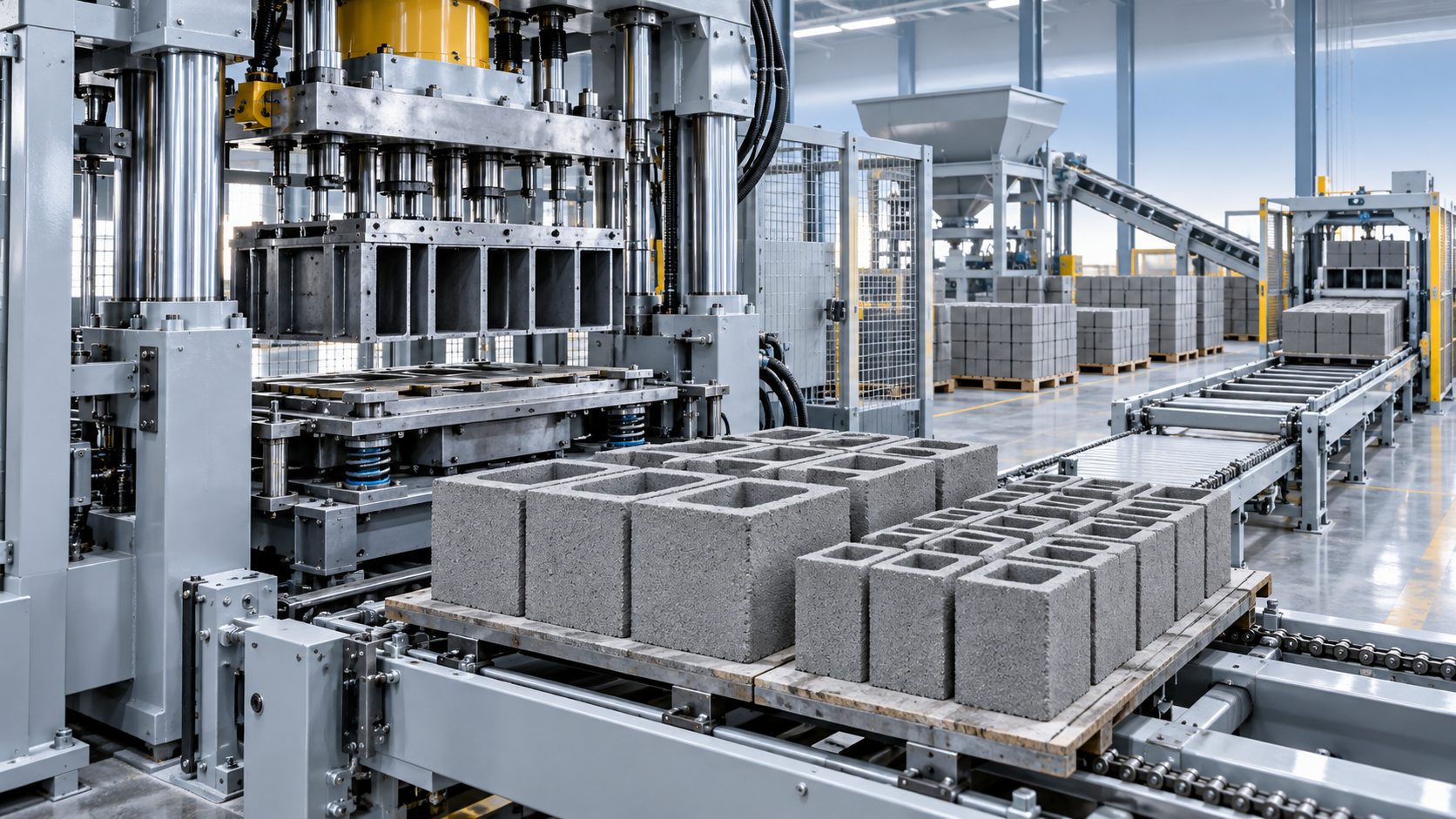
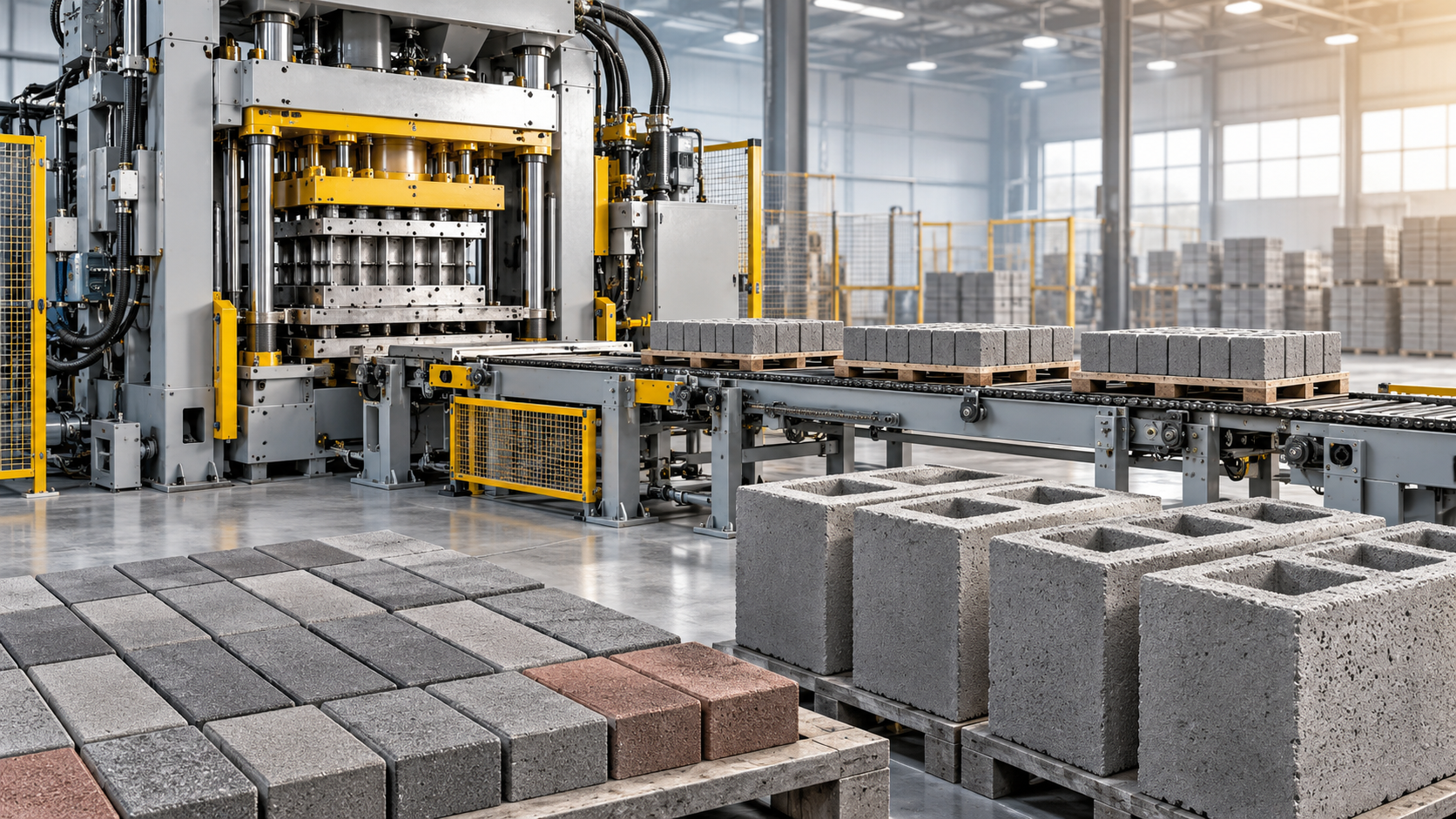
For a block production line, mold wear is often a major cost and quality issue. Compare mold material, heat treatment, machining accuracy, replacement time, and availability of matching spare sets.
Hydraulic systems deserve careful analysis because contamination, overheating, seal failure, and incorrect pressure settings can cause repeated stoppages. Check filtration design, gauge access, oil recommendations, and diagnostic points.
Concrete batching plants should be assessed for mixer liners, blades, shaft seals, bearing assemblies, weighing sensors, pneumatic valves, and conveyor belts. These parts determine both uptime and batching accuracy.
In aerated concrete block production, cutting wires, molds, autoclave-related systems, material handling equipment, and slurry preparation units require clear inspection standards. Delayed maintenance can affect an entire production sequence.
Compare whether critical parts are standardized or proprietary. Standardized bearings, motors, sensors, and valves may simplify local sourcing, while proprietary components can require closer manufacturer support and planned inventory.
Evaluate Access for Routine Inspection and Repair
A machine may use high-quality components yet remain difficult to maintain if technicians cannot safely reach inspection points, fasteners, lubrication locations, electrical terminals, or adjustment mechanisms.
During a factory visit or technical review, ask technicians to explain how they inspect, lubricate, calibrate, and replace major wear parts. Demonstrated access is more useful than a brochure statement.
Look for service doors, guarded access panels, removable covers, labeled terminals, reachable grease points, clear maintenance platforms, and enough working space around motors, pumps, gearboxes, and electrical cabinets.
Maintenance-friendly design reduces the time required for routine work. A bearing replacement that takes two hours instead of a full shift can materially improve production availability over several years.
Consider whether replacing a component requires removing unrelated assemblies. Designs that force technicians to dismantle conveyors, guard frames, or hydraulic lines increase labor time and create reassembly risks.
Safe access matters as much as fast access. Equipment should provide stable platforms, appropriate guarding, isolation points, lifting provisions, and lockout procedures for work around moving, hydraulic, or electrical systems.
For after-sales teams, accessible machinery also improves remote support. Clear access layouts make it easier for site technicians to share photographs, measurements, alarms, and inspection results with engineering specialists.
Compare Automation by Its Service Burden
Automation can reduce labor dependence and improve consistency, but it also changes the maintenance profile. More sensors and controls create more diagnostic possibilities, yet require stronger electrical support.
Do not assume that a highly automated system is always harder to maintain. Well-designed automation can identify faults early, prevent overloads, and guide technicians toward the actual source of failure.
Evaluate the PLC brand, human-machine interface, electrical drawings, alarm history, remote access capability, sensor labeling, and availability of backup programs. These details determine troubleshooting speed during unexpected stoppages.
A control panel should make fault information understandable. Error codes without descriptions, incomplete wiring diagrams, or unclear I/O labels can turn a minor sensor issue into prolonged downtime.
Ask whether parameter changes are controlled and recorded. Unmanaged modifications to vibration settings, batching formulas, timing sequences, or hydraulic pressures can cause recurring faults that appear mechanical.
Technicians should also check electrical cabinet protection, cooling, grounding, cable routing, and dust sealing. Poor electrical protection is especially risky in cement, aggregate, cutting, and polishing environments.
The preferred balance is appropriate automation with clear documentation. Select a system the customer’s maintenance capability can realistically support, while retaining access to manufacturer-level technical assistance when needed.
Assess Spare Parts Availability Before a Breakdown
Spare-parts availability is one of the strongest indicators of maintainability. Even robust Building Materials Machinery becomes expensive when a small failed part stops production for weeks.
Request a recommended spare-parts list divided into commissioning spares, routine consumables, critical emergency parts, and long-term wear components. Each category should include part numbers and replacement guidance.
For each critical item, confirm stock location, normal delivery time, alternative sourcing options, expected service life, and whether the part requires factory calibration or specialized installation tools.
Critical inventory often includes hydraulic seals, filters, sensors, relays, contactors, solenoid coils, bearings, belts, mixer blades, mold parts, cutting wires, and selected gearbox components.
After-sales teams should calculate the cost of holding critical spares against the cost of lost production. A modest on-site inventory is often justified for parts with long delivery times.
Ask suppliers whether older equipment models remain supported. Machinery can operate for many years, so parts continuity, upgrade paths, and compatibility between generations are important purchasing considerations.
Reliable manufacturers provide clear parts drawings and disciplined identification systems. This reduces ordering mistakes, simplifies warehouse control, and helps technicians communicate accurately during urgent service requests.
Measure Preventive Maintenance Workload
Maintenance demand should be measured across daily, weekly, monthly, quarterly, and annual tasks. This gives a more realistic comparison than simply counting major breakdowns or warranty claims.
Daily work may include cleaning, visual checks, lubrication verification, pressure readings, belt inspection, water drainage, and checking for unusual noise, heat, leakage, vibration, or product defects.
Weekly and monthly tasks commonly include tightening fasteners, inspecting filters, checking fluid condition, calibrating weighing systems, testing safety devices, examining wear parts, and cleaning electrical cooling systems.
Annual shutdown requirements may include gearbox oil replacement, hydraulic system flushing, cylinder inspection, bearing replacement, alignment checks, mold refurbishment, electrical testing, and control-system backups.
Compare not only how often work is needed, but also the labor skills required. A task requiring a trained hydraulic specialist creates a different cost profile than a basic inspection.
Manufacturers should provide a preventive maintenance schedule with task frequency, acceptance criteria, tools, consumables, estimated labor hours, and safety steps. Vague instructions create inconsistent site practices.
A strong maintenance plan turns service into predictable routine work. Without one, teams often react after quality drops or equipment fails, increasing emergency labor and collateral damage.
Use Documentation as a Maintainability Test
Technical documentation is an operational maintenance tool, not just a handover requirement. Incomplete manuals make troubleshooting slower, training weaker, and warranty discussions more difficult for everyone involved.
Compare operating manuals, maintenance schedules, electrical schematics, hydraulic diagrams, spare-parts catalogs, installation records, lubrication charts, calibration instructions, and troubleshooting guides before final equipment selection.
Good documentation explains symptoms, likely causes, inspection steps, corrective actions, and safety warnings. It should help an experienced technician isolate a fault without repeatedly waiting for remote clarification.
Check whether documents match the delivered configuration. Generic manuals can be misleading when a line includes customized conveyors, molds, control cabinets, batching units, or material handling systems.
Digital documentation offers additional value when it includes revision control, searchable part lists, videos, downloadable PLC backups, and maintenance records linked to the exact machine serial number.
After-sales personnel should encourage customers to maintain a service history. Recording alarms, repairs, replaced parts, oil analysis, calibration results, and recurring failures supports better future decisions.
Documentation quality also reflects supplier discipline. A manufacturer that controls drawings, serial numbers, and revisions is generally better positioned to provide accurate technical support over time.
Examine Supplier Support and Technician Training
Equipment maintenance depends partly on the supplier’s organization. Strong technical support can reduce downtime when local teams face uncommon faults, installation issues, software problems, or complex component failures.
Ask how support requests are handled, who provides remote diagnosis, what response times apply, and whether field engineers are available for commissioning, upgrades, emergency repairs, and operator training.
Training should cover more than machine operation. Maintenance staff need instruction on lubrication, inspections, fault recognition, electrical safety, hydraulic adjustment limits, calibration methods, and correct parts replacement.
For complex production lines, training should include the connection between process quality and machine condition. Operators must understand how abnormal materials or settings can increase wear and create avoidable faults.
Assess whether the manufacturer has engineering depth across mechanical, electrical, hydraulic, automation, and process disciplines. Building materials equipment often requires coordinated diagnosis across these areas.
Companies with established research capability, production facilities, quality systems, and long-term product support may provide greater confidence for customers operating capital-intensive machinery over many years.
However, support claims should be verified through references, service records, response procedures, available languages, regional parts coverage, and the practical experience of technicians who use the equipment.
Build a Practical Maintenance Comparison Scorecard
After-sales teams can make comparisons clearer by using a weighted scorecard. This converts broad impressions into a documented recommendation that customers and internal service teams can review.
Assign high weighting to production-stopping components, spare-parts lead times, service accessibility, documentation quality, diagnostic capability, supplier response, safety, and required maintenance labor hours.
Use lower weighting for cosmetic design features or optional functions that do not affect uptime. The scorecard should reflect the customer’s production priorities and technical resources.
For example, a remote site may assign greater weight to locally available parts and simple repair procedures. A large factory may prioritize automation diagnostics, integration capability, and planned-service efficiency.
Include evidence beside each score. Reference technical drawings, observed factory demonstrations, parts lists, customer feedback, maintenance schedules, and formal supplier commitments instead of relying on verbal assurances.
Review the scorecard after installation and during the first year of operation. Actual maintenance records can reveal whether assumptions about wear rates, training needs, or spare inventory were accurate.
This feedback loop helps after-sales teams improve future equipment recommendations. It also identifies recurring issues that may require design changes, updated instructions, improved training, or different service stock levels.
Conclusion: Choose Machinery That Can Be Maintained Consistently
The most maintainable Building Materials Machinery combines durable critical components, practical access, understandable controls, planned preventive work, available spares, complete documentation, and dependable technical support.
For after-sales maintenance personnel, the key comparison question is not whether a machine will ever require service. Every industrial machine does. The question is how predictably it can be serviced.
Evaluate maintenance demands before purchase, confirm them during commissioning, and track them throughout operation. This approach protects production uptime, improves customer confidence, and reduces the total cost of ownership.
Recommend
 Oct 15, 2026
Can a Hollow Block Making Machine Produce Different Block Sizes?
Can a hollow block making machine produce different block sizes? Discover how interchangeable molds, smart settings, and reliable equipment improve flexibility and output.
- Oct 14, 2026
What Is the Difference Between a Concrete Brick Machine and a Block Machine?
What is the difference between concrete brick machine and block machine? Compare products, molds, output, and find the right solution for your plant.
- Oct 13, 2026
How to Choose a Wall Panel Production Machine for Export Quality?
How to choose a wall panel production machine for export quality? Explore essential factors for consistent output, curing, automation, quality control, and supplier support.