What makes a green building material production line more sustainable
A production line can make a material that is marketed as “green” and still consume excessive electricity, reject too much material, waste water, or create avoidable dust. This becomes visible when output is stable on paper but operators are constantly correcting mix proportions, restarting equipment, trimming defective products, or handling spilled raw material. The environmental burden is not only in the finished block, panel, or slab; it is built into every batch that must be reworked, discarded, or produced again.
A green building material production line becomes more sustainable when its equipment, controls, material flow, and maintenance practices reduce resource use without sacrificing product consistency. Energy-efficient drives matter, but they are only one part of the picture. A genuinely sustainable line uses raw materials accurately, limits waste at the source, recovers usable by-products where practical, controls dust and water, and produces durable materials that meet specification with fewer rejected units.
Sustainability starts with the whole production process
It is easy to judge a line by one visible feature, such as a low-power motor or a dust collector. That can be misleading. Building-material production involves linked stages: raw material receiving, crushing or grinding, batching, mixing, forming, curing, cutting, finishing, inspection, and material handling. A problem at one stage often creates losses at another.
For example, inconsistent aggregate moisture can change the actual water-to-binder ratio in a concrete block operation. The mixture may then require adjustment during production, leading to weak edges, variation in dimensions, or a higher reject rate. In an aerated concrete process, inaccurate dosing of slurry components or expansion agents can affect density and cutting quality. In engineered quartz production, poor control of resin, pigment, or aggregate distribution can result in visual defects or slabs that do not pass internal inspection.
The most sustainable line is therefore not simply the one with the lowest rated energy consumption. It is the line that keeps process variation under control and turns a high share of incoming materials into saleable products.
Lower energy use means matching power to the actual task
Production machinery needs energy for conveying, crushing, mixing, pressing, vibration, vacuum processing, hydraulic movement, cutting, curing, and dust collection. Sustainability improves when each system uses only the energy needed for the material and production rate being handled.
Oversized equipment can waste power when operated far below its efficient range. Undersized equipment may run continuously at high load, overheat, create bottlenecks, and force repeated starts and stops. The useful question is not “Does this machine have a high-efficiency motor?” but “Does the machine operate efficiently at our real throughput, material condition, and shift pattern?”
Where energy losses often hide
- Idle conveyors and auxiliaries: Material-handling equipment sometimes continues running while upstream production has stopped. Interlocks and sensible sequencing can reduce unnecessary operation.
- Compressed air leaks: Pneumatic systems are common in gates, valves, cleaning devices, and automation components. Leaks and excessive pressure settings create continuous power demand.
- Hydraulic systems held under pressure: Pumps, valves, and hydraulic circuits should be selected and controlled for the duty cycle rather than left running at full demand when no movement is required.
- Poorly maintained mixers and crushers: Worn liners, damaged bearings, misalignment, and buildup increase resistance and extend cycle times.
- Inefficient curing control: Where steam, heat, or controlled environments are used, poor insulation, leakage, and uneven temperature control can add substantial energy use while also affecting product quality.
Variable-frequency drives can be useful for fans, pumps, conveyors, and other equipment with changing loads. Their value depends on correct process design. Installing a variable-speed drive on a poorly selected fan or a conveyor that is always required to run at one fixed speed does not automatically produce meaningful savings. Energy improvements should be verified through operating conditions, not assumed from a component list.
Precision batching prevents waste before it is created
Raw material efficiency is often the strongest sustainability lever because every incorrect batch carries embedded impacts from extraction, transport, preparation, and processing. Precise weighing and dosing reduce overuse of cementitious binders, resins, pigments, additives, water, and aggregates. They also reduce the need to correct mixtures after they have entered the process.
In practice, precision depends on more than installing load cells. Storage bins must discharge predictably. Moisture changes must be recognized. Feeders need regular inspection for bridging, wear, and calibration drift. Material that segregates during transport can make a correct weight behave like an incorrect recipe because the particle distribution entering the mixer is no longer consistent.
A well-managed batching system should make it possible to answer several basic questions at any time: Which materials entered the batch? Were they within the permitted tolerance? Was the recipe changed manually? Did the material moisture differ from the assumed value? Was the batch associated with a downstream quality issue? Without this traceability, a line may consume more material than necessary simply because deviations cannot be located quickly.
Not every recycled input is automatically the better option
Recycled aggregates, reclaimed fines, returned concrete, process scrap, and recovered stone fragments can reduce demand for virgin material. Their use is beneficial only when they are prepared and controlled well enough for the intended product. Contamination, fluctuating particle size, unsuitable moisture, or incompatible chemistry can increase defects and cause more waste than the recycled content avoids.
The sensible approach is to define a suitable application for each recovered material stream. Fine reclaimed material may be appropriate for a lower-grade product, internal filler, or a controlled proportion of a mix, while larger clean fragments may be reused more directly. The target should be productive reuse, not simply adding recycled content without considering performance.
Waste reduction should be designed into material flow
Visible scrap is only part of the waste picture. Losses occur through spillage at transfer points, dust escaping from open handling systems, material left in mixers, cutting losses, cracked units, off-spec curing, damaged packaging, and products rejected after final inspection. Some losses are unavoidable, but many point to a process issue that can be corrected.
Consider a line where material repeatedly accumulates below a conveyor transfer. Cleaning it up may keep the area orderly, yet it does not address the cause. The transfer chute may be poorly aligned, the belt speed may be mismatched, the material may be too wet or too dry for the chute design, or a worn skirt may be allowing leakage. Recovering spilled material is better than sending it to disposal, but preventing the spill is usually more reliable and less labor-intensive.
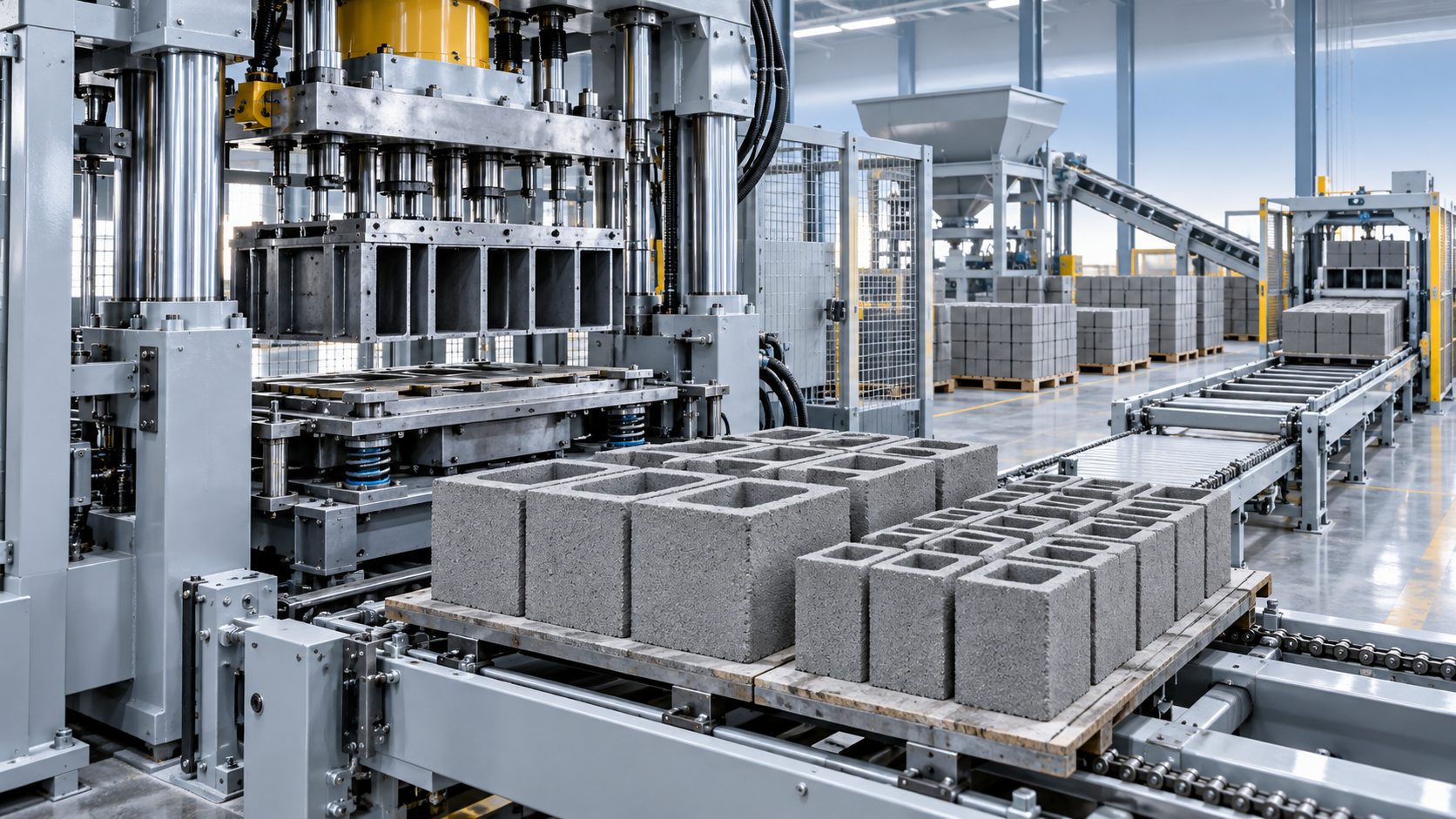
Equipment layout also matters. Long, complicated transport paths create additional transfer points and more opportunities for breakage, segregation, dust release, and cleanup. A compact layout with logical flow between storage, batching, processing, curing, and packing can reduce handling losses. However, compactness should not make maintenance difficult. When equipment cannot be cleaned, inspected, or repaired safely, minor issues can grow into chronic waste.
Water management depends on where the water goes
Water may be used in mixing, washing, cooling, dust suppression, cutting, and cleanup. A sustainable approach begins by separating clean and contaminated streams. Water from a controlled process may be recoverable for an appropriate reuse purpose, while water containing slurry, pigments, resin-related residues, or fine solids may need treatment before it can be reused or discharged.
Closed-loop or partial-reuse systems can reduce freshwater demand, but they need monitoring. Recycled water can carry dissolved solids or suspended fines that alter a mix, damage pumps, block nozzles, or interfere with surface quality. The practical goal is not necessarily to reuse every drop. It is to reuse water where its quality is suitable and prevent poorly controlled recirculation from creating larger product losses.
Settling tanks, filtration, sludge handling, and clear operating rules help maintain that balance. Operators should know which water source is acceptable for each task. Using process water intended for general washing in a tightly controlled mix can create inconsistency; using potable-quality water for routine cleanup may be unnecessary where a treated alternative is suitable.
Dust, noise, and emissions control should support production reliability
Dust control is often discussed as an environmental or workplace issue, but it also protects material yield and equipment performance. Fine powder that escapes into the work area is raw material no longer available to the product. Dust buildup can affect sensors, motors, bearings, electrical panels, and moving parts. It can also make leaks and mechanical defects harder to spot.
Effective control combines enclosure, correctly sized extraction, maintained filters, sensible transfer design, and housekeeping. A dust collector cannot compensate for every open transfer or poorly sealed chute. Similarly, excessive water spraying may suppress visible dust while creating wet buildup, material sticking, or wastewater problems. The right method depends on the material and process stage.
Noise and vibration deserve similar attention. Abnormal vibration in presses, mixers, crushers, or cutting systems is not merely an operator comfort issue. It can indicate imbalance, loose fasteners, worn mounts, bearing problems, or inconsistent feed. Correcting it early can protect equipment life and prevent quality variation that later becomes scrap.
Automation helps only when it improves decisions
Automation can make a production line more sustainable by keeping repeatable tasks within defined limits. Automated batching, recipe control, moisture measurement, production tracking, and alarm systems can reduce reliance on manual estimation. They are especially useful where small deviations affect density, strength, dimensions, color, surface finish, or curing behavior.
Yet automation does not remove the need for process understanding. A sensor that is not cleaned or calibrated can provide confident but inaccurate information. An alarm threshold set too wide may allow waste to continue unnoticed; one set too narrowly may encourage operators to bypass it. Controls should be built around meaningful operating limits and reviewed whenever materials, product designs, or production rates change.
Data becomes useful when it connects equipment conditions with output. Tracking electricity alone may show a monthly increase but not explain it. Tracking energy per unit of acceptable output, along with reject reason, downtime, material consumption, and major process changes, gives a clearer picture. A line that uses slightly more energy but sharply reduces rework may have a lower overall impact than one with a lower power reading and persistent product loss.
Durability and maintainability are part of sustainable equipment selection
Equipment should be evaluated over its operating life, not only at installation. Components that wear quickly, are difficult to access, or require frequent replacement can increase downtime, spare-parts use, and material waste. This is particularly relevant in abrasive applications involving sand, aggregate, stone powder, or quartz materials.
When comparing machinery, look beyond nominal capacity. Ask how wear parts are accessed, whether critical components can be inspected without major disassembly, how cleaning is performed between products, and whether the control system records faults clearly enough to support troubleshooting. A line that is difficult to maintain may continue operating with worn parts until quality losses become obvious.
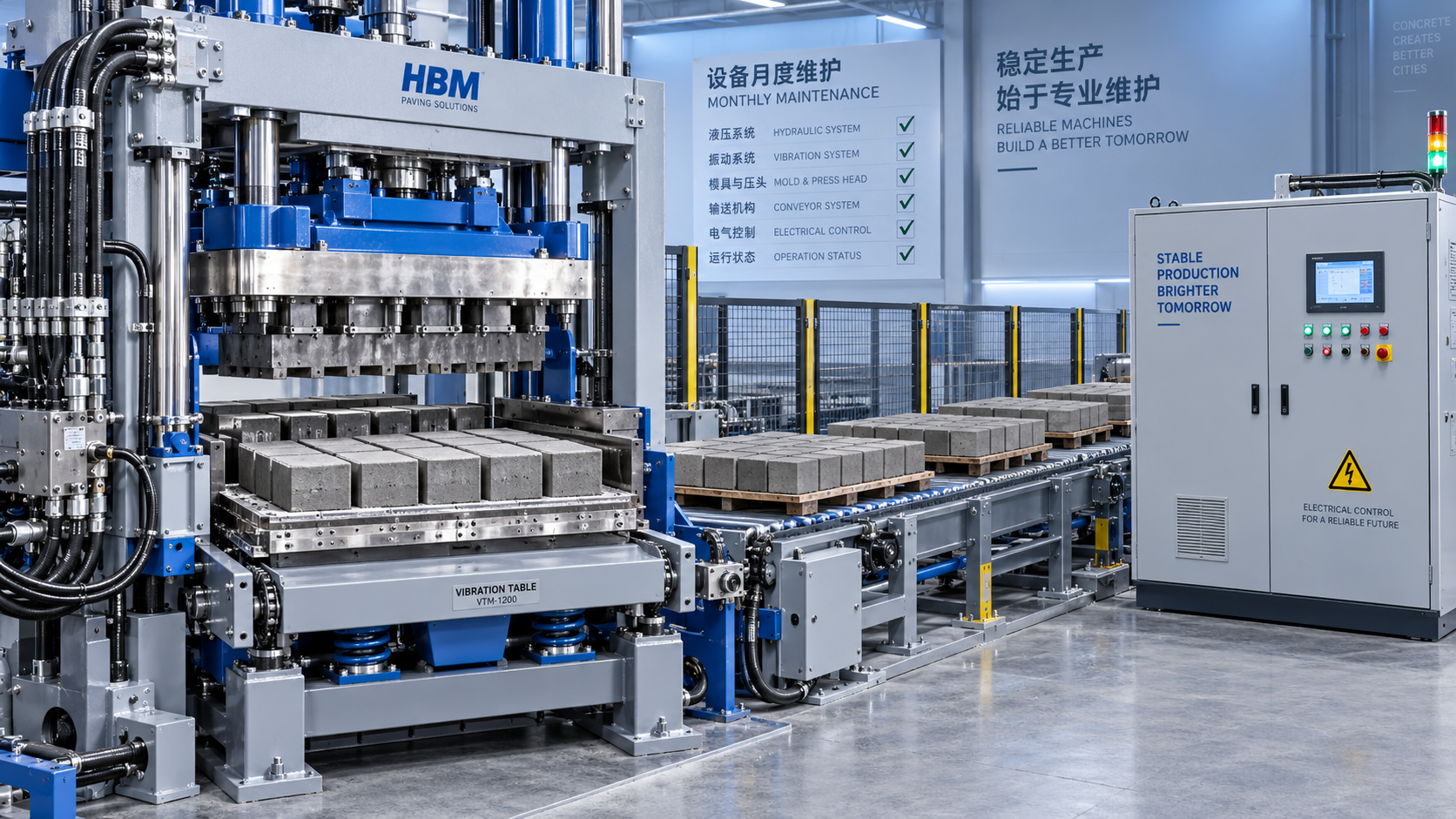
Preventive maintenance should focus on conditions that influence both consumption and product quality: scale calibration, mixer condition, belt tracking, bearing temperature, hydraulic leaks, air pressure, cutter alignment, filter performance, and sensor accuracy. Replacing a worn component before it damages a batch or stops a line is often more sustainable than reacting after a failure.
A practical way to assess an existing line
Before investing in major changes, observe the line during normal production rather than only during a demonstration or a short trial. Follow one batch or one product group from raw material intake to final inspection. Note where material is added, removed, spilled, returned, reworked, or rejected. Then compare those observations with energy use, downtime records, and quality records for the same period.
- Identify the largest source of rejected or reworked material rather than starting with the most visible environmental issue.
- Check whether the loss is caused by raw material variation, equipment condition, operating settings, handling, or inspection criteria.
- Measure acceptable output against energy, water, and major material inputs.
- Correct basic calibration, leakage, alignment, and maintenance issues before assuming new machinery is required.
- When equipment replacement is being considered, compare expected resource use across the full process, including handling, curing, dust control, and maintenance access.
The strongest sustainability improvements usually come from removing recurring sources of variation. A production line that batches accurately, uses energy in proportion to demand, controls emissions, recovers suitable materials, and produces consistent building products with minimal rework is more sustainable in daily operation than one that relies on occasional cleanup or end-of-pipe treatment alone.
Recommend
 Oct 16, 2026
What Monthly Maintenance Does a Paving Block Machine Need?
What maintenance does a paving block machine need monthly? Discover essential checks for hydraulics, molds, vibration, safety, and reliable block quality.
- Oct 15, 2026
Can a Hollow Block Making Machine Produce Different Block Sizes?
Can a hollow block making machine produce different block sizes? Discover how interchangeable molds, smart settings, and reliable equipment improve flexibility and output.
- Oct 14, 2026
What Is the Difference Between a Concrete Brick Machine and a Block Machine?
What is the difference between concrete brick machine and block machine? Compare products, molds, output, and find the right solution for your plant.