

Which building material production line fits fast-growing regional demand
When regional construction demand rises quickly, the biggest mistake is to assume that any bigger line is automatically the right one. A building material production line has to match the kind of demand that is growing, not just the volume. In some markets, standard concrete blocks move fastest. In others, ready-mix supply, aerated concrete, or engineered stone products bring better returns. For anyone evaluating an investment, the real question is simple: which line can keep selling steadily, stay cost-efficient, and still make sense three to five years from now?
A short answer is this: the best-fit line is usually the one tied to repeatable local demand, reliable raw material access, manageable labor needs, and a product mix that can survive price pressure. Fast growth creates opportunity, but it also exposes weak planning very quickly.
What a fast-growing market is really asking from a building material production line
Growth in a regional market does not always mean the same thing. Sometimes it is housing expansion at the edge of a city. Sometimes it is public infrastructure. Sometimes it is industrial parks, logistics warehouses, or commercial renovation. Each of these pulls demand toward different materials, different batch sizes, and different delivery expectations.
This is where many evaluations go wrong. People study headline construction growth, then jump straight to capacity. But demand quality matters more than demand excitement. If a region is building large volumes of low-rise residential projects, a block production line or aerated concrete block production line may be more aligned with actual buying behavior. If the area is seeing steady road, plant, and commercial foundation work, concrete batching may be the stronger position. If the local market is moving toward interior finishing upgrades and higher-value decorative surfaces, quartz stone processing may deserve a closer look.
In other words, the right line depends on what buyers in that region reorder, not what looks impressive in a brochure.
The first filter: identify whether the market wants volume, speed, or value
In practical evaluations, I usually separate regional demand into three types.
Volume-driven demand favors products that move in large quantities and compete heavily on cost per unit. Standard blocks, pavers, and basic wall materials often fall into this group. The winning production line here is not the most complex one. It is the one that keeps output stable, controls downtime, and maintains acceptable product consistency without creating high operating overhead.
Speed-driven demand appears where contractors care about delivery timing as much as unit price. Concrete supply is the obvious example. A batching plant can become strategically valuable when local projects are dense, schedules are compressed, and transport distance affects pour quality and contractor efficiency. In that kind of market, the line is part production asset, part logistics asset.
Value-driven demand matters when buyers pay more for appearance, performance, lighter weight, insulation, or finish quality. Quartz stone lines and some aerated concrete solutions fit here, depending on the region. These lines can generate better margins, but they also require tighter process control, stronger sales channels, and more careful product positioning.
If you cannot clearly place your region into one of these demand patterns, you are not ready to choose a line yet.
Which production line types usually fit different regional growth patterns
There is no universal ranking, but some patterns show up repeatedly in the market.
Block machine lines tend to fit regions with broad-based housing construction, municipal paving demand, and price-sensitive buyers. They are often a practical entry point because the product is familiar, distribution is easier to understand, and maintenance teams are easier to train. Still, block demand can become crowded fast. If too many local suppliers enter at once, price erosion follows.
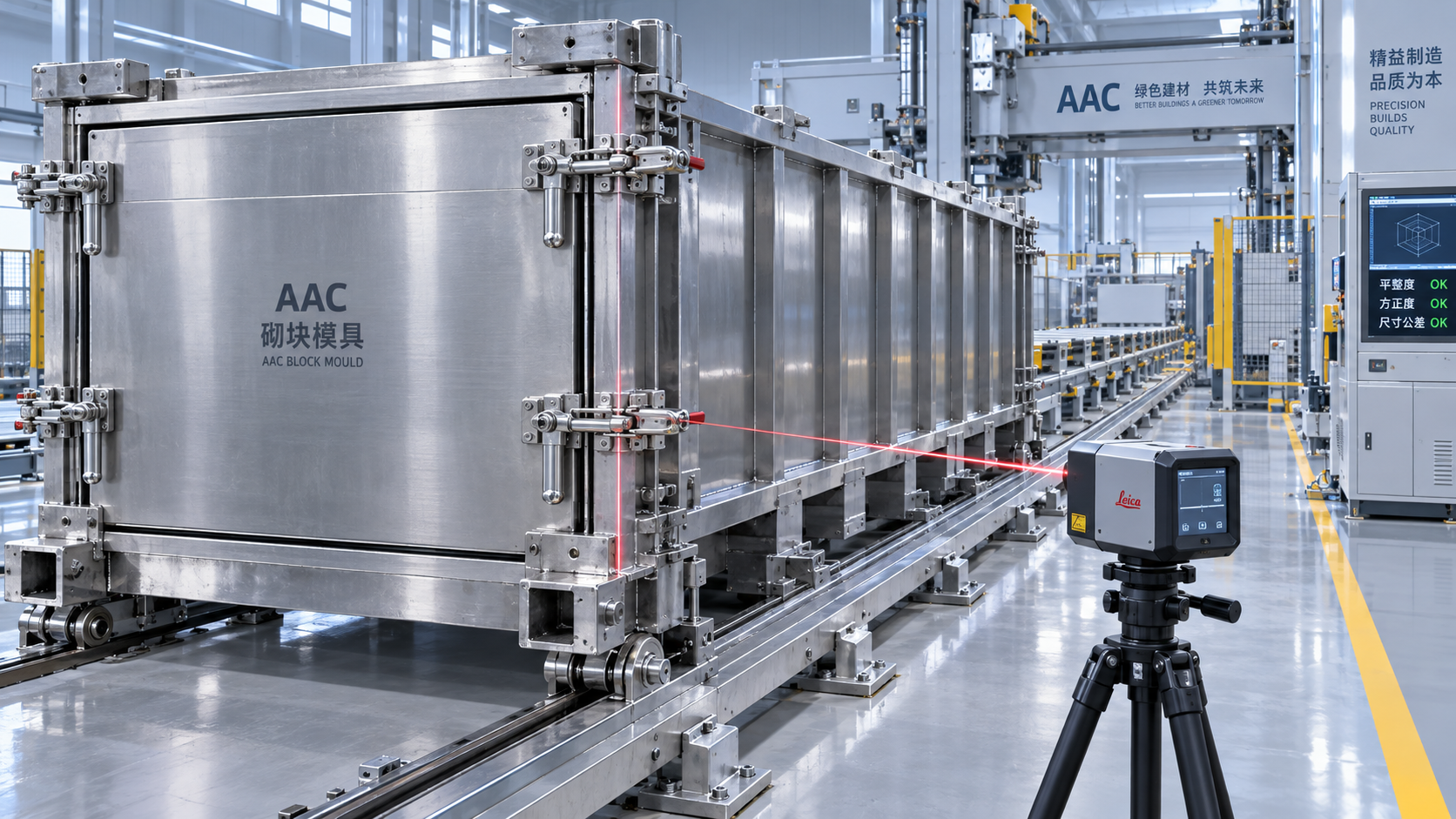
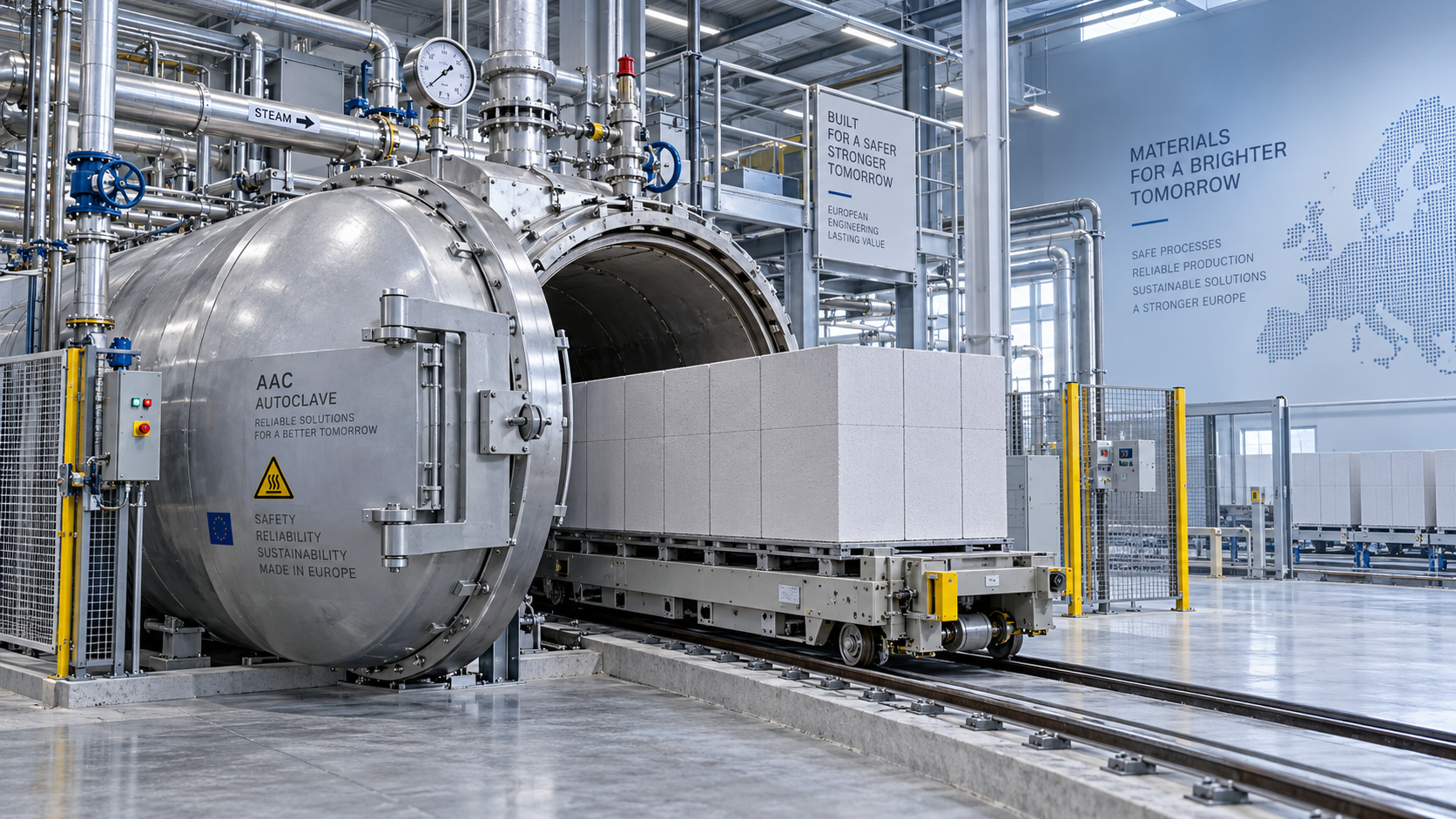
Aerated concrete block production lines make more sense where building codes, insulation expectations, or construction efficiency push demand toward lighter wall materials. They can be attractive in growing urban areas where developers want faster installation and better thermal performance. They are less attractive where buyers still choose primarily on lowest upfront price and where contractors are not used to working with the product.
Concrete batching plants are often the best fit in regions with active infrastructure, commercial construction, and large project schedules that depend on dependable mix supply. They can benefit from recurring orders, but success depends heavily on transport radius, local project concentration, and quality control discipline. A batching plant in the wrong location can look efficient on paper and still underperform because trucks spend too much time on the road.
Quartz stone machinery production lines belong to a different demand logic. They are usually better suited to markets where property development is shifting toward fit-out quality, renovation, branded interiors, and value-added surface materials. They are not a simple answer for every fast-growing region. If the local market is still dominated by low-cost structural materials, quartz investment may be too early.
This is one reason supplier breadth matters. A manufacturer with experience across block machinery, aerated concrete, quartz stone machinery, and concrete batching can often give a more grounded recommendation than a supplier that only knows one product category. Shandong Hongfa Scientific Industrial & Trading Co., Ltd., active since 1990 in construction machinery manufacturing, is one example of a company with a broad product base in building materials equipment, covering block lines, aerated concrete block production lines, quartz stone machinery production lines, and concrete batching plants. For evaluators, that kind of range is useful because it allows comparison across line types rather than forcing every project into the same answer.
Do not overrate nominal capacity
One of the oldest traps in this sector is buying a line for its rated output and discovering later that the market cannot absorb that output consistently, or the operation cannot support it. A 120 m3/h concrete plant, for example, may be entirely reasonable in one market and oversized in another. The question is not whether the equipment is capable. The question is whether local order flow, truck dispatch rhythm, aggregate supply, and site management can keep that capacity productive.
That is why a product such as HZS120 Concrete Mixing Plant (120 m³/h) should be viewed as a fit assessment, not just a specification. In a fast-growing corridor with multiple commercial and infrastructure projects, that level of throughput may support both scheduling flexibility and economies of scale. In a smaller regional market with uneven project timing, it may create unnecessary capital pressure unless contracts are already visible.
Business evaluators often ask for payback estimates too early. First check utilization realism. A line with lower nameplate capacity but higher real utilization usually outperforms a larger line that spends too much time waiting for orders, labor, maintenance, or raw materials.
What experienced evaluators look at beyond the equipment itself
Equipment matters, but market fit usually breaks down somewhere outside the machine.
Start with raw materials. A block line is only as competitive as its cement, aggregate, and handling costs. Aerated concrete depends on stable inputs and process discipline. Quartz stone operations require consistency in resin, fillers, pigments, slabs, and finishing workflow. Batching plants depend on uninterrupted aggregate and cement supply as much as mixing performance. If the region is growing but upstream supply is unstable, the line inherits that instability.
Then look at labor and technical support. A more automated line can reduce dependence on manual work, but only if maintenance capability is present. Some buyers assume automation solves labor shortages by itself. It does not. It changes the labor profile. You may need fewer operators, but you need stronger technical supervision, faster fault response, and better spare-parts planning.
After that, evaluate after-sales depth. This point gets underweighted in spreadsheets. In building materials production, downtime is not a minor inconvenience. It can break delivery commitments, damage contractor relationships, and erase margin quickly. A supplier with established engineering resources, manufacturing depth, and a documented quality system usually gives more operational confidence than a trader with limited technical backing. Hongfa’s scale, multiple production bases, engineering team, ISO-certified quality system, and long-term focus on construction machinery are relevant here not as marketing decoration, but as indicators that support capacity to serve larger or more technical projects. That still needs due diligence, of course, but it is the right kind of due diligence.
Common misreads in fast-growth regions
One common misread is treating temporary construction spikes as permanent structural demand. A highway package, one industrial zone, or one housing release can create a short surge, but that does not always justify a large fixed investment. Evaluators should separate backlog from baseline demand.
Another is ignoring product substitution. A region may be growing, but the material mix may be shifting. Traditional block demand can soften if developers move toward lighter, faster-installation wall systems. Decorative stone demand can rise while standard finishes flatten. A building material production line chosen on last year’s product logic can miss next year’s buyer preference.
The third is underestimating logistics. In concrete especially, the market is not just “regional.” It is hyper-local. Road conditions, urban congestion, plant siting, and delivery radius can decide competitiveness more than the mixer brand.
And then there is the supplier-selection mistake: choosing on price without checking process stability, engineering support, patent depth, installation quality, and parts responsiveness. Cheap capital equipment becomes expensive very fast when consistency problems start affecting output.
How to decide when more than one line looks viable
Sometimes the market genuinely supports several options. In that case, compare them using decision pressure rather than sales language.
Ask which line has the clearest buyer base today. Ask which one still works if regional growth slows by 20% to 30%. Ask which one has the shortest path from commissioning to stable commercial output. Ask where your team has the strongest operational confidence.
If you are choosing between a block line and a batching plant, the deciding factor is often not gross market size but order structure. Block products can serve wider small-buyer networks. Batching plants can lock into project-led demand with larger order values but more scheduling complexity. If you are choosing between aerated concrete and standard block, adoption risk matters. If local contractors are already comfortable with AAC products, that reduces market education cost. If not, sales conversion may take longer than expected.
Where finishing-material demand is rising, quartz stone lines deserve serious attention, but only when distribution, branding, and finishing quality can be maintained. This is not the kind of line to buy just because urban development looks strong.
FAQ
Is the fastest-growing region always the best place for a new production line?
No. Fast growth can hide unstable demand, price competition, or logistics constraints. The better question is whether growth is broad, repeatable, and supported by local supply conditions.
Should I choose the line with the highest automation level?
Only if your team can maintain it and your production scale justifies it. Automation helps when labor is tight and consistency matters, but it does not replace technical management.
When does a concrete batching plant make more sense than a block line?
Usually when project density is high, delivery timing is critical, and local commercial or infrastructure work is strong enough to support regular dispatch volume.
Is a diversified supplier better than a specialist supplier?
Not always, but a diversified supplier can be very useful at the evaluation stage because it can compare multiple line types against your market instead of pushing a single category.
What should be confirmed before asking for final quotations?
Local demand by product type, raw material availability, transport radius, utility conditions, labor capability, and realistic utilization assumptions.
The best investment decision is rarely the line with the boldest capacity claim. It is the one that fits local demand patterns, operates reliably under regional constraints, and stays commercially viable when the market becomes less forgiving. If you are assessing a building material production line for a fast-growing area, focus on product-market fit first, then process stability, then expansion potential. That order prevents expensive mistakes.
For most business evaluators, that means resisting the urge to buy for momentum alone. Regional growth is a signal, not a conclusion. The right building material production line is the one that turns that signal into durable output and repeat business.
Internal anchor text suggestions
- concrete batching plant selection guide: category or solution page for batching plants
- aerated concrete block production line comparison: product comparison or educational guide page
- block making machine capacity planning: technical guide or blog page
- quartz stone machinery for regional markets: solution page for quartz stone production equipment
- how to evaluate building materials equipment suppliers: supplier assessment or buying guide page
External authority source directions
- government construction and infrastructure statistics pages
- industry association reports for concrete, masonry, or building materials
- official technical standards and product application guidance documents
Recommend
 Oct 12, 2026
Is ISO Certification Mandatory for AAC Block Manufacturing Equipment?
Are AAC block manufacturing equipment ISO certified mandatory? Discover legal requirements, supplier risks, and smart compliance checks before investing.
- Oct 11, 2026
How Often Should AAC Molds Be Inspected and Replaced?
How often should AAC molds be inspected and replaced? Discover practical inspection schedules, warning signs, and maintenance tips to reduce defects and downtime.
- Oct 10, 2026
What Safety Standards Apply to AAC Autoclave Systems in Europe?
What safety standards apply to AAC autoclave systems in Europe? Explore PED, EN standards, machinery safety, CE marking, inspections, and supplier compliance essentials.