How a Concrete Brick Machine Works—and Why Curing Still Matters
A freshly molded concrete brick may hold its shape, but that does not mean it is ready for construction. Forming and strength development are separate stages.
A concrete brick machine feeds a controlled mix into molds, then compacts it through vibration, often combined with pressure, to create consistent shapes and dimensions.
Lasting strength develops afterward as cement hydrates under suitable moisture and temperature conditions. Fast molding cycles alone cannot guarantee durable bricks or reliable production output.
This guide explains how mixing, compaction, handling, and curing work together, and which checks help distinguish a productive manufacturing process from one that merely runs quickly.
What Does a Concrete Brick Machine Actually Do?
The machine gives a concrete mixture its intended geometry and consolidates the material. It does not complete the chemical reactions responsible for the finished unit’s strength.
Most industrial concrete brick and block machines process relatively dry concrete. The mixture must compact effectively while remaining stiff enough to retain its shape after demolding.
A typical production line includes material storage, batching equipment, a mixer, a forming machine, production pallets or boards, handling equipment, and a designated curing area.
Machine configurations vary considerably. Some rely primarily on vibration, while others combine controlled vibration with hydraulic pressure applied through a press head above the mold.
The term “brick machine” can describe equipment for solid bricks, hollow blocks, or paving units. Actual capability depends on compatible molds, machine specifications, and handling arrangements.
This process differs from fired clay brickmaking and autoclaved aerated concrete production. Those products use different raw materials, forming methods, and hardening processes.
How Does the Mix Become a Uniform Brick?
The production sequence starts with proportioning cement, aggregates, water, and any approved supplementary materials or admixtures. Consistent ingredients make machine settings more repeatable between batches.
Aggregate grading matters because smaller particles fill spaces between larger particles. Suitable grading supports compaction, while excessive fines can increase water demand and complicate feeding.
Aggregate moisture also changes the effective water content. A batch containing wet sand may receive more total water than intended unless the added water is adjusted.
Mixing must distribute moisture and binder throughout the batch. Dry pockets, cement clumps, or uneven moisture can produce weak areas despite apparently satisfactory machine operation.
After mixing, the material enters a feed hopper. A feed drawer or comparable mechanism distributes it across the mold cavities before the main compaction stage.
Uneven filling can create density differences between units or within individual units. Consistent feeding therefore matters as much as the machine’s advertised pressing capability.
Why Vibration and Pressure Need to Match the Mixture
Vibration helps particles rearrange and reduces unwanted voids. Where a press head is used, it assists consolidation and establishes the unit’s final height during forming.
Too little compaction may leave excessive voids and fragile edges. Poorly matched vibration settings can also produce uneven consolidation, even when the overall cycle appears normal.
More vibration or pressure is not automatically better. Settings must suit the mixture, aggregate characteristics, mold geometry, and machine design to achieve consistent results.
Moisture strongly affects this balance. An overly dry mix may resist consolidation, while excessive water can cause sticking, deformation, or difficulty releasing units from molds.
After compaction, the mold lifts away or the unit is otherwise released. Fresh units generally remain supported on production boards during their initial handling.
These units possess green strength: enough early cohesion for controlled handling. Green strength should never be treated as proof of specified compressive strength or durability.
Why Does Curing Matter After the Brick Holds Its Shape?
Cement develops binding properties through hydration, a chemical reaction with water. Curing maintains conditions that allow this reaction to continue after the machine finishes forming.
Drying and curing are therefore different processes. Rapid moisture loss can interrupt hydration near exposed surfaces, leaving units weaker or more vulnerable than their appearance suggests.
Fresh bricks exposed to wind, strong sunlight, or dry air can lose moisture quickly. Protection should begin promptly after molding and continue through the specified curing period.
Temperature also affects strength development. Cold conditions slow hydration, while freezing can damage vulnerable concrete; excessive heat without adequate moisture can accelerate harmful drying.
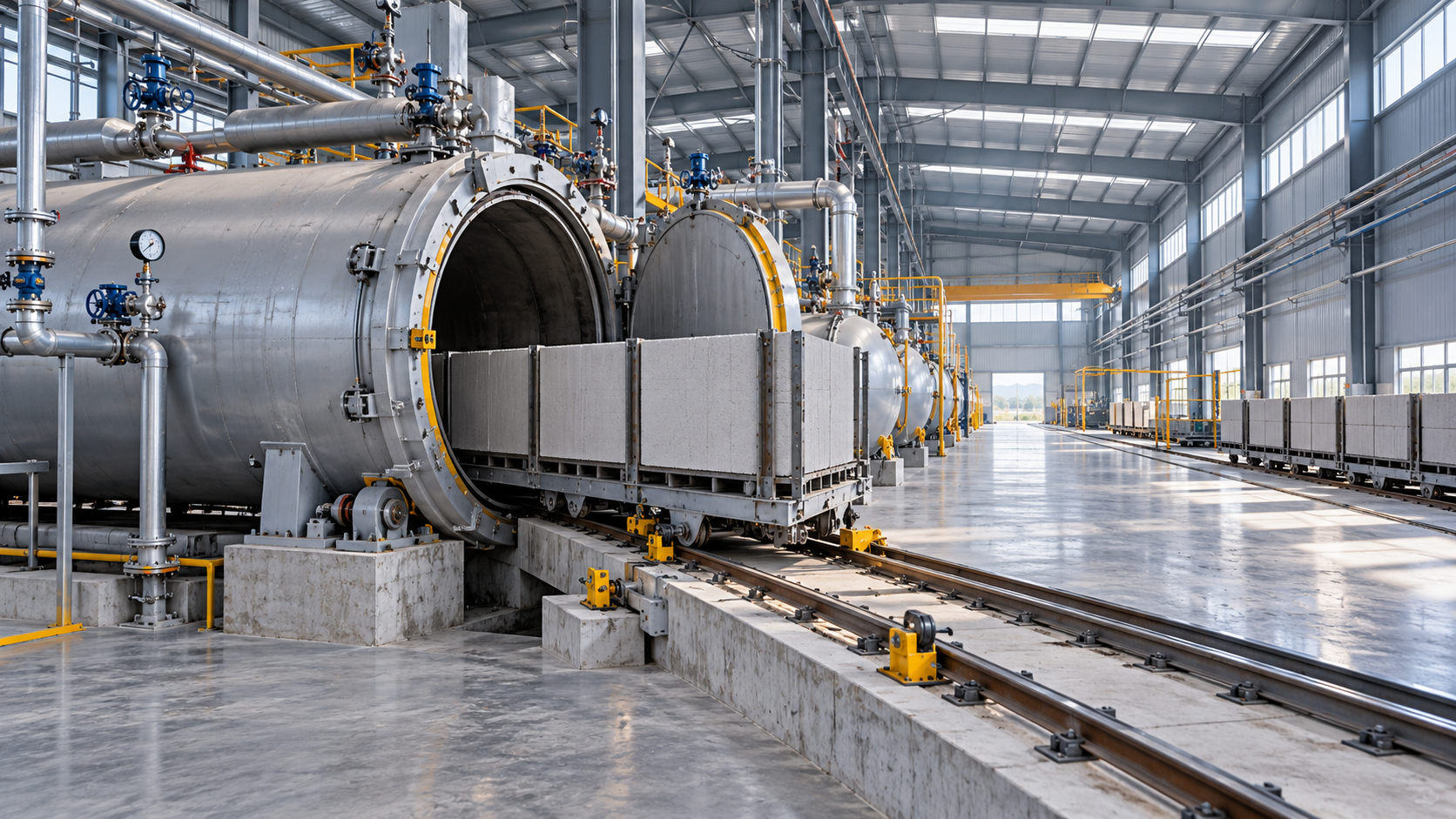
Depending on the production system, curing may involve covered storage, humid enclosures, controlled moisture application, or an engineered chamber with regulated temperature and humidity.
Steam curing can accelerate early strength in appropriately designed systems. Heating rates, moisture conditions, holding periods, and cooling require control rather than simply maximizing temperature.
Carefully controlled curing improves consistency between production batches. It also helps manufacturers separate problems caused by forming from those introduced during storage and handling.
How Long Before Concrete Bricks Can Be Handled or Used?
There is no universal release time. The answer depends on the mix design, cement characteristics, curing temperature, product geometry, required strength, and intended application.
Twenty-eight days is a common reference age for specifying or reporting concrete strength. It is neither a universal shipping rule nor the point when hydration stops.
Distinguish three decisions: moving fresh units, stacking or transporting hardened units, and accepting products for their intended use. Each requires an appropriate basis for release.
Initial movement depends on sufficient green strength and gentle handling. Later stacking and transport require enough developed strength to withstand the actual loads and impacts.
Final acceptance should follow the applicable product specification and test results. Depending on the product, requirements may include strength, dimensions, absorption, and relevant durability performance.
Establish handling and dispatch criteria through validated production trials and representative testing. Surface hardness, lighter color, or a dry appearance cannot reliably establish readiness.
Which Production Checks Reveal Problems Early?
Useful quality control begins before molding. Record material proportions, aggregate moisture adjustments, mixing time, and relevant machine settings so unexpected results can be traced.
During forming, monitor mold filling, unit height, fresh unit mass, and visible defects. Compare equivalent products because different geometries naturally require different target values.
Fresh mass is a useful consistency indicator when dimensions remain stable. Unexpected variation may suggest changing moisture, inconsistent feeding, or compaction problems requiring further investigation.
Inspect production boards and transfer equipment as well. Distorted supports, abrupt conveyor movements, or excessive vibration during transport can damage units that were formed correctly.
Maintain batch identification through curing and testing. Without traceability, a failed result provides little guidance about which material, machine setting, or curing condition needs correction.
Use the appropriate test method for the product and market. Compressive strength results depend on specimen preparation, conditioning, dimensions, and loading procedures, making consistency essential.
What Do Common Defects Tell You?
Defects often have several possible causes. Investigate the process in sequence instead of assuming every broken corner or low strength result requires greater pressing force.
A sound investigation changes one relevant variable at a time where practical. Record the outcome before adopting new settings across routine production or multiple shifts.
Why the Fastest Machine May Not Deliver the Most Saleable Bricks
Machine capacity describes only part of production performance. Saleable output also depends on batching, mixing, material supply, board circulation, handling, curing capacity, and rejection rates.
A short molding cycle offers limited benefit when the mixer cannot maintain supply or the curing area cannot accommodate additional production under controlled conditions.
Estimate theoretical output by multiplying units per cycle by cycles per hour. Then account for product changes, cleaning, maintenance, interruptions, and units rejected during quality checks.
Curing space should be sized around actual production and the time units occupy boards, racks, or chambers. Insufficient space can encourage premature movement or dispatch.
Batching equipment must also match the line’s actual needs. Hongfa’s HZS25 Concrete Mixing Plant (25 m³/h) provides one option to assess when planning upstream concrete supply.
Its listed capacity alone does not establish suitability for a brick line. Verify mixer compatibility with the intended dry concrete, practical batch timing, and discharge arrangements.
What Should You Ask Before Comparing Machines?
Start with the product you intend to manufacture: dimensions, solid or hollow geometry, appearance requirements, applicable standard, and the volume of accepted units needed daily.
Ask suppliers to demonstrate performance using representative local aggregates and a realistic mix. Results from different materials or simpler products may not transfer directly.
Request evidence covering dimensional consistency, measured strength after defined curing, rejection rates, and sustained output. A brief demonstration cannot establish normal operating performance by itself.
Clarify what the proposed system includes: molds, production boards, batching, mixing, conveying, curing arrangements, installation support, and operator training. These boundaries affect cost and operational readiness.
Also examine mold availability, wear parts, maintenance access, and local service arrangements. Reliable production depends on keeping the complete line operating consistently over time.
Judge the Complete Process, From Mixing to Verified Strength
A concrete brick machine determines how consistently a suitable mixture becomes a shaped, compacted unit. Curing determines whether that unit can develop its intended properties.
For meaningful comparisons, evaluate the complete production system: controlled materials, repeatable forming, protected handling, adequate curing capacity, and test results tied to identifiable batches.
The strongest purchasing or operating decision rests on verified saleable output. Fast cycles become valuable when the resulting bricks consistently meet the requirements for their application.