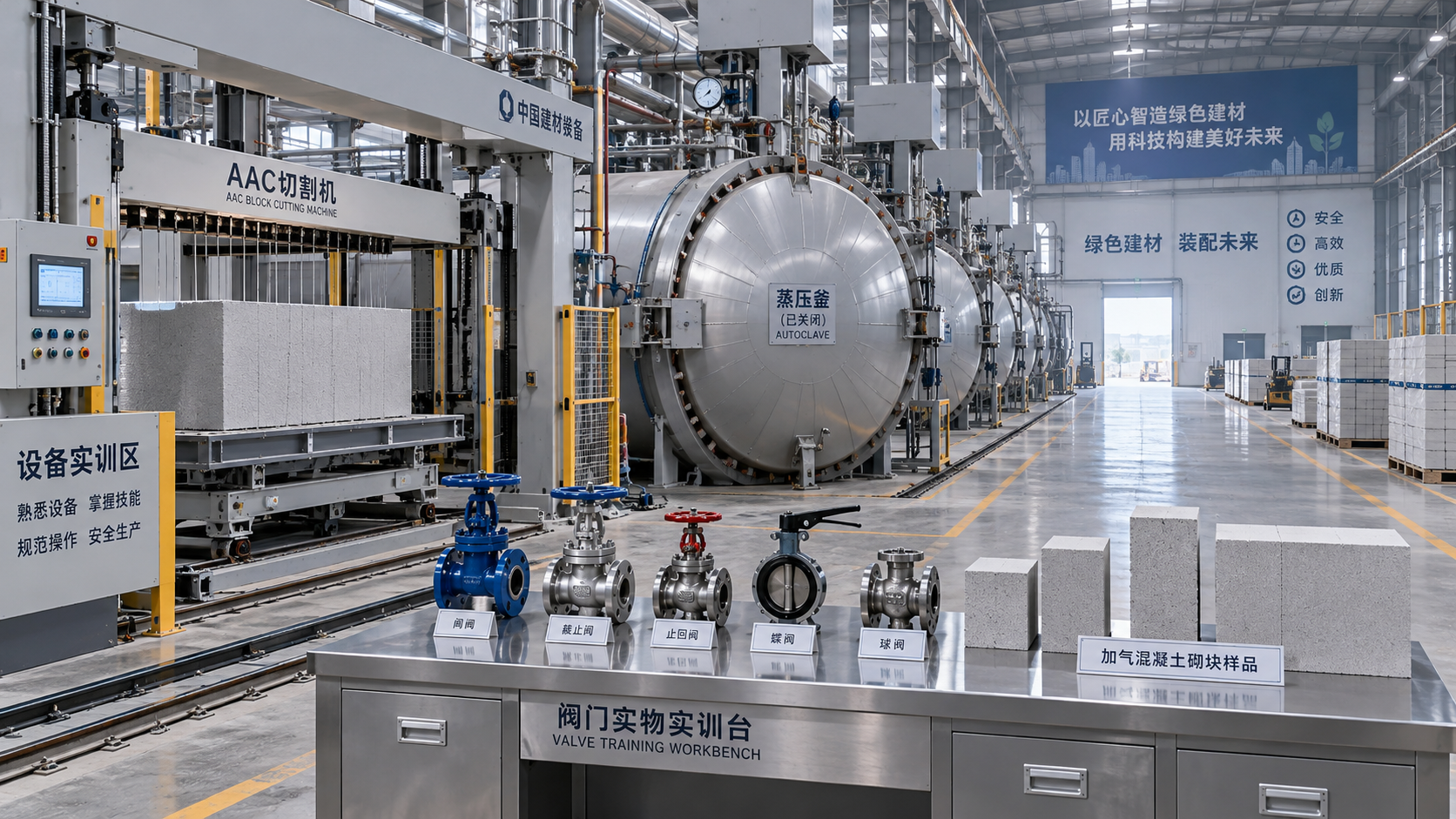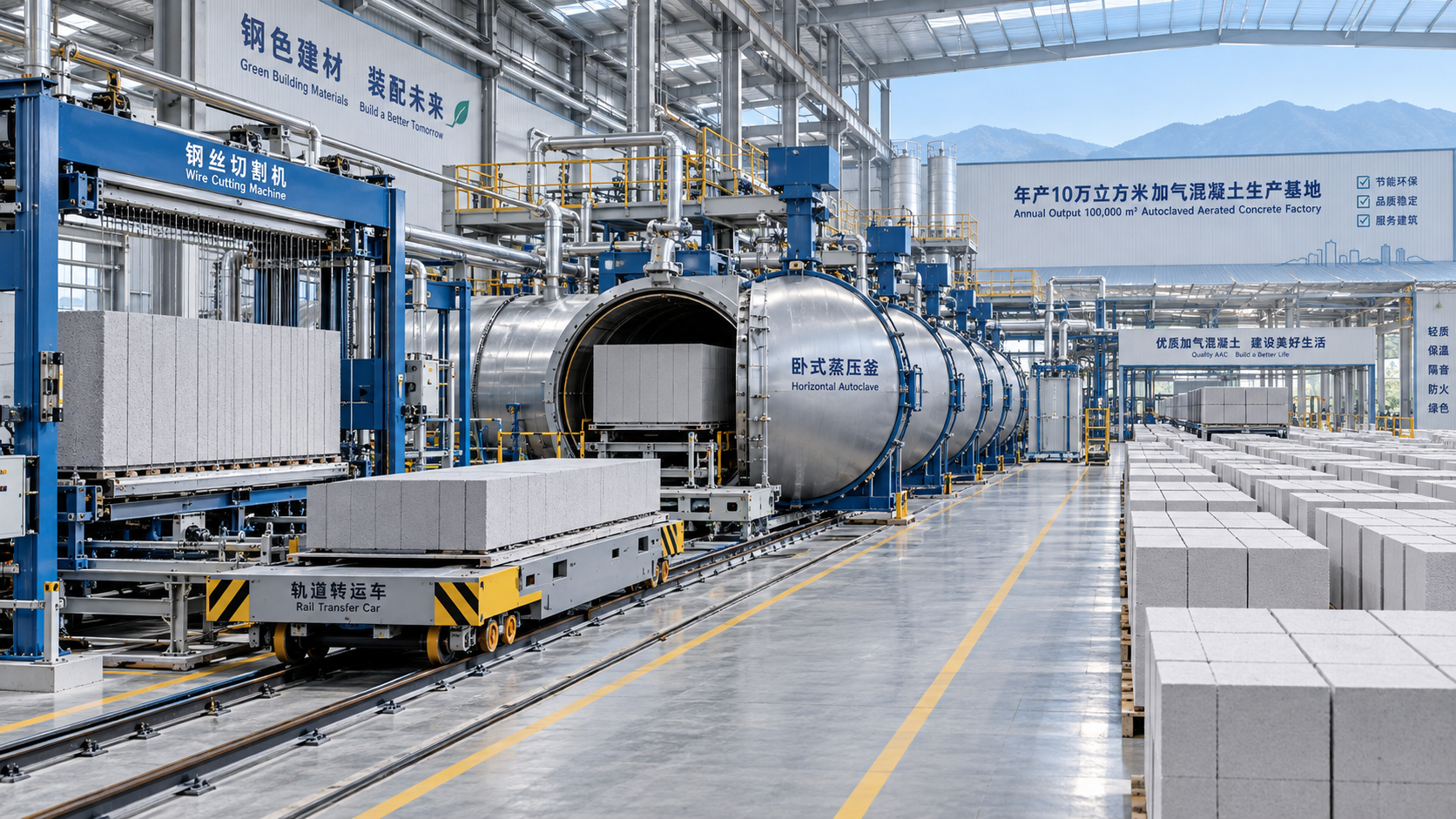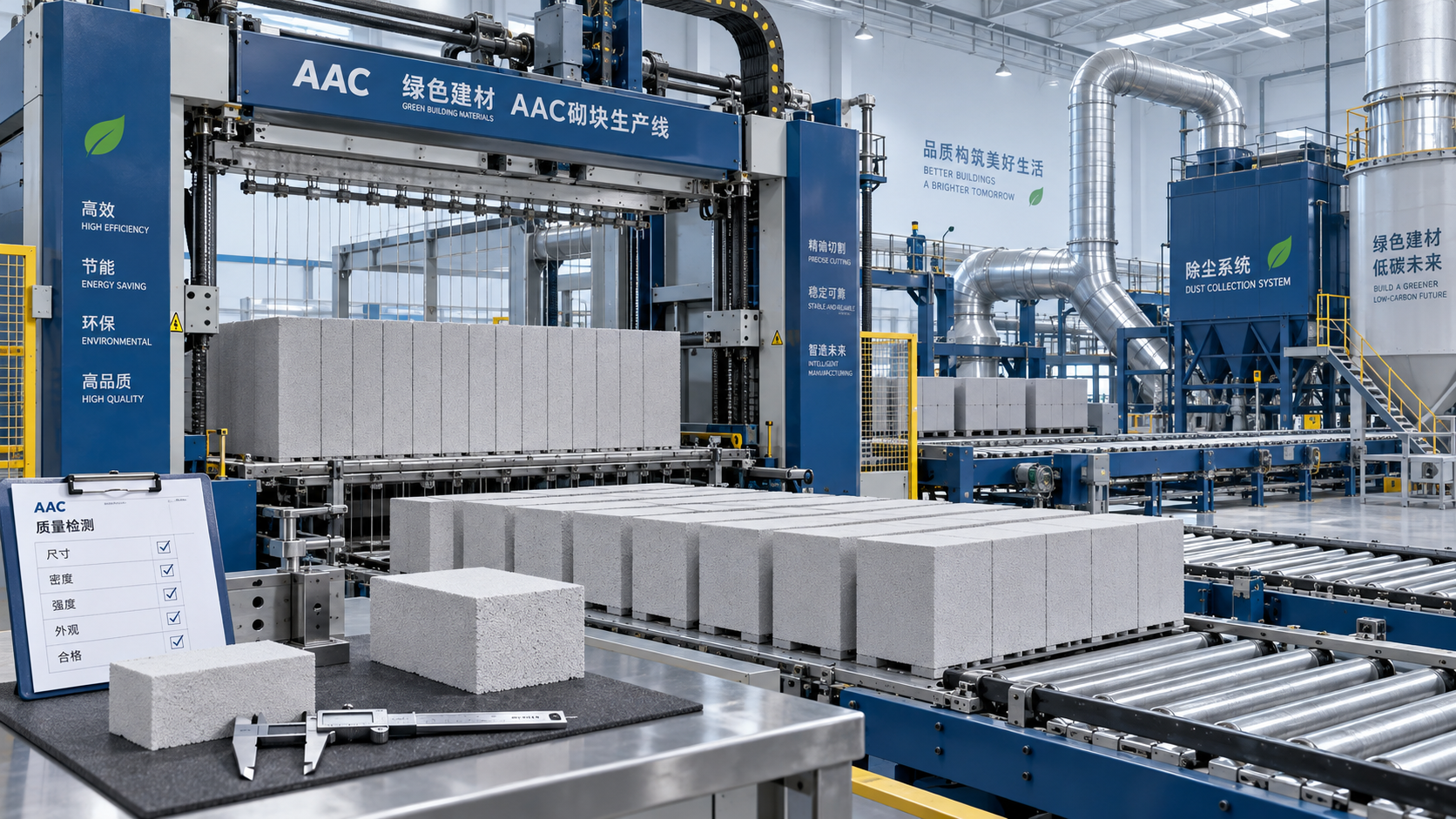
An overseas AAC production line is only as effective as its operating team. Practical training should prepare local staff to run production safely and consistently.
Without that preparation, unfamiliar controls, inconsistent batching, and weak maintenance practices can cause costly downtime, unnecessary material losses, and uneven block quality after commissioning ends.
AAC plant technical training for overseas operators should cover raw material preparation, process control, cutting, autoclave safety, troubleshooting, preventive maintenance, and documented assessments of operator competence.
For buyers evaluating suppliers such as Shandong Hongfa, the key question is whether training produces demonstrable operating competence, supported by clear responsibilities and continuing technical assistance.
What Should Your Team Be Able to Do Before Handover?
A useful training package starts with operational outcomes. Your team should understand normal production conditions, recognize deviations, and know when to stop equipment or escalate problems.
Operators should demonstrate routine startup, controlled shutdown, alarm response, and safe recovery from interruptions. Maintenance staff should perform scheduled tasks using approved procedures and isolation methods.
Quality personnel should connect raw material changes and process records with finished block results. Supervisors should coordinate these activities without depending on a visiting supplier engineer.
Distinguish training completion from plant performance acceptance. An attendance certificate shows participation; practical assessments establish whether people can perform their assigned responsibilities under realistic conditions.
Before signing the supply contract, define which tasks require demonstration, who evaluates performance, and what additional instruction follows if a trainee cannot yet perform safely.
Who Needs Training, and How Should Overseas Delivery Work?
A single classroom session rarely serves every role. Production operators, laboratory technicians, maintenance personnel, shift supervisors, and authorized autoclave staff need different levels of instruction.
Operators need hands-on practice at their stations. Laboratory teams need sampling and testing skills, while maintenance teams need equipment access, drawings, and fault diagnosis practice.
Supervisors need broader process understanding, production reporting, escalation rules, and staffing plans. Managers need visibility into competence gaps that could delay stable production after handover.
Language arrangements should be explicit. Specify the teaching language, translated operating documents, interpreter responsibilities, and terminology used on control screens, equipment labels, and safety notices.
Technical translation requires preparation. An interpreter unfamiliar with pressure equipment or batching terminology may communicate general explanations accurately while missing details that affect safe operation.
Use staged delivery: introductory instruction before startup, practical coaching during commissioning, and supervised production afterward. Train every shift and identify local trainers for future recruitment.
How Should Operators Learn Batching and Raw Material Control?
AAC quality begins before material enters the mixer. Training should explain the approved raw materials, their required characteristics, and how incoming variations influence process behavior.
Depending on the supplied process, this may include sand or fly ash, lime, cement, gypsum, water, and aluminum dosing materials, each with specific handling requirements.
Operators should practice checking weighing systems, confirming material identity, inspecting slurry preparation, and recording relevant measurements. Laboratory staff should learn representative sampling and approved test methods.
Explain how slurry density, fineness, temperature, and material reactivity can affect mixing and rising. These relationships help staff investigate changes instead of guessing at adjustments.
Training must define who may alter recipes and under what conditions. Unauthorized adjustments can hide the original problem and create further variation across production batches.
Ask the supplier to establish initial recipes using available local materials and document an adjustment method. A recipe alone provides limited protection against changing supplies.
What Process Control Skills Protect Block Quality?
Operators need to understand the relationship between mixing, casting, rising, pre-curing, cutting, and autoclaving. A downstream defect may originate several stages earlier in production.
Training should combine control-screen instruction with observation on the production floor. Staff must connect displayed values with actual material condition and equipment behavior during operation.
For mixing and casting, teach the approved sequence, dosing checks, relevant temperatures, and abnormal-condition responses. Explain which values operators may change and which require authorization.
During rising and pre-curing, trainees should recognize acceptable cake development and the conditions required for cutting. Timing alone may be insufficient when raw materials change.
Cutting instruction should cover readiness checks, equipment alignment, wire inspection, dimensional verification, and safe waste removal. Operators should recognize defects before passing material downstream unnecessarily.
A practical exercise should trace one batch from material receipt to finished blocks, linking operating records with observed quality and identifying where deviations first appeared.
What Must Autoclave Training Cover Before Anyone Operates It?
Autoclaves deserve particular attention because pressure, steam, heat, and heavy loads create serious hazards. Training must follow equipment documentation and applicable requirements in the destination country.
The supplier should explain loading arrangements, door mechanisms, interlocks, instrumentation, approved operating cycles, and shutdown procedures. Operators must understand the purpose of each protective feature.
Training should require verification of safe conditions before opening, using the prescribed checks. Staff must never rely solely on elapsed time or a single indication.
Cover steam admission, condensate management, pressure and temperature monitoring, and responses to abnormal readings. Use approved simulation or controlled demonstrations where live practice would introduce hazards.
Operators need explicit stop-work rules for suspected leaks, damaged door components, unreliable instruments, or failed interlocks. Production targets must never override required protective checks or isolation.
Supplier instruction does not replace legally required operator authorization, inspections, or certification. Establish who handles local compliance and confirm prerequisites before assigning independent operating duties.
AAC operators also need clear coordination procedures with boiler or steam-system personnel. Training responsibility for those systems should be assigned explicitly within the project scope.
How Should Troubleshooting Be Taught Without Encouraging Unsafe Shortcuts?
Effective troubleshooting starts with observation and evidence. Teach staff to record the alarm, operating stage, recent changes, affected batch, and relevant readings before attempting corrective action.
The supplier should provide fault guidance that distinguishes operator checks from work requiring electrical, mechanical, or specialist support. Clear boundaries reduce improvised repairs during production pressure.
Useful scenarios include inconsistent rising, damaged cakes, dimensional variation, interrupted conveying, and abnormal curing results. Each exercise should follow the equipment-specific diagnostic sequence and escalation rules.
For example, poor cake development should prompt checks of material characteristics, dosing records, and temperatures. Immediately changing several settings prevents staff from identifying the underlying cause.
Include recovery after power loss or an emergency stop. Restarting requires verification of equipment status, material condition, personnel location, and the approved restart sequence before operation.
Operators should never bypass interlocks to clear a fault. Assess whether trainees can recognize when production must remain stopped until qualified personnel resolve the condition.
What Maintenance Skills Should the Supplier Transfer?
Maintenance training should turn the equipment manual into a workable schedule. Identify daily checks, planned servicing, inspection responsibilities, lubrication requirements, and the records needed for follow-up.
Staff should practice safe isolation of electrical, mechanical, pneumatic, hydraulic, thermal, and pressure energy where applicable. Emergency stopping alone does not establish a safe maintenance condition.
Practical instruction should address accessible wear components, cutting wires, seals, bearings, sensors, and drive systems as applicable. Use the supplied equipment configuration to determine priorities.
Explain inspection criteria and replacement triggers, rather than relying only on calendar intervals. Actual operating hours, material conditions, and manufacturer instructions should inform maintenance decisions.
Electrical personnel need appropriate drawings, component identification, backup procedures, and access arrangements. Any control-system changes should follow defined authorization, documentation, and supplier guidance where required.
Connect training with spare-parts planning. Identify critical components, compatible specifications, expected procurement lead times, and storage requirements so the plant can prepare for foreseeable replacements.
How Can Buyers Verify That Training Has Worked?
Require a competence checklist for each role. It should identify the task, expected performance, assessment method, assessor, and any restrictions remaining after the training period.
Assessment should include independent demonstrations under supervision: completing a startup checklist, identifying an abnormal condition, taking a representative sample, or performing an approved maintenance task.
Evaluate understanding as well as memorized sequences. Ask trainees to explain why a check matters and what they would do if its result were unacceptable.
Agree on measurable production observations during supervised operation, such as dimensional consistency, recorded rejects, and correctly completed process logs. Define sampling methods and applicable product standards.
Do not assume a successful demonstration run proves every shift is ready. Check coverage across operating teams and ensure absences have not left critical roles untrained.
Record unresolved gaps and assign corrective training before independent work. Where performance issues persist, investigate equipment, utilities, and materials alongside operator competence rather than assigning blame.
What Should the Training Contract and Support Package Include?
The contract should specify training scope, delivery stages, working language, trainer responsibilities, expected participants, and required documents. Avoid relying on a general promise of installation assistance.
State how training duration will be determined and extended if prerequisites are delayed. Equipment readiness, local material availability, and trainee experience all affect productive instruction time.
Clarify fees for travel, accommodation, interpretation, additional training days, and return visits. These details help buyers compare quotations and avoid unexpected costs during startup and handover.
Request equipment-specific manuals, operating procedures, maintenance schedules, electrical drawings, assessment records, and relevant parameter backups. Confirm which documents will be translated and when they arrive.
Define remote support channels, availability, escalation contacts, and expected response arrangements. Distinguish an initial response from fault resolution, particularly when replacement parts or site attendance are necessary.
When evaluating Shandong Hongfa or another supplier, request a proposed curriculum and examples of training records. Verify that commitments apply to your purchased line and location.
How Should You Judge the Value of a Training Offer?
The strongest offer combines practical instruction, documented competence, and usable support after departure. Its value depends on reducing operational dependence while maintaining safe, consistent production.
Compare proposals against the same role-based checklist, then examine missing coverage, language suitability, supervised practice, assessment methods, and continuing support. Training hours alone are an incomplete measure.
For a new operating team, prioritize deeper practical coaching and supervisor development. An experienced team may need greater attention to unfamiliar automation, equipment differences, and process adjustments.
Track early results using downtime causes, rejects, maintenance completion, and competence gaps. These records reveal whether follow-up training should address operating technique, diagnosis, or maintenance execution.
Ultimately, AAC plant technical training for overseas operators should leave your team able to operate, recognize problems, and seek help appropriately, with evidence supporting each capability.
Before accepting handover, confirm that people, procedures, assessments, and support arrangements are ready. That gives buyers a clearer basis for expecting reliable production beyond commissioning.