What Should an Automated AAC Block Line Cost Estimate Include?
An automated AAC block line cost estimate should show the investment required to bring the plant into commercial operation: process equipment, automation, buildings and foundations, utilities, delivery, installation, commissioning, and the funds needed during startup. A machinery quotation can support that estimate, but its total is only meaningful when the supply boundaries and operating assumptions are clear.
For a buyer comparing proposals, the first question is whether each price covers the same plant, at the same saleable output, under the same site conditions. A lower quotation may exclude steam generation, raw material preparation, local electrical work, or finished-block handling. Those omissions can change both the project budget and the labor needed to operate the line.
Define the production basis before comparing prices
A useful automated AAC block production line cost estimate starts with a written production basis. This should identify the required block sizes, density and strength requirements, raw material route, working schedule, and expected saleable output. Without these assumptions, equipment lists that look similar can represent substantially different production capabilities.
Capacity deserves particular attention. Ask whether the stated output refers to material entering the process, blocks leaving the autoclaves, or accepted products available for sale. The estimate should also state the operating days, shifts, maintenance allowance, and assumed rejection rate used to calculate annual production. A nominal daily capacity does not, by itself, establish annual revenue potential.
The equipment must work as a coordinated system. Batching and casting capacity, mold circulation, cutting throughput, autoclave loading, curing schedules, and unloading capacity all influence the achievable output. Adding a faster cutting machine will have limited value if curing or mold availability restricts production. Request a process schedule showing how the proposed configuration supports the quoted capacity.
Raw materials affect the configuration as well. A sand-based route and a route using suitable fly ash may require different preparation, storage, and handling arrangements. Material composition, fineness, moisture, and consistency can influence processing requirements and formulation development. The estimate should identify which raw material assumptions have been established through testing and which still require investigation.
Product mix also belongs in the budget discussion. Changing block dimensions can affect cutting arrangements, handling, packaging, and production scheduling. If reinforced AAC panels are part of a future expansion, their requirements should be assessed separately; a block-line quotation should not be assumed to include reinforcement preparation or panel production capability.
Build the equipment scope around the complete process
The machinery section should follow the material from receipt through finished-product dispatch. Each stage needs a defined supply boundary, including the connecting equipment. Transfer systems, piping, instruments, and auxiliary equipment can otherwise fall between individual machine packages.
Raw material receiving, preparation, and batching
Include the storage and feeding systems required for the selected materials: silos, bins, conveyors, feeders, slurry tanks, pumps, and associated dust control. Where grinding or other preparation is required, the estimate should cover that equipment and its supporting systems. Delivery form matters: bulk material receiving and bag handling create different equipment and labor requirements.
Batching scope should specify weighing and dosing equipment, mixing systems, water measurement, and the preparation and dosing arrangement for the aluminum expansion agent. Clarify whether platforms, access arrangements, tank agitators, interconnecting pipes, and field instruments are included. A list containing “batching system” and “mixer” leaves too much uncertainty for a project budget.
Casting, pre-curing, cutting, and material recovery
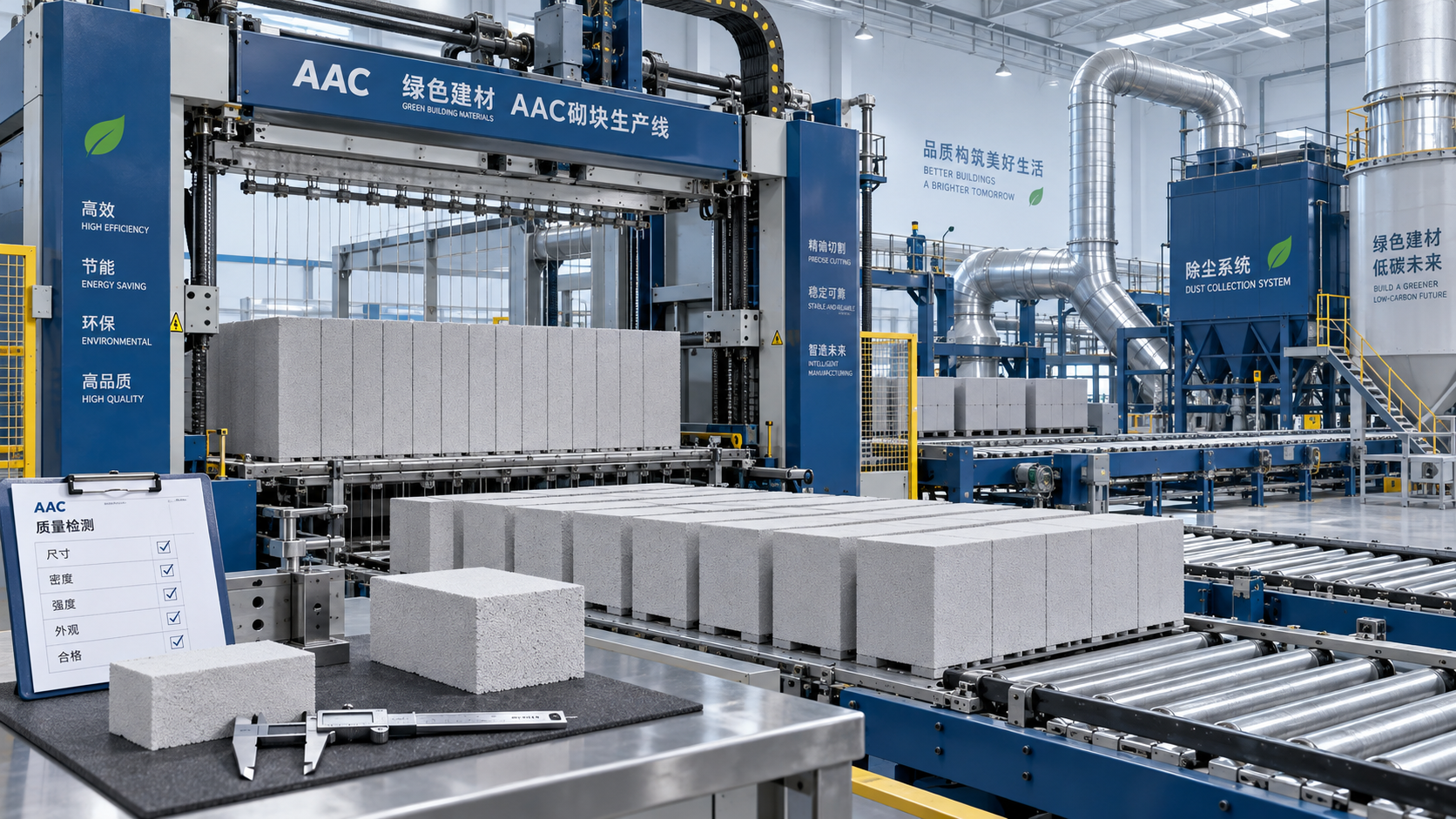
Molds, mold handling, casting equipment, pre-curing facilities, tilting or demolding equipment, and cutting systems should be listed together. Mold quantity is part of the capacity calculation because molds remain occupied during portions of the production cycle. A proposal with fewer molds may carry a lower price while supporting a different operating schedule.
For cutting, define the required product dimensions and tolerances, the method of size adjustment, and the handling of cut material. Include the system for collecting and returning reusable process material where this forms part of the proposed design. Cutting wires, wear components, lubrication equipment, and initial consumables should be identified separately from the main machine price.
Autoclaves and steam-related equipment
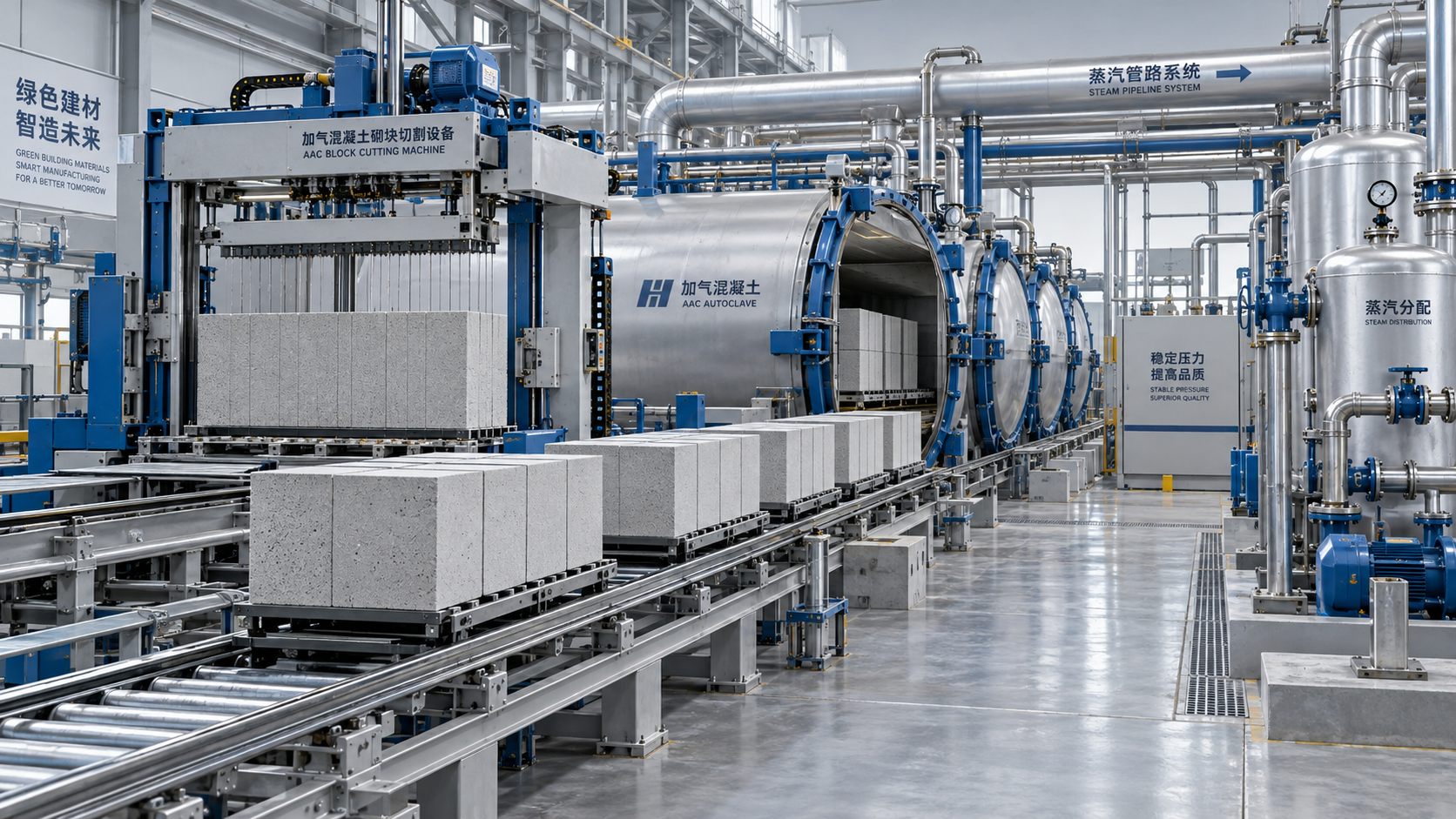
The curing section should identify autoclave quantity, usable dimensions, loading arrangements, operating requirements, and the accessories included with each vessel. Rails, curing cars, transfer equipment, valves, instruments, and steam piping need explicit treatment. Vessel capacity should be checked against the proposed batch schedule and product loading pattern.
Steam supply requires its own cost boundary. Depending on the site, this may involve a new boiler installation or a connection to an existing steam source. The budget may need to cover fuel handling, water treatment, feedwater equipment, condensate return, insulation, and any specified heat recovery arrangement. Steam demand should be evaluated over the production cycle, including peak requirements, rather than represented only by an average consumption figure.
Pressure equipment documentation, inspection, and installation requirements depend on the destination jurisdiction. Establish which documents and services the supplier provides and which the buyer must arrange locally. Resolving this before purchase helps avoid an equipment package that needs additional work before it can be accepted for operation.
Finished-block handling and the actual automation boundary
Include unloading, separation where required by the process, conveying, stacking, packing, and movement to storage. Packaging materials, pallets where used, forklifts, and yard handling may sit outside the machinery supplier’s scope, but they still belong in the investment estimate.
The word “automated” needs a functional description. Ask which operations run automatically, which require an operator’s intervention, and which remain manual. The control scope should identify panels, field devices, software, production records, alarm functions, and interfaces between equipment packages. It should also define access to backups, software licenses, and the arrangements for technical support.
Labor assumptions must follow those boundaries. Automated batching and cutting do not establish the staffing required for receiving materials, operating utilities, quality control, maintenance, packaging, or dispatch. A staffing plan tied to specific tasks is more useful than a single headcount attached to the word “automatic.”
Include the site work and startup costs that sit outside the machinery quote
Civil works can materially alter the total investment. The estimate should cover the production building, equipment foundations, pits, drainage, internal roads, storage areas, and utility structures required by the layout. Ground conditions, building design, and available services determine these costs; transferring an allowance from another location can produce a misleading budget.
Equipment loads and foundation requirements should be available early enough to support local engineering. Autoclaves, silos, cranes, and heavy processing equipment need coordinated layouts and structural provisions. Access for installation and later maintenance also affects building dimensions and equipment spacing. A compact drawing is useful only if machines can be installed, serviced, and supplied with materials within it.
Electrical scope should extend from the incoming supply to the equipment connection points. Depending on the site, this can include a transformer, distribution equipment, cable routes, grounding, lighting, and local control wiring. Ask the supplier to distinguish installed power from expected operating demand and identify major starting loads. The utility connection budget needs its own assessment.
Water, compressed air, drainage, dust collection, and process-water handling should receive the same treatment. Identify the required flow, pressure, quality, and connection point for each service. Where an existing factory provides utilities, check available capacity and any upgrade cost before assigning a zero allowance.
Delivery and installation require a separate breakdown. Freight, insurance, duties, taxes, port handling, inland transport, unloading, cranes, erection labor, and specialist supervision can be paid by different parties under different contract terms. Identify the delivery basis and avoid assuming that “installation included” covers local labor, lifting equipment, or all travel and accommodation expenses.
Commissioning should have a defined scope and completion condition. Include utility checks, control-system testing, production trials, formulation adjustment, operator training, and performance verification. Specify who supplies raw materials, energy, laboratory testing, and replacement consumables during trials. Acceptance criteria should connect output to product quality and agreed operating conditions.
Startup funding should cover initial raw material stocks, spare parts, consumables, payroll, utilities, and the cash tied up before customer receipts arrive. Production may take time to reach stable saleable output. Working capital belongs alongside fixed investment in the funding plan, with its assumptions shown separately so buyers can see how inventory and payment terms affect cash needs.
Turn the estimate into a comparison that supports a purchase decision
Ask each supplier to price against a common scope schedule. Every item should be marked as included, excluded, optional, or supplied by the buyer, with a clear connection boundary where responsibilities meet. Apply this to proposals from Shandong Hongfa or any other AAC equipment supplier. A company’s manufacturing background does not establish what a particular contract includes.
The commercial comparison should distinguish firm quotations from preliminary allowances. Civil works based on an unfinished layout, freight without a shipment plan, and utility connections without local assessment carry different levels of uncertainty. Show the basis and validity of each amount, including currency, tax treatment, payment terms, and exposure to exchange-rate changes.
Contingency should reflect unresolved project conditions. Uncertain ground conditions, incomplete raw material testing, or an undefined utility connection need specific attention. Keep contingency separate from known scope exclusions: an omitted boiler or building is a budget item, while an allowance for uncertainty serves a different purpose.
A practical supplier review should resolve a few questions before the price is treated as comparable:
- What saleable output and product specifications does the proposed configuration support?
- Which equipment, connecting systems, installation services, and local works are excluded?
- What utility demand and staffing assumptions support the operating plan?
- How will commissioning performance be measured, and who pays for the trial inputs?
- Which costs remain provisional, and what information is needed to firm them up?
Operating cost should be calculated separately from capital expenditure, then reviewed alongside it. Include raw materials, fuel or steam, electricity, water, labor, maintenance, consumables, packaging, and production losses. Use cost per saleable cubic meter and state the utilization assumption. A calculation at full nominal capacity can conceal the financial effect of lower demand or a slower production ramp-up.
Test the investment against plausible changes in utilization, energy prices, material consumption, and rejection rates. The purpose is to see which assumptions have the greatest effect on cash flow and whether a cheaper equipment configuration creates additional recurring costs. Extra manual handling, constrained curing capacity, or difficult maintenance access may matter more over time than the initial price difference.
The estimate is ready to support a purchase decision when the buyer can trace the total to a defined scope, understand the remaining allowances, and connect the proposed plant to a credible operating plan. Before committing, obtain the scope schedule, utility requirements, preliminary layout, and acceptance criteria together. Those documents give the quoted price a practical meaning: what must be funded, what the plant is expected to deliver, and what evidence will demonstrate that it has done so.
Recommend
 Oct 19, 2026
How Can Buyers Verify a Green Building Material Line Export Supplier?
Verify a green building material production line export supplier with factory checks, performance evidence, and contract safeguards. Explore this buyer’s guide to reduce risk and invest confidently.
- Oct 19, 2026
What Should an Automated AAC Block Line Cost Estimate Include?
An automated AAC block production line cost estimate should cover more than machinery. Explore equipment, utilities, installation, and startup costs to compare quotes and invest confidently.
- Oct 19, 2026
How Does a Hydraulic Roof Tile Machine Differ from Manual Pressing?
Color tile or concrete roof tile? Discover how hydraulic roof tile machines improve consistency, output, compaction, and quality over manual pressing.