



Which Is More Durable: Color Roof Tiles or Concrete Roof Tiles?
When builders, distributors, or roof tile manufacturers ask, “Which is more durable: color roof tiles or concrete roof tiles?”, the most accurate answer is not simply one material versus another. The term color roof tile can describe several products: a pigmented concrete tile, a concrete tile with a surface coating, a ceramic tile with a colored glaze, or even a coated metal roofing panel in some markets. Their long-term behavior can differ dramatically.
If “color roof tile” means a properly manufactured, through-colored or coated concrete roof tile, it may be just as durable as a plain concrete roof tile—and sometimes more resistant to surface staining and weather exposure. If it refers to a thinner, lower-density decorative tile with only a superficial color layer, conventional high-density concrete roof tiles will usually provide the more reliable service life.
For investors in building materials production, the question reaches beyond roof appearance. Tile durability affects product returns, market reputation, maintenance claims, and the stability of a manufacturing operation. The decisive factors are raw material control, compaction, curing, coating technology, and quality inspection—not color alone.
Start by defining what “color roof tile” means
The comparison often becomes confusing because “color tile” is a marketing description rather than a single technical material category. Before evaluating durability, buyers should ask what lies beneath the color.
- Colored concrete roof tiles: Made primarily from cement, graded sand or aggregates, water, and pigments. Color may be mixed into the body, applied as a slurry, or protected by a coating system.
- Surface-coated concrete tiles: These use a concrete base but receive an acrylic, polymer-modified, or similar protective decorative finish after curing.
- Clay or ceramic colored tiles: Their color is generally created by mineral content, engobe, or glaze, then fixed during high-temperature firing.
- Other colored roofing products: In some local markets, coated steel sheets, composite panels, or lightweight resin tiles are also called “color roof tiles.” They should not be directly compared with concrete tiles without considering their different structure and installation methods.
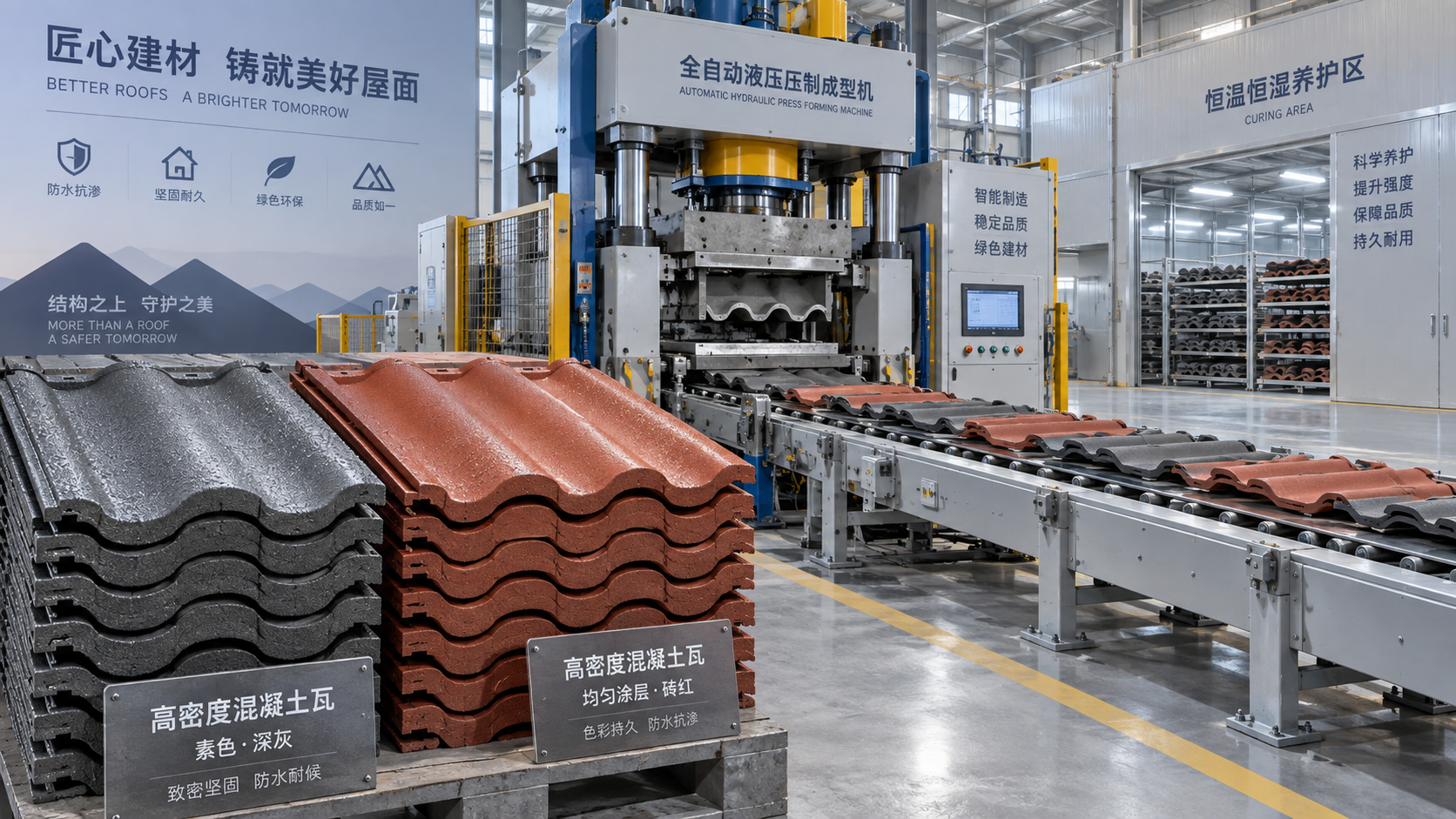
In the construction machinery context, the most relevant comparison is usually between a standard concrete roof tile and a colored concrete roof tile made on the same type of production line. Under those conditions, the base material and process discipline matter far more than whether the tile is gray, red, brown, black, or another shade.
Which is more durable in normal roofing conditions?
A well-compacted, well-cured concrete roof tile is inherently durable because its body has high mass, strength, and resistance to everyday weathering. It can perform reliably in sun, rain, wind, and seasonal temperature changes when it is produced to an appropriate specification and installed on a sound roof system.
A colored concrete roof tile can match that durability when the color treatment does not compromise the concrete body. In fact, a sound protective finish may provide practical benefits: reduced surface porosity, slower dirt accumulation, less visible efflorescence, and improved retention of the intended roof appearance. These benefits depend on the coating being compatible with the tile substrate and fully bonded after the curing process.
However, color does not automatically make a tile stronger. A tile with insufficient cement content, poor aggregate grading, inadequate pressing pressure, or rushed curing remains vulnerable even if it has an attractive finish. The color layer may initially hide surface defects, but it cannot correct a weak, porous, or poorly formed tile underneath.
So, which is more durable? For structural and long-term weather durability, high-density concrete roof tiles and quality colored concrete roof tiles can be equivalent. For appearance retention, a properly coated colored concrete tile may have an advantage. For reliability in demanding projects, the tile with the better base density, curing quality, and production consistency is the better choice.
Durability comparison: what actually changes?
The base tile decides whether the roof lasts
Concrete roof tile durability begins before molding. Cement type, aggregate cleanliness, particle-size distribution, water control, admixtures, and pigment compatibility all influence the final product. Even a small inconsistency in moisture can affect compaction and produce variation from one tile to the next.
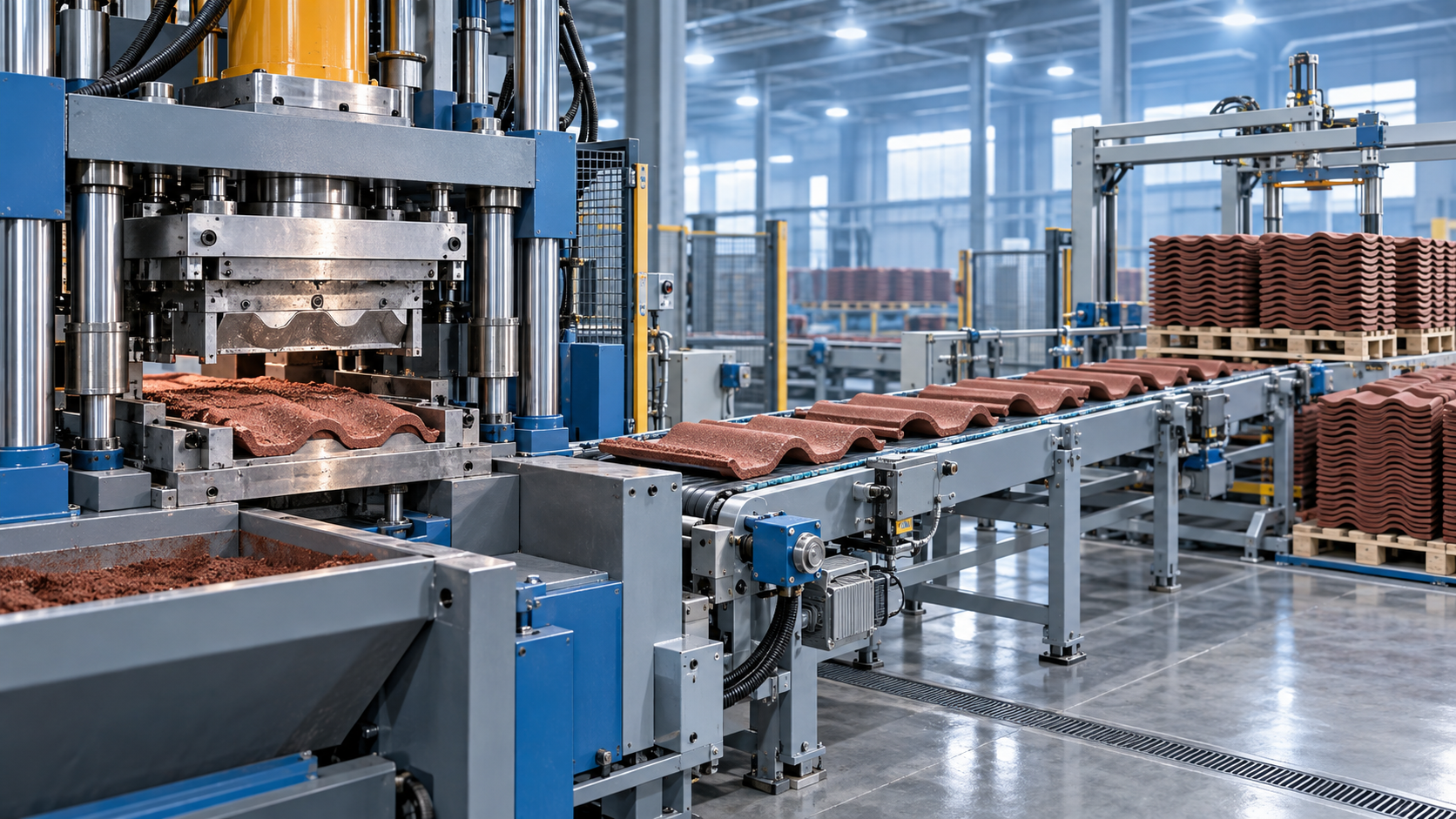
During forming, vibration and hydraulic pressing help create a compact tile body. Insufficient compaction leaves more internal voids, which can increase water absorption and reduce resistance to repeated wet-dry cycles. Excessive wear in molds can also cause inaccurate interlocking edges, making installation more difficult and affecting how the roof handles wind-driven rain.
Curing is equally important. Fresh concrete needs controlled conditions to develop its intended strength. A factory that prioritizes production speed but neglects curing discipline may produce tiles that look acceptable when they leave the line yet perform inconsistently months later. This is one reason serious tile producers focus on process control rather than treating color as the main selling point.
For manufacturers building or upgrading a roof tile operation, equipment selection should support repeatability at every stage: accurate batching, stable feeding, controlled molding, dependable handling, and organized curing. Hongfa’s experience in concrete product machinery, batching systems, block lines, and building-material production equipment reflects this broader reality: durable finished products come from a coordinated system, not from one machine or one decorative treatment.
When color becomes the weak point
Color roof tiles can disappoint when the coating or pigment system is poorly selected for the climate. In areas with strong sunlight, low-grade pigments may fade noticeably. In humid regions, a finish with weak adhesion can deteriorate sooner if moisture repeatedly enters and leaves the tile body. Where winters are cold, water absorbed into a porous substrate can make freeze-thaw damage more likely.
Several warning signs deserve attention during supplier evaluation:
- Color appears rich on the surface but is absent immediately below it.
- The finish feels overly brittle, powdery, or uneven around edges and interlocking zones.
- Tiles from the same batch show inconsistent shade, thickness, or profile.
- Fresh tiles are packed or transported before curing has been sufficiently completed.
- The supplier discusses color options in detail but cannot explain raw materials, curing, water absorption, or quality checks.
A fading color layer is often an aesthetic problem first, while cracking and excessive absorption are more serious performance issues. Still, appearance matters on a roof. A patchy roof can create customer complaints long before the tile itself fails structurally. That is why a durable color finish should be viewed as part of total product quality, not merely decoration.
Climate and roof design may matter more than tile color
A tile that performs well in a dry, warm region may require different design attention in a wet coastal area or a location with large temperature swings. High rainfall places greater importance on water shedding, side-lock accuracy, underlayment, and roof pitch. Wind-prone locations require secure fixing details. Trees, shade, and airborne pollution can increase algae, moss, and staining regardless of whether the tile is plain concrete or colored.
Roof construction should also be considered as a system. The quality of battens, fasteners, flashing, ventilation, waterproof layers, and installation workmanship can determine whether a roof performs as expected. A durable tile cannot compensate for poor drainage or incorrect overlap. Likewise, a visually appealing colored tile installed without allowance for local wind loads may create avoidable repair work.
For this reason, distributors should avoid presenting “color tile” as a universal upgrade and “concrete tile” as a basic alternative. The better recommendation depends on project expectations. A housing development seeking a uniform architectural look may value coated color stability. Agricultural, utility, or cost-sensitive buildings may prioritize robust concrete body strength and straightforward maintenance. In both cases, reliable production quality should remain non-negotiable.
How manufacturers can produce tiles that hold up over time
For a tile producer, durability is designed into the process. A practical quality program should begin with incoming-material checks and continue through batching, molding, curing, finishing, storage, and dispatch. The goal is not simply to manufacture tiles that pass a visual inspection; it is to reduce variation that later becomes breakage, color inconsistency, or customer dissatisfaction.
Useful control points include stable aggregate moisture measurement, accurate weighing of cement and pigments, regular mold inspection, consistent pressing conditions, controlled curing time, and sample testing from each production period. For colored products, coating viscosity, spray or application uniformity, drying conditions, and adhesion need their own inspection standards.
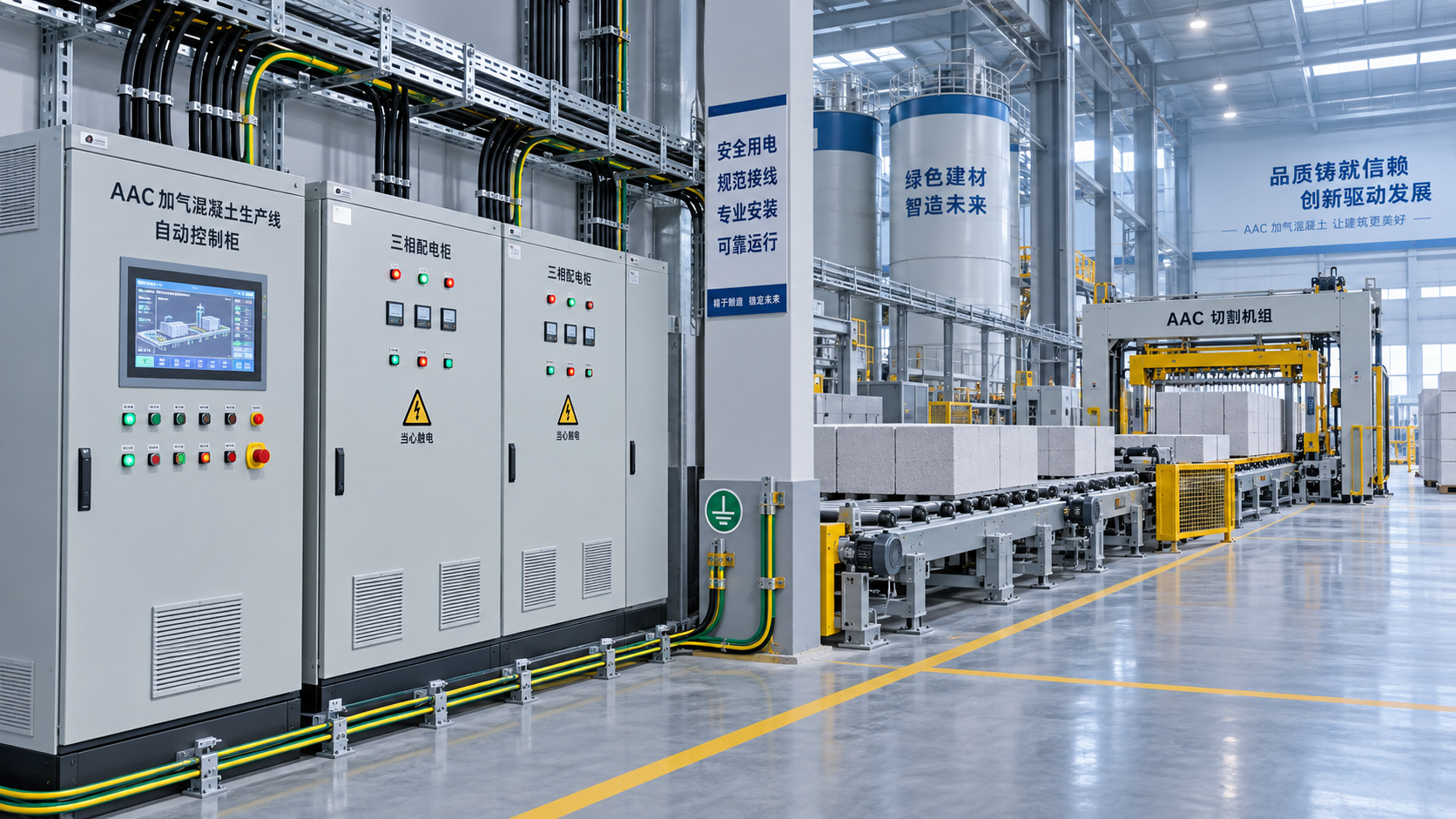
Modern building-material machinery is valuable when it gives operators repeatable control rather than adding unnecessary complexity. Hongfa has developed construction-material production equipment over decades, supported by engineering teams, research capabilities, patented technologies, and a quality-tracking approach. For producers planning concrete roof tile capacity alongside block, aerated concrete, or batching operations, integrated process planning can help align raw-material handling, concrete preparation, and finished-product consistency.
Questions to ask before choosing a tile or production solution
Whether you are buying finished roof tiles, specifying materials for a project, or investing in a tile line, the following questions can bring the comparison back to measurable facts:
- Is the colored tile a concrete tile with a durable finish, or a different roofing material entirely?
- What are the tile’s density, water absorption behavior, and dimensional tolerances?
- How is color created: integral pigment, surface slurry, paint, or multilayer coating?
- What curing method is used, and how is curing consistency monitored?
- How will the tile perform in the project’s sun, rain, humidity, wind, and temperature conditions?
- Are replacement tiles likely to match future production batches in profile and color?
- Can the supplier explain machine configuration, mold maintenance, testing, and after-sales technical support?
FAQ: Which is more durable?
Are colored concrete roof tiles less strong than plain concrete tiles?
Not necessarily. If both products use the same high-quality concrete base and are formed and cured under the same controlled conditions, their structural strength can be very similar. A color coating mainly affects surface appearance and protection; it does not inherently weaken the concrete body.
Do color roof tiles fade over time?
Some gradual weathering is normal, especially under intense UV exposure. The extent depends on pigment quality, coating formulation, surface preparation, and climate. A durable coating system should fade slowly and evenly rather than peel, chalk, or form irregular patches.
Is a plain concrete roof tile easier to maintain?
It can be simpler because there is no decorative coating to protect. However, plain concrete may show stains, moss, or surface weathering more visibly in damp environments. A dense colored tile with a well-bonded finish may be easier to clean and retain a more uniform appearance.
What is the safest choice for a long-life roof?
Choose a tile with a dense, well-cured base; an appropriate profile for the roof pitch; proven compatibility with local weather; and installation support that addresses the complete roof system. If appearance is important, select a colored concrete tile with a tested, stable finish rather than relying on color alone as evidence of quality.
Ultimately, the answer to “Which is more durable?” is clear: the best-made tile is more durable, whether it is plain concrete or colored concrete. A sound concrete body provides the foundation. Precise machinery, disciplined curing, and controlled finishing determine whether that foundation becomes a roof product that continues to protect—and look right—over many seasons.
Recommend
 Sep 30, 2026
When does an automated building material production line pay off?
Automated building material production line ROI explained: assess capacity, quality, labor, waste, and total costs to make a profitable investment.
- Oct 01, 2026
How a green building material production line reduces material waste
Discover how a green building material production line cuts waste through precise batching, controlled forming, stable curing, and smart material recovery.
- Oct 02, 2026
What to confirm before finalizing AAC factory planning
AAC factory planning: confirm product mix, raw materials, capacity, utilities, layout, automation, and supplier scope before investing in a reliable, efficient AAC plant.