AAC Cutting Machine Accuracy: The Roles of Wire Tension and Green Strength
A green AAC cake can leave the cutting station with bowed faces, torn corners, or inconsistent block widths even when the wire spacing appears correct. These defects affect stacking, downstream handling, and dimensional compliance. The first distinction is whether the wire is moving away from its intended cutting plane, the cake is deforming around it, or both are happening together.
Accurate cutting requires a stable wire system and a cake within a validated green-strength window. Insufficient wire tension permits excessive deflection under cutting resistance. Insufficient green strength allows the material to smear, tear, or slump. Excessive tension cannot make an underdeveloped cake stable, while delaying cutting too long can increase resistance and wire loading. Diagnosis should therefore connect tension, material condition, and cutting speed rather than adjust any one variable in isolation.
Separate dimensional error from surface damage
Before changing settings on an AAC cutting machine, define the defect precisely. A block with an incorrect average width presents a different problem from one with the correct average width but a curved face. Likewise, a rough surface does not automatically indicate that the wire position is wrong.
Measure dimensions at consistent positions along the cutting direction and at different cake heights. Record squareness, face straightness, and edge condition separately. Use the same measurement method and reference surfaces for each comparison; pressing a measuring tool into soft material can create an apparent dimensional error.
These patterns guide investigation; they are not unique diagnoses. A loose wire and a soft cake can produce overlapping symptoms. Preserve the defect pattern and operating records before making several adjustments that obscure the original cause.
Wire tension controls resistance to deflection—not the whole cutting process
A cutting wire experiences transverse loading as it passes through the cake. For the same loading and unsupported span, greater tension generally reduces lateral displacement. A longer unsupported span is more susceptible to deflection. This explains why identical nominal tension settings may not produce equivalent accuracy on machines with different frame layouts or guide arrangements.
Actual cutting load is not constant. It changes with cake consistency, wire diameter, surface condition, feed speed, and any oscillating motion used by the equipment. A tension value that works under light resistance may allow noticeable wire lag when resistance rises. The resulting surface can curve even though the wire returns to its correct position after leaving the cake.
Nominal pressure is not necessarily actual wire tension
On a pneumatically or hydraulically tensioned system, a pressure reading is only a proxy for wire force. Cylinder geometry, friction, linkage condition, and the tensioning arrangement influence the relationship. Equal pressure readings do not prove equal tension across every wire.
- Verify the manufacturer's method for establishing actual tension and its permitted operating range.
- Check clamps, guides, and tensioning mechanisms for slip, sticking, wear, and inconsistent movement.
- Confirm that replacement wire has the specified diameter, material, and strength characteristics.
- Inspect for corrosion, kinks, and abrasion that can reduce reliability even when tension appears correct.
Increasing tension without checking these conditions can raise wire stress without removing the source of instability. It may also increase loading on clamps and the cutting frame. Tension adjustment, wire replacement, and close inspection must follow isolation procedures because a tensioned wire stores energy and can recoil if it fails.
Green strength defines whether the cake can hold the cut
Green strength is the cake's ability to retain its shape and resist cutting and handling forces before autoclaving. It is not the same as the compressive strength of the finished AAC block. A cake may stand under its own weight yet remain too weak locally to retain clean edges during cutting.
Pre-curing develops the structure needed for demolding, transfer, and cutting. Its progress depends on the formulation, raw-material reactivity, water content, temperature history, and other process conditions. Elapsed time alone is therefore an unreliable release criterion when those conditions vary.
The useful target is a cutting window, not maximum green strength. Below that window, the wire can drag material instead of leaving a stable separation plane. The cake may deform during transfer or lose edge definition after cutting. Above the practical window, greater resistance may increase wire deflection, surface damage, or breakage risk, depending on the material and machine.
Evaluate consistency as well as the average condition. Temperature or density differences within a cake can create zones that cut differently. A satisfactory surface test may miss a weaker or more resistant interior. Qualification should establish whether sampling locations represent the full cake, including areas associated with recurring defects.
Use a repeatable readiness test
Plants may use penetration resistance, a defined green-strength test, or another validated indicator to decide when to cut. The method must specify the tool, test location, loading procedure, and acceptance criteria. Results from different probes or procedures should not be treated as interchangeable.
Correlate the readiness indicator with actual cutting quality over representative production conditions. A useful release criterion should predict acceptable shape retention and manageable cutting resistance, not merely reproduce a familiar pre-curing duration.
Match cutting motion to the material window
Feed speed affects the loading imposed on both wire and cake. Raising speed can increase resistance and transient deflection; reducing it may improve a marginal cut, but cannot reliably compensate for insufficient green strength. Longer wire contact can also alter dragging or buildup behavior, so “slower is better” is not a universal rule.
Acceleration and entry conditions deserve separate attention. A machine may maintain a stable cutting speed while loading the cake abruptly at entry. Damage concentrated at the start or end of travel suggests checking approach motion, support transitions, and wire engagement before changing the entire cutting cycle.
Where wire oscillation is fitted, evaluate its settings within the equipment supplier's limits. Oscillation changes the relative cutting action, but an unsuitable setting can introduce vibration or unfavorable dynamic loading. Verify support conditions as well: cake movement or sag can mimic a wire-accuracy problem even when the wire system is functioning correctly.
A controlled troubleshooting sequence
When accuracy deteriorates, avoid increasing tension, slowing the machine, and extending pre-curing simultaneously. That may produce acceptable blocks temporarily, but it leaves the cause unresolved and makes the next adjustment harder to interpret.
- Record the initial condition. Map defects to cake position and cutting direction. Capture wire specification, tension setting, speed, readiness-test results, temperature history, and relevant formulation changes.
- Verify the mechanical baseline. Under the required isolation procedure, check wire spacing, frame alignment, guides, clamps, tensioning operation, and cake supports. Correct identifiable faults before process trials.
- Confirm measurement reliability. Check instrument condition and repeatability. Establish whether the apparent variation exceeds measurement uncertainty.
- Compare material readiness. Use the established test at defined locations. Look for differences between acceptable and defective cakes rather than relying solely on clock time.
- Change one controlled variable. Within approved limits, adjust tension or cutting motion while keeping material condition as comparable as practicable. Record effects on dimensions, surfaces, and wire behavior.
- Verify repeatability. Repeat the selected condition across enough cakes to expose normal variation. One clean cut does not establish a stable operating window.
Stop trials when repeated wire breakage, abnormal frame movement, or unstable tensioning appears. These conditions call for mechanical investigation rather than further compensation through process settings.
Evidence to request during equipment evaluation
A quoted dimensional accuracy is incomplete unless its operating conditions are defined. Ask which product sizes, cake densities, wire spans, and readiness conditions support the claim. Clarify whether results describe freshly cut green units or finished autoclaved products, since downstream handling and curing can introduce additional dimensional changes.
A meaningful demonstration should include measurements from different positions in the cake and from repeated production cycles. Request the distribution of results rather than only a selected block or an overall average. Averages can conceal alternating oversize and undersize units or localized face bow.
The acceptance protocol should define:
- The applicable product specification and the agreed limits for dimensions, squareness, and surface condition.
- The measurement stage, reference points, instruments, sampling locations, and treatment of damaged edges.
- The permitted process window for cake readiness, tension, cutting speed, and wire condition.
- The response to stoppages, restarts, wire replacement, and changes between product formats.
There is no single wire-tension value or green-strength threshold suitable for every AAC line. Supplier recommendations must be tied to the actual wire assembly and formulation. Product standards establish relevant acceptance requirements, but they should not be assumed to prescribe a universal cutting recipe.
Equipment scope also needs clarification when comparing proposals. A product listed as a QT4-20C Block Making Machine should not be treated as evidence of AAC wire-cutting capability. Confirm the actual forming process and included equipment before applying AAC cutting-accuracy criteria to a quotation.
Turn successful trials into operating limits
Once trials identify stable conditions, document an operating window with explicit boundaries. Include the readiness-test method, approved wire specification, tension verification procedure, motion settings, and defect-based stop criteria. Record what operators should do when a cake falls outside the window instead of leaving them to compensate with extra tension.
Trend wire replacement frequency, dimensional variation, and edge defects alongside material-readiness results. A gradual increase in required tension may indicate wear, buildup, or changing material resistance rather than a legitimate new setpoint. Revalidate the window after significant formulation changes, tension-system repairs, or changes to wire specification.
The decisive evaluation question is whether the line maintains the required dimensions across a defined range of normal material variation. Equipment that produces an acceptable sample only at an unusually narrow readiness condition may require tighter upstream control than the plant can consistently provide. Acceptance should establish that boundary before production settings are approved.
Recommend
 Nov 01, 2026
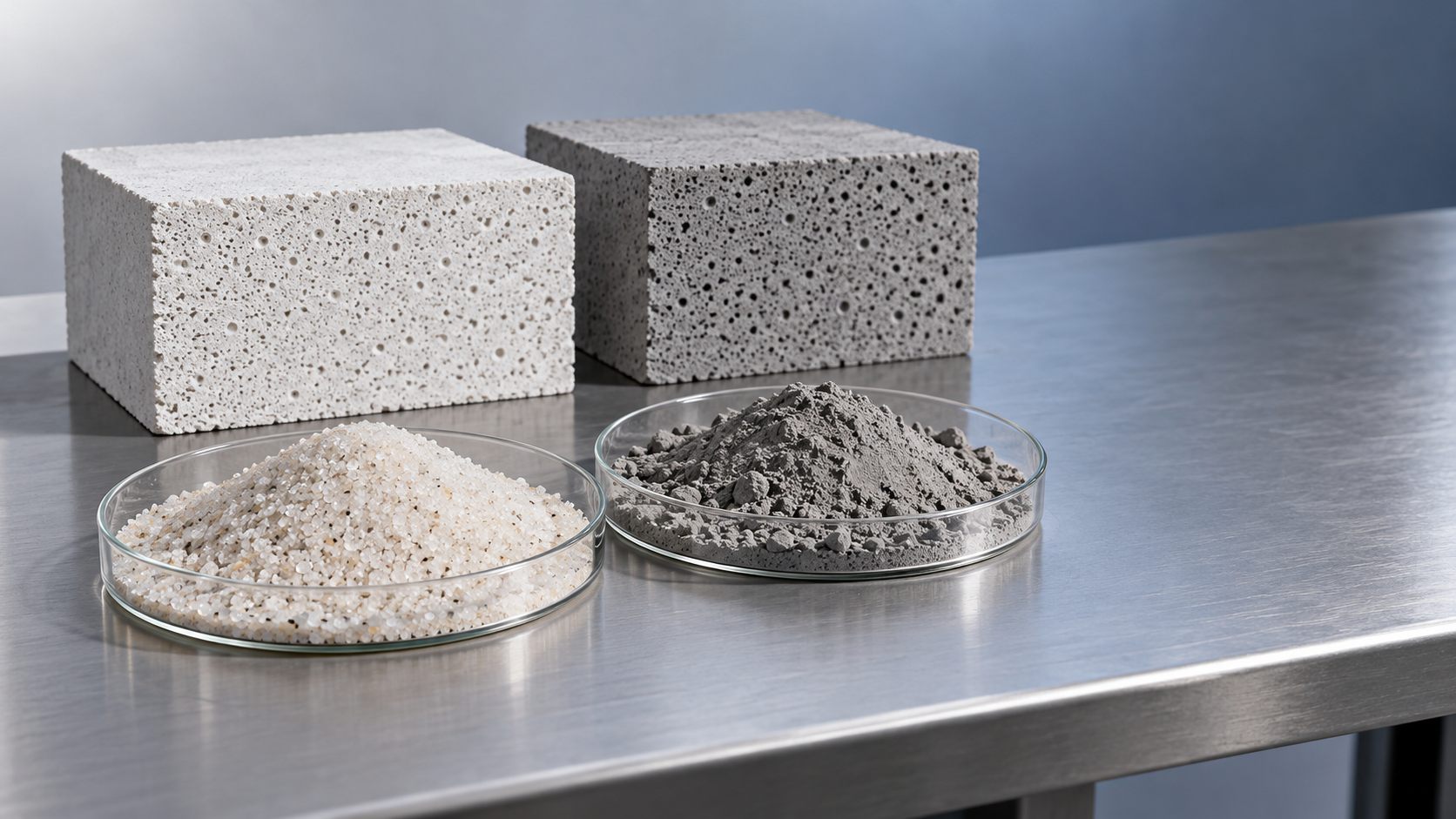
Which Is Better for AAC Production: Sand or Fly Ash?
How does a hydraulic roof tile machine differ from manual pressing? Discover why process control matters, then compare sand vs. fly ash for AAC costs, quality, and equipment needs.
- Nov 01, 2026
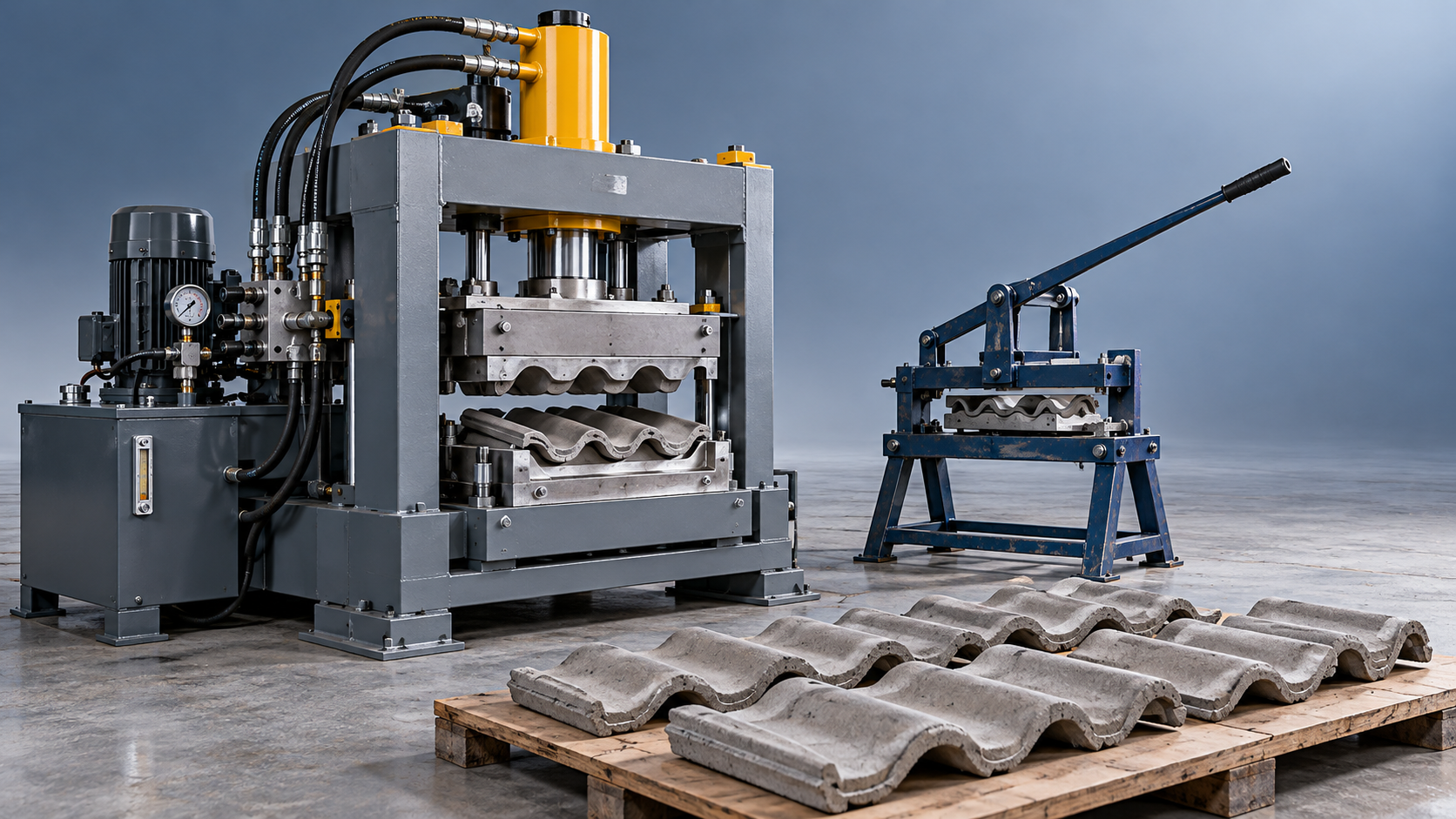
How Does a Hydraulic Roof Tile Machine Differ From Manual Pressing?
Choosing color tile or concrete roof tile? Compare hydraulic and manual pressing for costs, consistency, and output to find the right setup for your production goals.
- Oct 31, 2026
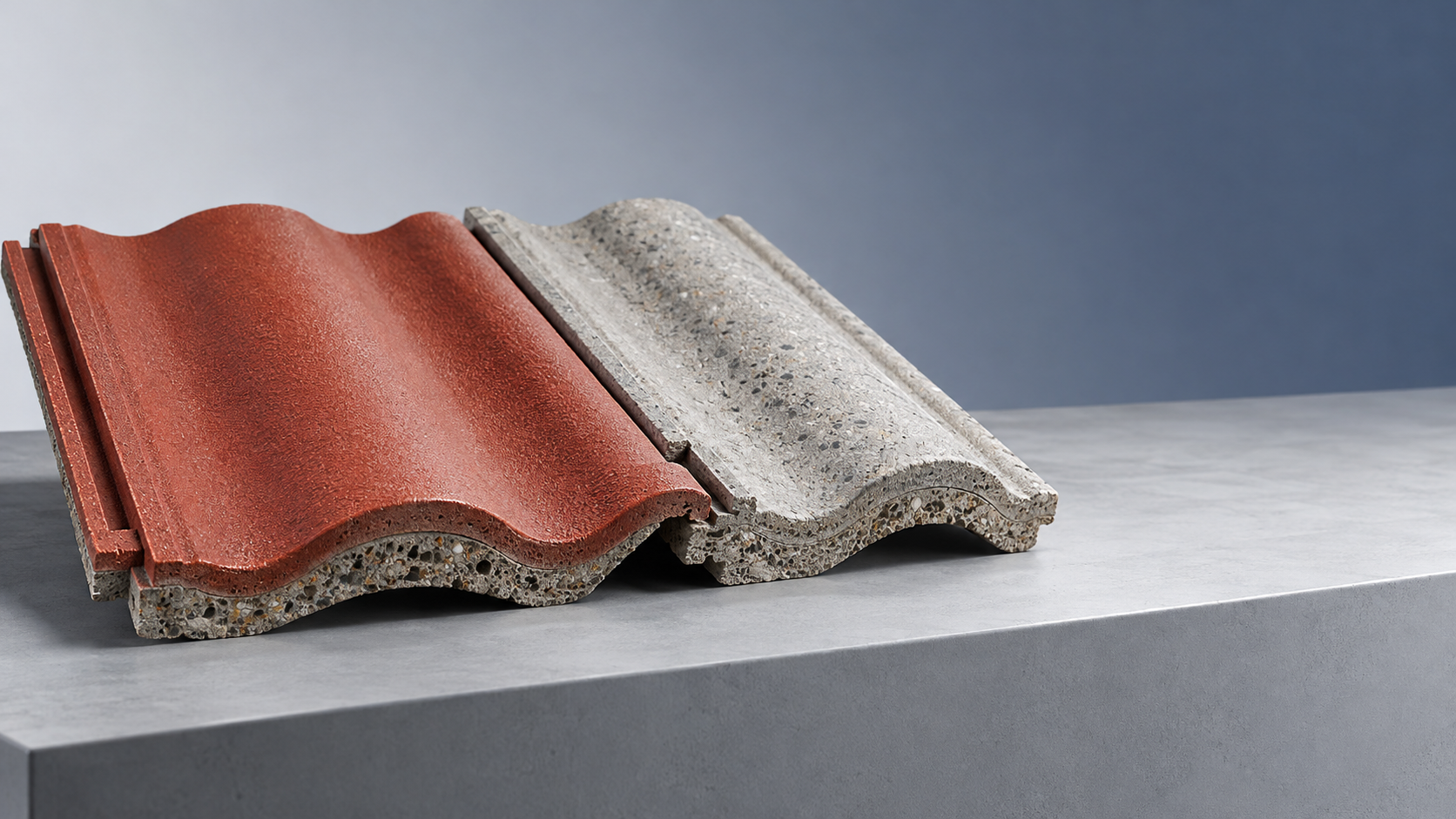
Which Is More Durable: Color Tile or Concrete Roof Tile?
Which is more durable: color tile or concrete roof tile? Compare materials, weather resistance, and manufacturing quality to choose the right roofing with confidence.