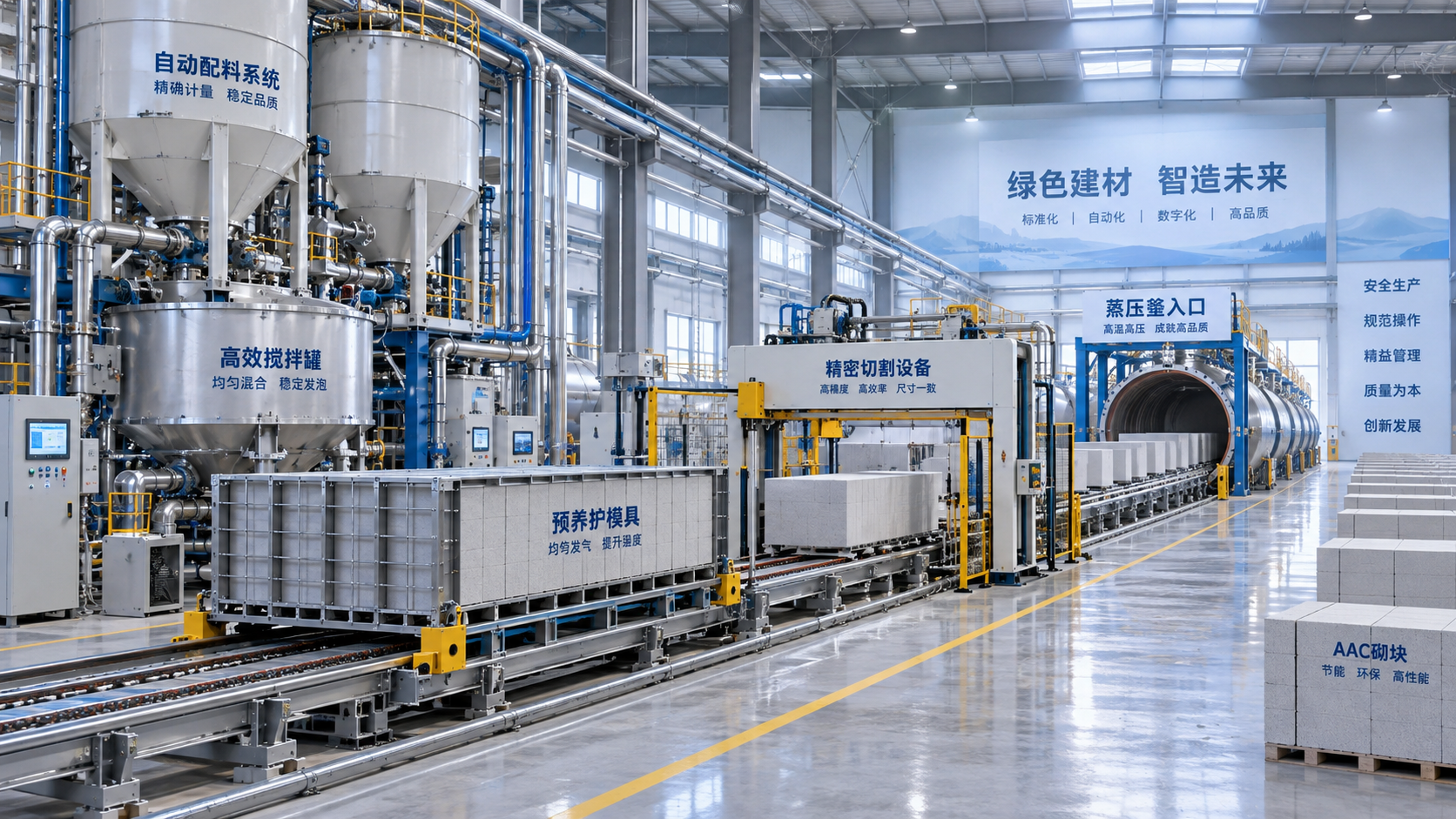
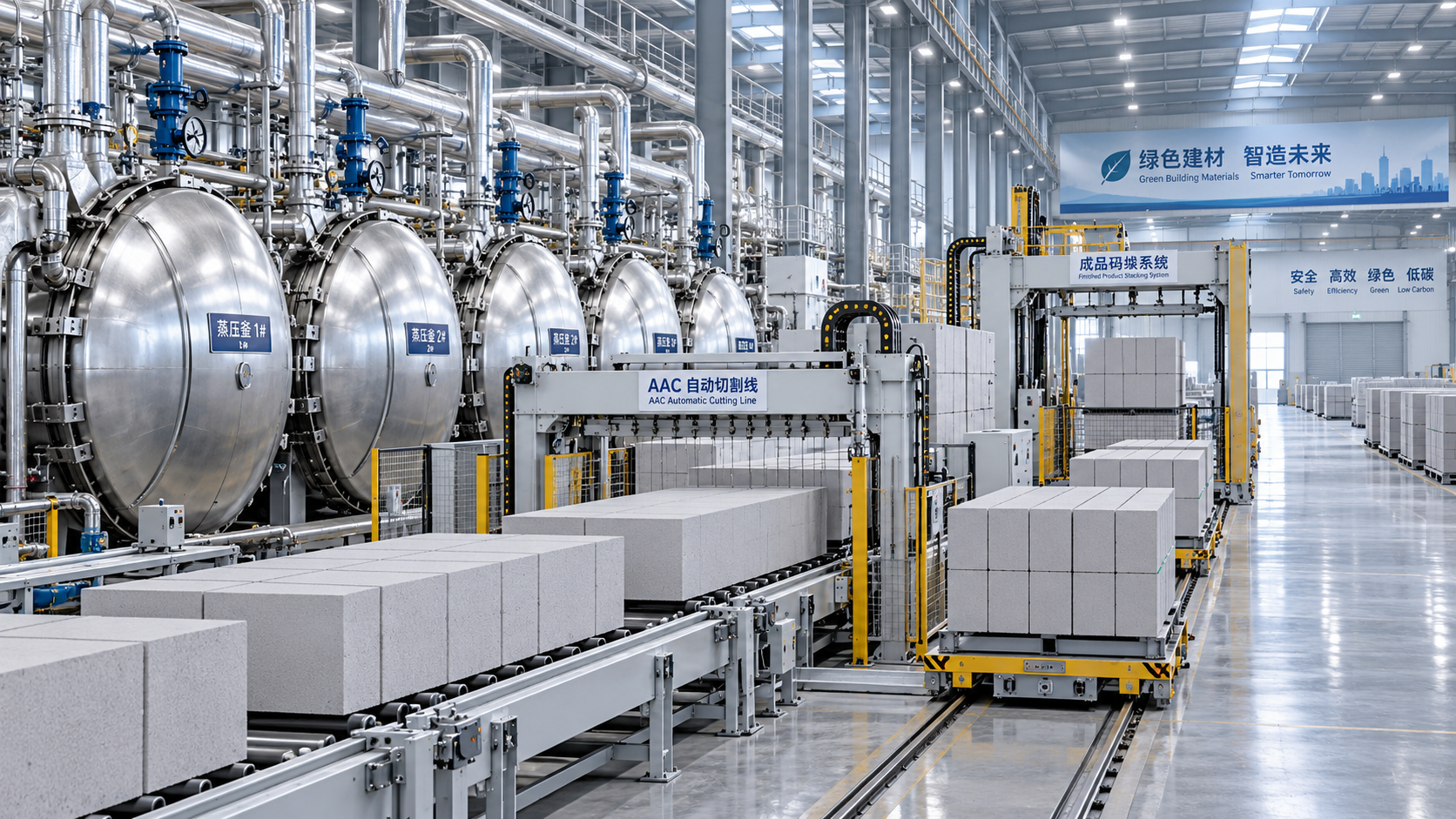
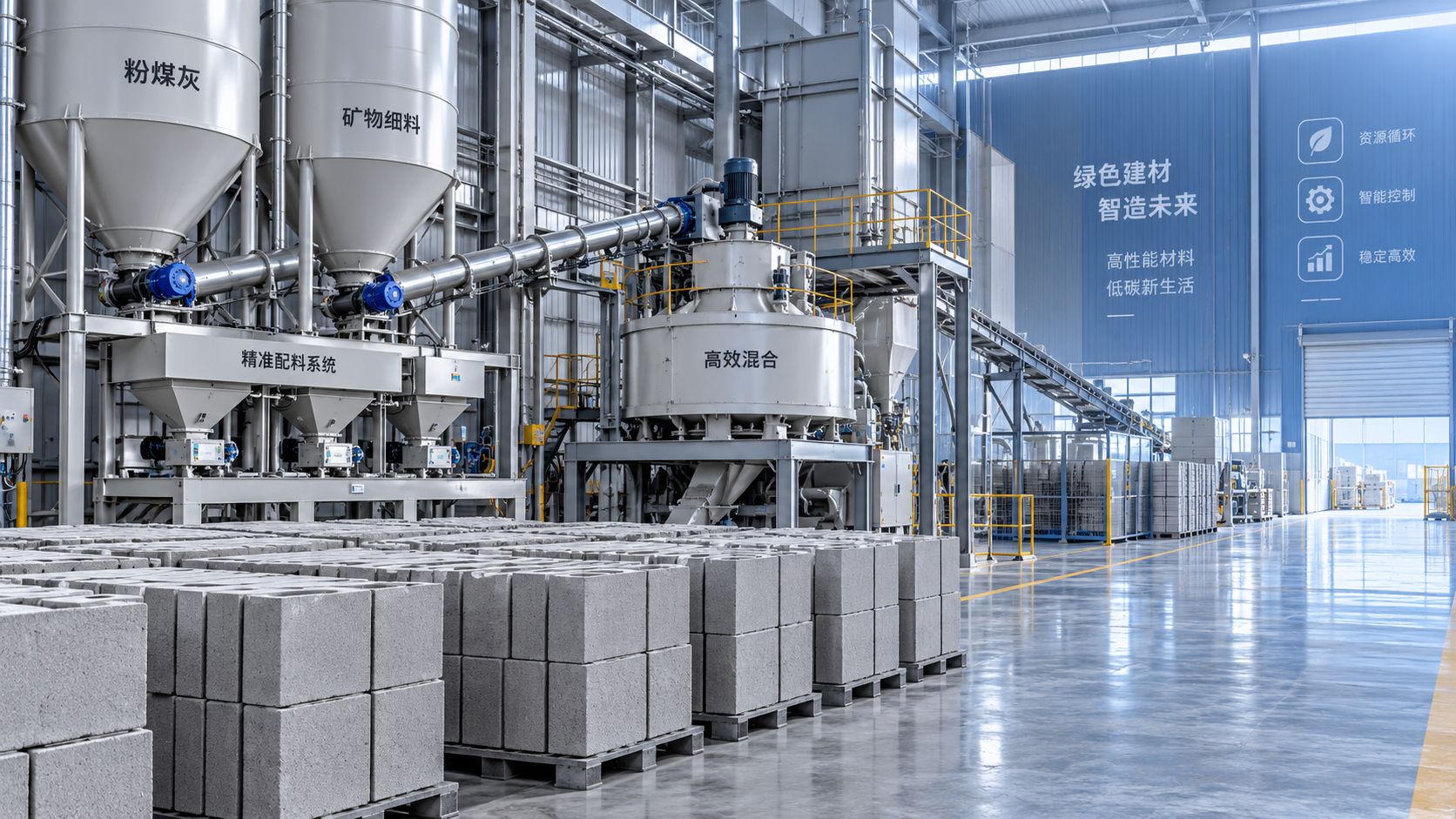
How Long Does AAC Plant Technical Training Usually Take?
When an AAC plant is close to commissioning, the question is rarely just whether operators can start the machines. The practical concern is whether the team can run a complete production cycle without creating avoidable losses: incorrect slurry density, unstable cake quality, cutting damage, poor autoclave loading, delayed maintenance, or unsafe handling of lime, aluminum paste, steam, and moving equipment.
AAC plant technical training usually takes several weeks for initial operational readiness, while stable independent operation often requires continued guidance through commissioning and early production. A basic program may be completed in roughly two to four weeks when the equipment scope is clear and the crew already understands industrial production. A new team operating a more automated line, managing unfamiliar raw materials, or learning during installation may need a longer period. Training should not be treated as a single classroom event; it is a staged process that continues until the plant can produce consistent AAC blocks or panels under normal working conditions.
Why the training period varies from one AAC plant to another
An autoclaved aerated concrete line connects several processes that affect one another. A mistake made during raw-material preparation may not become visible until pre-curing, cutting, or autoclaving. For this reason, the training duration depends less on the nameplate capacity of the line than on how many production decisions the operating team must make and how much experience they already have.
The most important variables are the level of automation, the production scope, the condition of the installation, raw-material consistency, and the responsibilities assigned to the local team. A line producing standard blocks with proven formulas can be easier to learn than a plant producing several densities, dimensions, or reinforced products. Similarly, operators familiar with batching plants, block equipment, steam systems, or PLC-controlled machinery usually adapt faster than a completely new crew.
The calendar length also differs from actual training hours. During installation, some instruction may take place while foundations, piping, electrical connections, and auxiliary systems are still being completed. The most valuable part of training often begins only after the line can run material, because operators then see how batching decisions affect the green cake, cutting behavior, and final product condition.
A realistic training sequence for an AAC production team
Effective technical training follows the production route rather than separating every department into isolated lessons. Operators need to understand their own station in detail, but they also need to know how upstream variation creates downstream problems. The following sequence is commonly more useful than trying to teach every function at once.
1. Equipment orientation and safe working practices
Before production trials begin, the team should learn the layout of the plant, equipment names, normal material flow, access restrictions, emergency stops, guarding, and lockout procedures. This stage covers the practical hazards around mixers, conveyors, molds, tilting devices, cutting machines, cranes, pumps, autoclaves, and steam-related equipment.
Safety instruction must be linked to actual tasks. It is not enough to show where an emergency stop is located. An operator should understand when a jam must be cleared only after isolation, why a moving mold or cutting frame cannot be approached during an automatic cycle, and which maintenance work requires confirmation that pressure, heat, and stored energy have been released.
2. Raw-material preparation and batching control
AAC quality begins with stable inputs. Training at this stage includes storage and handling of sand or fly ash, cement, lime, gypsum or other specified additives, water, and aluminum paste or powder. The team should know the purpose of each material, its handling requirements, and the checks needed before use.
The operating focus is not simply loading ingredients into a mixer. Personnel need to observe weighing accuracy, slurry temperature, mixing time, water addition, material fineness where relevant, and the preparation of the gas-forming agent. They should also understand that changing a single setpoint to correct a visible defect can create another problem later in the process. Any formula adjustment should be controlled, recorded, and evaluated against the resulting green cake and finished product.
3. Pouring, pre-curing, and green-cake assessment
The poured slurry must rise and develop sufficient strength before it is removed from the mold and sent to cutting. This is one of the stages where operator judgment matters most. A cake that is too soft may deform or tear during demolding and cutting. A cake that is over-hardened may cut poorly or develop edge defects. Uneven rising can point to issues with material temperature, mixing, aluminum addition, mold preparation, or the curing environment.
Training should teach operators what to inspect before moving a mold: rise behavior, surface appearance, timing, cake firmness, and signs of abnormal cracking or settlement. Rather than relying on a fixed time alone, the team should learn to evaluate whether the cake has reached a suitable cutting condition under the current material and temperature conditions.
4. Cutting, handling, and transfer operations
Cutting equipment is often highly automated, but its output still depends on correct setup and disciplined observation. Operators should learn the relationship between cake condition, wire condition, cutting speed, dimensional settings, and edge quality. They also need to recognize when a repeated cutting defect is likely a process issue rather than a simple machine adjustment.
Handling instruction includes mold transfer, cake lifting or tilting, separation procedures, scrap management, and loading preparation for autoclaving. Poor alignment, damaged cutting wires, incorrect transfer timing, or careless movement of green products can create breakage before the material reaches the autoclave. Training should make clear which small defects can be corrected through routine setup and which require the line to be stopped and inspected.
5. Autoclave operation and finished-product control
Autoclaving is not merely a final heating step. The loading pattern, steam cycle, pressure and temperature control, condensate management, and unloading procedure influence product performance and operational safety. Only authorized and properly trained personnel should manage pressure-related equipment according to the plant’s approved procedures and applicable local requirements.
Operators need to understand the normal cycle sequence, the reason for gradual pressure changes, the importance of door and sealing checks, and the response required when an alarm or abnormal reading occurs. Finished-product inspection should connect visible results back to earlier stages. Density variation, dimensional inconsistency, cracking, poor edges, or handling damage should be investigated through the process history rather than attributed automatically to the final station.
Commissioning training is different from classroom instruction
A team may understand the sequence of an AAC line after a few days of technical explanation, yet still need time to operate confidently during live production. Commissioning creates the working conditions that manuals cannot fully reproduce: actual material moisture, changing ambient temperature, equipment synchronization, response to alarms, and communication between control-room operators, mechanics, electricians, laboratory staff, and supervisors.
During this period, the training provider or technical team should gradually shift responsibility to the plant crew. At first, operators may follow instructions closely while observing each adjustment. Later, they should carry out normal startup, shutdown, changeover, inspection, cleaning, and basic fault response under supervision. The final objective is not that someone can repeat a button sequence; it is that the team can identify an abnormal process condition before it becomes a costly production interruption.
A useful readiness test is whether the team can explain the cause-and-effect chain behind routine decisions. For example, when cutting quality declines, can the team distinguish between a wire issue, an unsuitable green cake, a transfer problem, or an incorrect cutting setting? When density changes, can operators review batching records and raw-material conditions before making an unplanned adjustment? These capabilities are a better indication of training progress than attendance alone.
How to avoid extending the learning curve unnecessarily
Delays are often caused by trying to train every person on every task at the same depth from the beginning. A better approach is to establish clear roles. Control-room personnel need strong knowledge of sequence logic, setpoints, alarms, and records. Batching operators need detailed familiarity with weighing, mixing, and material checks. Cutting and handling personnel need to understand equipment alignment and green-product care. Maintenance technicians need access to mechanical, electrical, hydraulic, pneumatic, and lubrication information relevant to their work.
- Assign a responsible person for each production area before commissioning starts.
- Prepare operating procedures, shift records, maintenance schedules, and alarm-response instructions in a language the team can use reliably.
- Train with the actual raw materials and intended product specifications whenever possible.
- Record trial batches, process settings, defects, corrective actions, and outcomes so that knowledge remains after technical personnel leave.
- Include daily cleaning, lubrication, inspection, and wear-part checks in training instead of treating them as separate maintenance topics.
- Allow operators to perform supervised repetitions of startup and shutdown procedures, since these transitions often reveal gaps in understanding.
Management should also plan staffing realistically. Training loses effectiveness when the same individual is expected to learn control operation, supervise unloading, solve electrical faults, and manage raw-material deliveries during the first production trials. A stable shift structure gives each person enough repetition to recognize normal and abnormal equipment behavior.
When additional technical support is justified
Some situations require more than standard operator training. These include repeated green-cake collapse, unstable density, recurring cutting damage, abnormal autoclave performance, major automation alarms, or production results that change after a raw-material source is replaced. Continuing to adjust settings without a disciplined review can make the issue harder to trace.
In these cases, the plant should preserve relevant records: batch weights, moisture observations, slurry conditions, curing time, cutting parameters, autoclave cycle information, alarm history, and samples of the defect. Technical support can then assess the process as a connected system rather than focusing only on the last machine where the problem became visible.
Questions operators and investors often ask
Can an AAC plant start production immediately after training?
The equipment may be ready to run after installation and commissioning checks, but commercial stability usually develops through early production runs. Initial output should be closely monitored while the team confirms the relationship between local raw materials, process settings, product quality, and equipment behavior.
Does a fully automatic AAC line require less training?
Automation reduces repetitive manual work, but it does not remove the need for process knowledge. Operators still need to understand alarms, interlocks, sensor signals, batching accuracy, machine sequence, cleaning requirements, and the limits of manual intervention. In some respects, automated lines require more disciplined training because an incorrect setting can affect several connected stations.
Which employees should receive the most detailed training?
Control-room operators, batching personnel, cutting and handling operators, maintenance technicians, laboratory or quality staff, and shift supervisors should all receive role-specific instruction. Supervisors should also understand the full process well enough to coordinate decisions between departments during abnormal conditions.
What should be documented before the technical team leaves?
The plant should retain approved operating procedures, startup and shutdown sequences, preventive maintenance requirements, lubrication instructions, electrical and control documentation, spare-parts information, alarm records, process recipes or parameter guidance, and quality inspection records. The most useful documents are those that help a shift team make a safe, repeatable decision during normal operation and fault recovery.
Next:No more content
Recommend
 Oct 15, 2026
How Long Does AAC Plant Technical Training Usually Take?
How long does AAC plant technical training usually take? Discover realistic timelines, commissioning guidance, and key steps for safe, stable AAC production.
- Oct 14, 2026
What Should an AAC Factory Planning Report Include?
What should be included in an AAC factory planning report? Explore market demand, capacity, site, raw materials, utilities, costs, compliance, and implementation essentials.
- Oct 13, 2026
Can a Green Building Material Line Use Local Industrial Waste?
Can a green building material line use local industrial waste? Discover how tested by-products can improve sustainable production, control costs, and ensure reliable quality compliance.