



How a green building material production line reduces material waste
A production line can reduce material waste only when it treats waste as a process-control problem rather than a disposal problem. In a typical shift, losses may appear as inaccurate batching, off-spec green products, breakage during transfer, trimming residue, curing rejects, or material left in mixers and conveyors. Each loss point may seem minor in isolation, yet together they affect yield, storage requirements, rework capacity, and the consistency of the finished building material.
For a technical evaluation, the central question is not whether a green building material production line includes recycling equipment. It is whether the line can prevent avoidable waste before it is created, identify unavoidable waste by material type, and return suitable material to the process without destabilizing product quality. The strongest waste-reduction designs combine accurate dosing, controlled forming, gentle handling, stable curing, in-process inspection, and a clearly defined recovery loop.
Begin with a material-flow view, not a machine list
Evaluating a production line solely by its main machine capacity can hide the sources of scrap. A high-output mixer, press, block machine, or cutting unit does not automatically produce high usable yield. The line should instead be assessed as a material flow: raw material enters, is prepared, formed, transferred, conditioned or cured, finished, inspected, and packed. At every transfer or transformation point, a portion can be lost, downgraded, or recycled.
A practical starting point is to separate material loss into four categories:
- Process residue: material remaining in mixers, hoppers, pipes, molds, feeders, or transfer equipment after a batch or product change.
- Dimensional scrap: products outside permitted size, weight, density, flatness, or edge-condition requirements.
- Damage-related loss: cracking, chipping, collapse, deformation, or breakage during handling, cutting, stacking, or curing.
- Non-recoverable contamination: mixed waste containing incompatible binders, pigments, packaging debris, lubricants, metal fragments, or excess moisture.
This classification matters because each category requires a different response. Excess mixer residue may be reduced by equipment geometry and cleaning procedures. Dimensional scrap points toward batching, mold filling, pressing, or cutting control. Handling damage often comes from poorly synchronized transfer equipment rather than from the material formulation itself. Contaminated waste cannot simply be returned to the mix without checking its effect on product properties.
Accurate batching prevents the most expensive form of waste
Waste reduction starts before forming. Variations in aggregate grading, moisture content, binder dosage, water addition, pigment concentration, or recycled fines can create batches that are technically processable but inconsistent. That inconsistency often appears later as low strength, surface defects, poor compaction, uneven density, shrinkage, or cutting losses. By the time a defect is visible, the material and energy used in several downstream stages have already been consumed.
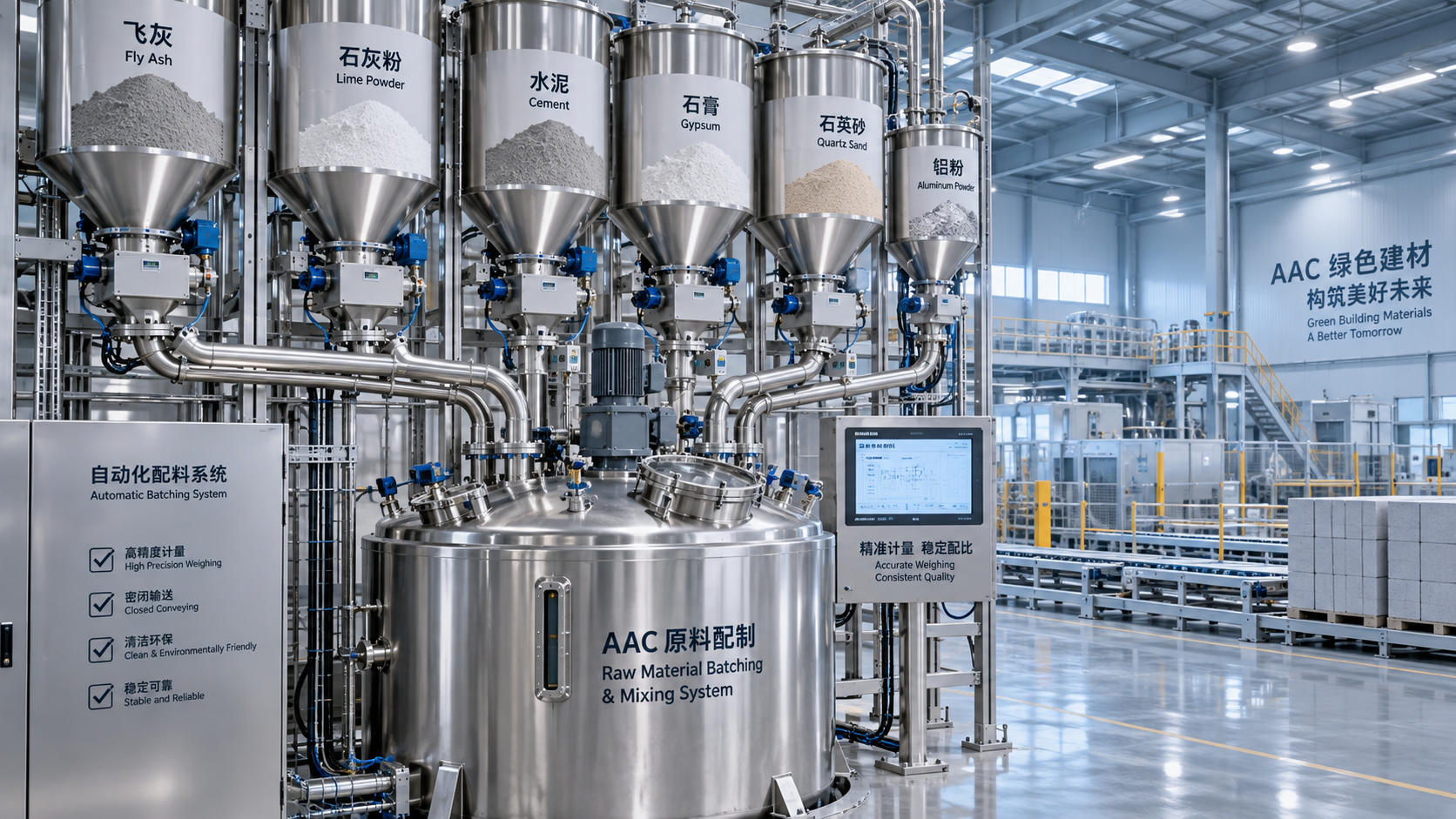
For this reason, a line should use weighing and dosing arrangements appropriate to the behavior of each input. Fine powders require controlled feeding and dust management; coarse aggregate needs stable feed conditions; recycled material often needs separate screening and storage because its size distribution and moisture level can vary more than virgin feedstock. Where water content has a strong influence on forming quality, moisture monitoring and controlled water correction are more reliable than relying on a fixed water-setting value.
The key evaluation point is traceability. Operators should be able to connect a finished product deviation to its batch information: material source, weighing record, mixing time, water addition, and relevant process settings. Without that link, production teams may compensate by increasing binder content or discarding questionable output, both of which raise material consumption.
Mixing consistency is also a yield issue
A mixer should distribute moisture, binder, additives, and fine particles evenly without causing segregation or excessive buildup. Insufficient mixing can create localized weak zones; excessive mixing may alter the workable condition of some formulations or make cleaning more difficult. The suitable mixing cycle depends on the material system, but the control principle is consistent: set mixing time according to verified homogeneity and processability, then monitor whether the same result is maintained across batches.
Residual material deserves particular attention during product changes. A line producing materials with different colors, densities, aggregate fractions, or formulations should have a practical method for managing transition batches. Sending all transition material directly into finished-product production can create mixed or off-spec output. Segregating it for approved internal reuse, when technically suitable, is often more controlled than treating it as ordinary waste.
Forming equipment must control variation before defects become visible
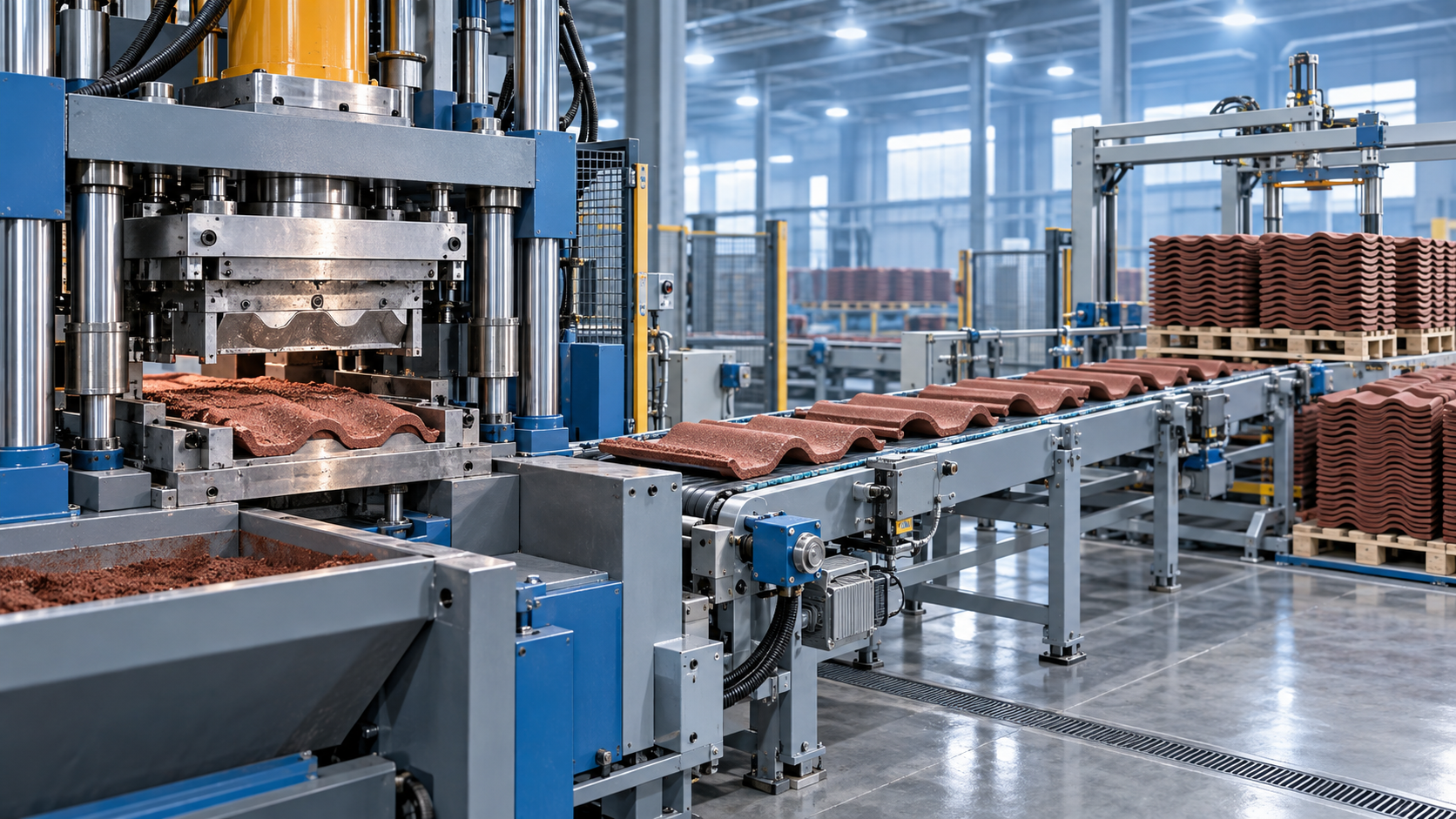
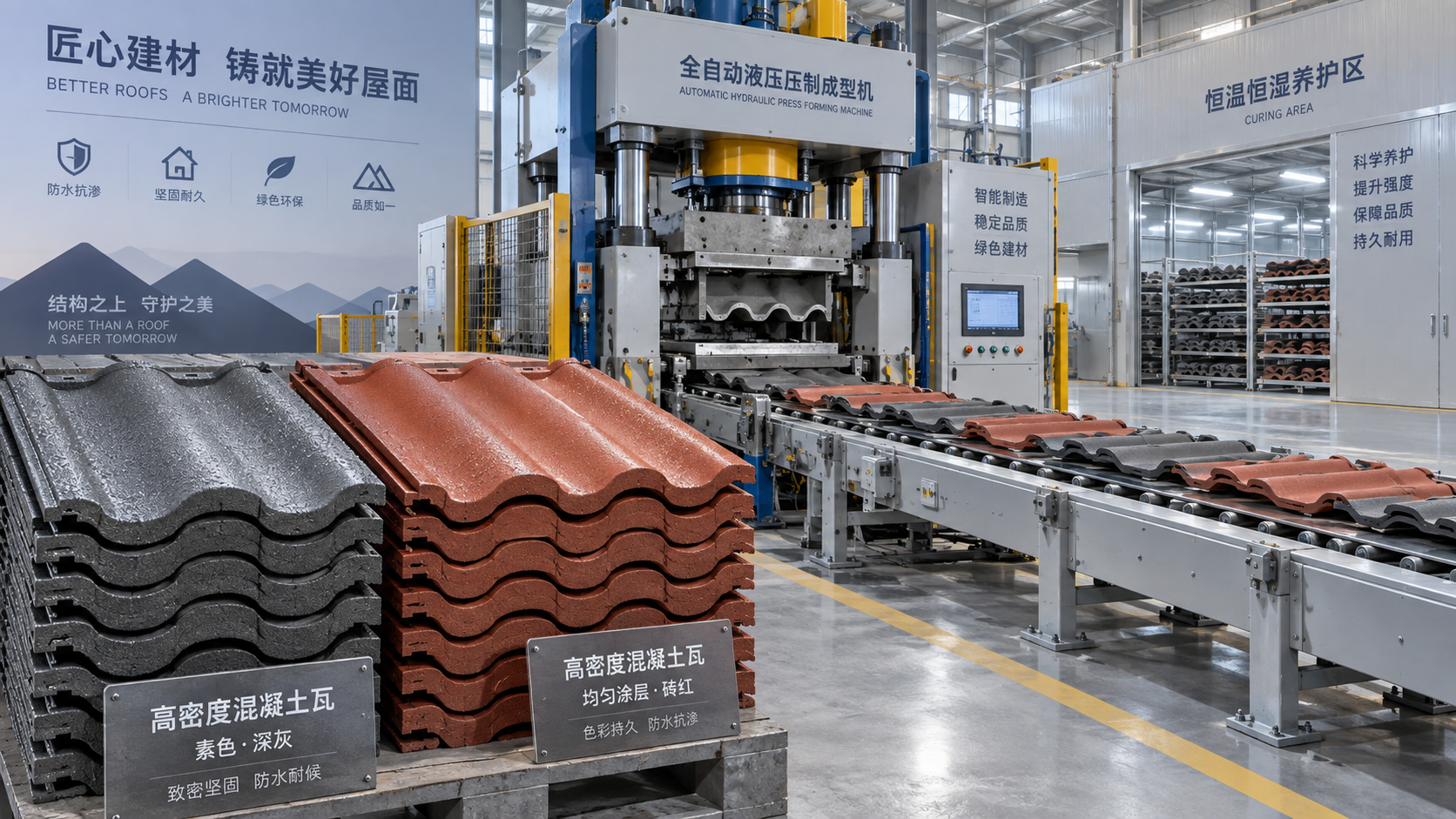
In block, panel, molded stone, or similar building-material production, the forming stage converts a prepared mix into a product whose geometry and internal structure must survive later handling. Uneven filling, poor compaction, inconsistent vibration, unstable pressure, or worn mold surfaces can produce defects that are not immediately obvious. A unit may leave the forming area looking acceptable but crack during curing, cutting, demolding, or pallet transfer.
Waste is reduced when forming parameters are matched to the actual material condition rather than treated as permanent settings. Changes in moisture, particle shape, temperature, or recycled content can alter flow and compaction behavior. The control system should therefore allow operators to review and adjust relevant settings within approved limits, while preserving a record of the change. This is more useful than repeatedly correcting defects at the end of the line.
Evaluate the following relationships during technical review:
Wear parts should not be viewed only as maintenance items. Mold edges, cutting wires, scraper components, seals, guide rails, and transfer supports directly influence reject rates. A line may remain operational while producing gradually increasing waste. Trend-based inspection is more effective than waiting for a component to fail completely.
Cutting and finishing should separate recoverable material from damaged product
Cutting, trimming, edge finishing, and surface correction are common points of visible waste. The goal is not necessarily to eliminate all trim residue, because some products require dimensional finishing to meet specification. The goal is to reduce unnecessary overcutting and to keep recovered material clean enough for controlled reuse.
A cutting system should hold the product securely, maintain consistent tool alignment, and avoid sudden movement that causes corner damage or fracture. In materials that are cut before full curing, timing is especially important. Cutting too early may deform edges or pull material; cutting too late can increase resistance, tool wear, and cracking. The appropriate window depends on the formulation and curing method, so it should be established through process validation rather than by visual judgement alone.
Recovery equipment must also be evaluated by material quality, not simply collection volume. Dry, clean mineral fines may be suitable for screened return to a defined part of the formulation. Wet sludge, mixed-color residue, or material containing foreign particles may require separate treatment, limited reuse, or disposal according to site requirements. A recovery loop without segregation can shift waste from one stage into widespread quality variation across the line.
Curing stability protects both product yield and recycled content control
Curing is often discussed in terms of final strength or appearance, but it is equally important for material efficiency. Uneven temperature, humidity, airflow, pressure, or curing duration can lead to incomplete development, distortion, cracking, inconsistent moisture, or surface defects. Products rejected after curing represent a high-cost loss because raw materials, labor, machine time, and energy have already been invested.
The line should provide conditions that are repeatable across the curing space, not merely acceptable near the sensor location. Product spacing, rack loading, stack geometry, and air circulation can affect local curing conditions. Overloaded or unevenly loaded racks may restrict airflow and create variation between products in the same batch. Where curing cycles change between product types, the operating procedure should identify the parameters that must be adjusted and the criteria for release to the next stage.
Recovered material can complicate this stage when its moisture content is uncontrolled. Recycled fines or reclaimed green material may absorb or release water differently from virgin input. Their addition should therefore be governed by a defined proportion, particle-size condition, and moisture-management method. Treating all recovered material as interchangeable may reduce disposal volume while increasing curing rejects.
Automation is valuable when it makes abnormal conditions visible
Automation reduces waste most effectively when it improves repeatability and exposes deviations early. Automatic weighing, recipe management, conveyor synchronization, positioning systems, and sensor-based controls can reduce dependence on manual timing. However, automation alone does not correct poor process logic. A system that consistently feeds an incorrect moisture correction or transfers a weak product too quickly will repeat the same loss at higher speed.
Useful control functions include alarms for weighing deviations, hopper level abnormalities, mixer overload, transfer interruption, cutting-position errors, curing-condition deviation, and recurring rejection patterns. Data should support action. For example, a gradual increase in dimensional rejects may indicate mold wear, a drifting sensor, or a changing feed condition. If records show only total production and total rejects, the source of waste remains difficult to isolate.
It is also important to distinguish between an interlock and an information display. A display may show that a hopper is low; an interlock can prevent a batch from being produced with an unintended material ratio. The right level of control depends on the risk associated with that parameter. Critical recipe inputs and safety-related motions generally require stronger protection than non-critical operational indicators.
Assess the line through a controlled waste-reduction sequence
When reviewing an existing installation or specifying a new one, begin by mapping where material is generated, stored, transferred, recovered, and discarded. Then confirm whether each loss point has a measurable cause and an approved response. The following sequence keeps the review tied to actual production behavior:
- Identify the product specifications that define usable output, including dimensions, appearance, density, strength-related process indicators, and handling condition.
- Record waste by location rather than as one combined total: batching, forming, cutting, curing, handling, and packaging.
- Determine whether each waste stream is clean, segregated, and technically suitable for reuse.
- Check whether process records can connect rejects to batch settings, equipment status, and material condition.
- Correct recurring sources before expanding recycling capacity; prevention usually protects quality more effectively than reprocessing.
- Verify changes through stable production runs and confirm that lower scrap does not create hidden defects downstream.
A well-designed green building material production line therefore does more than collect excess material. It reduces variation where waste originates, prevents good products from being damaged between stages, and recovers only the material that can safely return to the process. For technical evaluation, the most credible design is one that makes these decisions visible in equipment layout, control logic, maintenance access, and material segregation—not one that relies on manual sorting after defects have already accumulated.
Recommend
 Sep 30, 2026
When does an automated building material production line pay off?
Automated building material production line ROI explained: assess capacity, quality, labor, waste, and total costs to make a profitable investment.
- Oct 01, 2026
How a green building material production line reduces material waste
Discover how a green building material production line cuts waste through precise batching, controlled forming, stable curing, and smart material recovery.
- Oct 01, 2026
What Raw Materials Does a Fly Ash AAC Plant Need?
What raw materials are needed for a fly ash AAC plant? Explore fly ash, lime, cement, gypsum, aluminum, water, and sand requirements for stable AAC block production.