How often do AAC molds need replacement—and what’s the typical cost impact per production cycle?
There’s no universal answer to “How often do AAC molds need replacement—and what’s the typical cost impact per production cycle?”—because mold lifespan isn’t measured in calendar time. It’s determined by how the mold is used, maintained, and built—not how old it is.
At Shandong Hongfa, where we’ve designed, manufactured, and supported AAC production lines since 1990, we see plant operators make the same mistake repeatedly: treating mold replacement as a scheduled maintenance item like oil changes or belt inspections. That approach leads to either premature replacement (wasting capital) or catastrophic failure mid-cycle (halting production, scrapping batches, damaging equipment). The real question isn’t “how often”—it’s what signals indicate the right moment to replace, and how much each delayed or rushed decision actually costs per production cycle.
Replacement isn’t about time—it’s about functional decay
AAC molds endure three primary stressors: mechanical wear from demolding, chemical exposure to alkaline slurry, and thermal cycling during steam curing. None of these degrade uniformly. A mold may hold dimensional tolerance on length but lose precision on corner radii. Surface finish may dull while structural rigidity remains intact. That’s why relying solely on cycle count—or worse, months elapsed—is misleading.
Based on field data from over 120 AAC plants across China, Southeast Asia, and Eastern Europe, the median service life for standard carbon-steel molds ranges from 800 to 1,400 production cycles. But that range hides critical variation:
- Molds used in high-density block production (≥650 kg/m³), with extended curing times (>8 hours at 190°C), typically reach end-of-life around 900–1,100 cycles.
- Molds handling lightweight panels (≤500 kg/m³) with shorter curing cycles often last 1,200–1,400 cycles—if cleaned thoroughly after each use.
- Molds exposed to aggressive cleaning agents (e.g., acidic descalers) or subjected to manual chipping of hardened residue rarely exceed 700 cycles—even if visually intact.
The key insight: degradation is cumulative and irreversible. Each cycle compounds micro-pitting on the inner surface. Once average surface roughness exceeds Ra 3.2 µm (measurable with a portable profilometer), release performance drops noticeably—increasing demolding force, raising breakage rates, and introducing subtle dimensional drift. That’s the true threshold—not a date on a calendar.
Cost impact isn’t just the mold price—it’s the hidden cycle cost
When quoting “typical cost impact per production cycle,” most suppliers list only the mold’s unit price divided by expected cycles. That’s incomplete—and dangerously optimistic.
Actual cost per cycle includes four layers:
- Direct mold amortization: A standard 3×1.2×0.6 m AAC mold costs $2,800–$4,200 (depending on material grade and precision). Amortized over 1,000 cycles, that’s $2.80–$4.20/cycle.
- Scrap & rework cost: As mold surfaces degrade, block edge chipping rises. Plants report a 0.8–1.7% increase in off-spec units between cycles 800–1,000. At $12–$18 per block, that adds $0.10–$0.30/cycle.
- Downtime & labor cost: Replacing a mold set takes 2.5–4 hours—including alignment verification. Lost output + technician overtime averages $180–$260 per replacement event. Spread across remaining cycles before replacement, that’s $0.15–$0.35/cycle—if replacement happens at optimal timing. Delay it by 100 cycles? That cost spikes sharply when unplanned downtime occurs.
- Energy & process inefficiency: Worn molds require higher demolding pressure, longer vibration settling, or increased steam pressure to achieve full consolidation. Plant-level energy audits show 3–5% higher kWh/ton in the final 200 cycles of a degraded mold—adding $0.07–$0.12/cycle.
So while the headline “mold cost per cycle” might be ~$3.50, the total operational cost impact climbs from ~$3.80/cycle at cycle 700 to over $5.20/cycle by cycle 1,100—not because the mold suddenly fails, but because every functionally compromised cycle extracts more from the system.
Why precision engineering matters more than cycle count
This is where material choice and manufacturing quality shift the economics—not just extend life, but stabilize cost per cycle over time. Standard molds use Q345B steel with basic machining. Their surface hardness hovers around HB 160–180. Under AAC slurry conditions, micro-corrosion initiates early, accelerating wear after ~600 cycles.
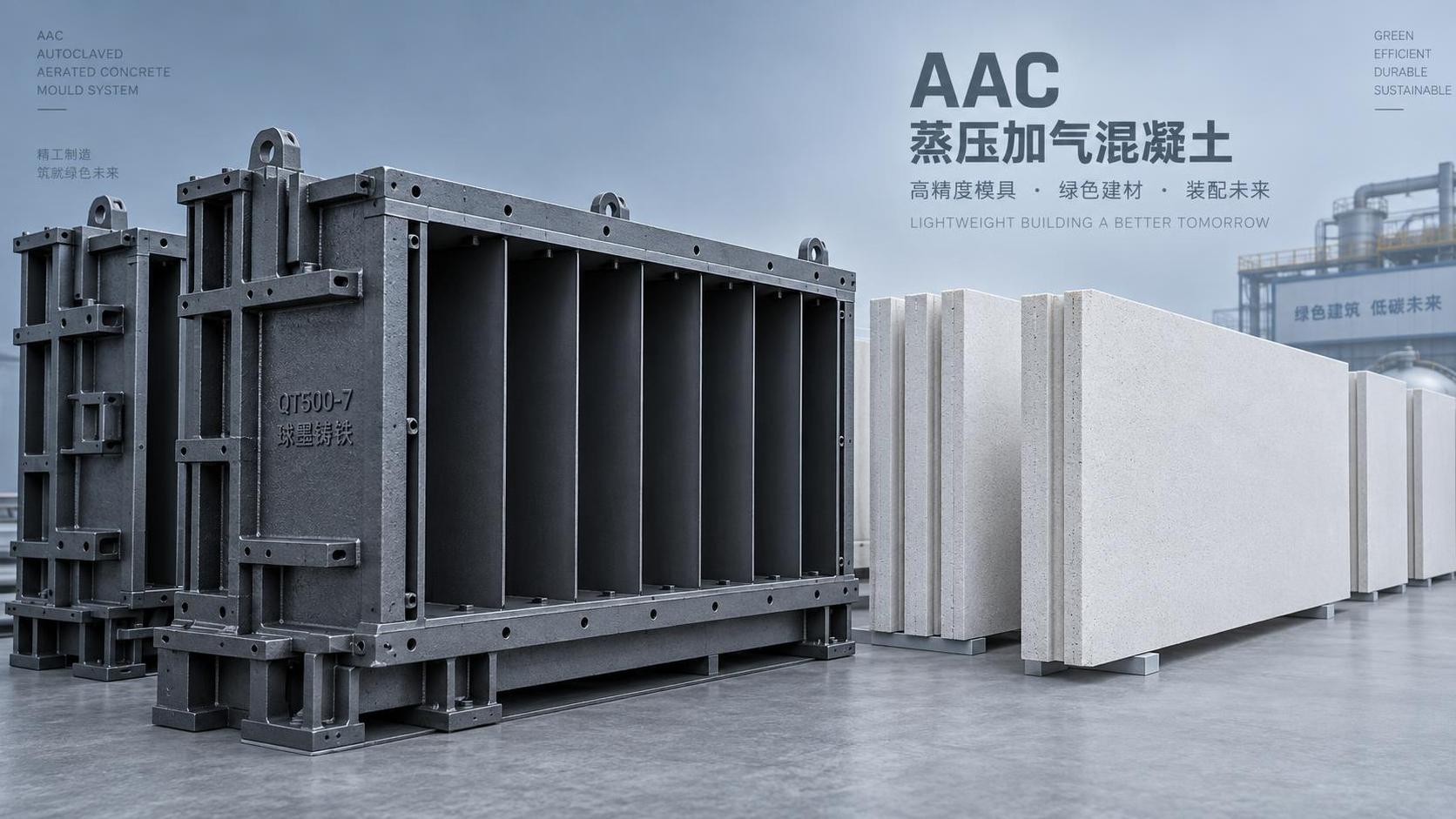
Hongfa’s wear-optimized molds use QT500-7 ductile iron with nitrided surfaces (HV 900+), combined with CNC-machined tolerances of ±0.15 mm across all critical dimensions. Field data shows these molds maintain Ra ≤2.5 µm up to cycle 1,600—and crucially, their cost-per-cycle curve stays flat between cycles 600–1,400. Why? Because dimensional stability reduces rework, consistent release minimizes downtime risk, and surface integrity prevents slurry infiltration into micro-cracks that cause pitting.
Yes, the upfront investment is 35–45% higher. But when you factor in reduced scrap, stable energy use, and predictable replacement timing (no emergency shutdowns), the breakeven point typically arrives by cycle 900. After that, the lower total cost of ownership compounds—especially in plants running >2 shifts/day.
Three practical checks—not calendar dates—to guide your replacement decision
Don’t wait for failure. Use these observable, measurable indicators instead:
- Demolding force trend: Track hydraulic or mechanical demolding pressure over 30 consecutive cycles. A sustained rise >12% above baseline indicates increasing adhesion due to surface degradation.
- Block edge consistency: Measure corner radius and edge straightness on 5 randomly selected blocks per shift. If variance exceeds ±0.4 mm across 3 shifts, mold geometry has drifted beyond acceptable limits.
- Surface inspection under raking light: Clean the mold thoroughly, then shine a work lamp at a low angle. Visible micro-pitting, streaking, or localized discoloration (not uniform oxidation) means localized wear has begun—and will accelerate.
If two of these three conditions appear consistently, replacement should be scheduled within the next 50–80 cycles—not deferred, not rushed.
Final note: Replacement timing is a production decision—not a procurement one
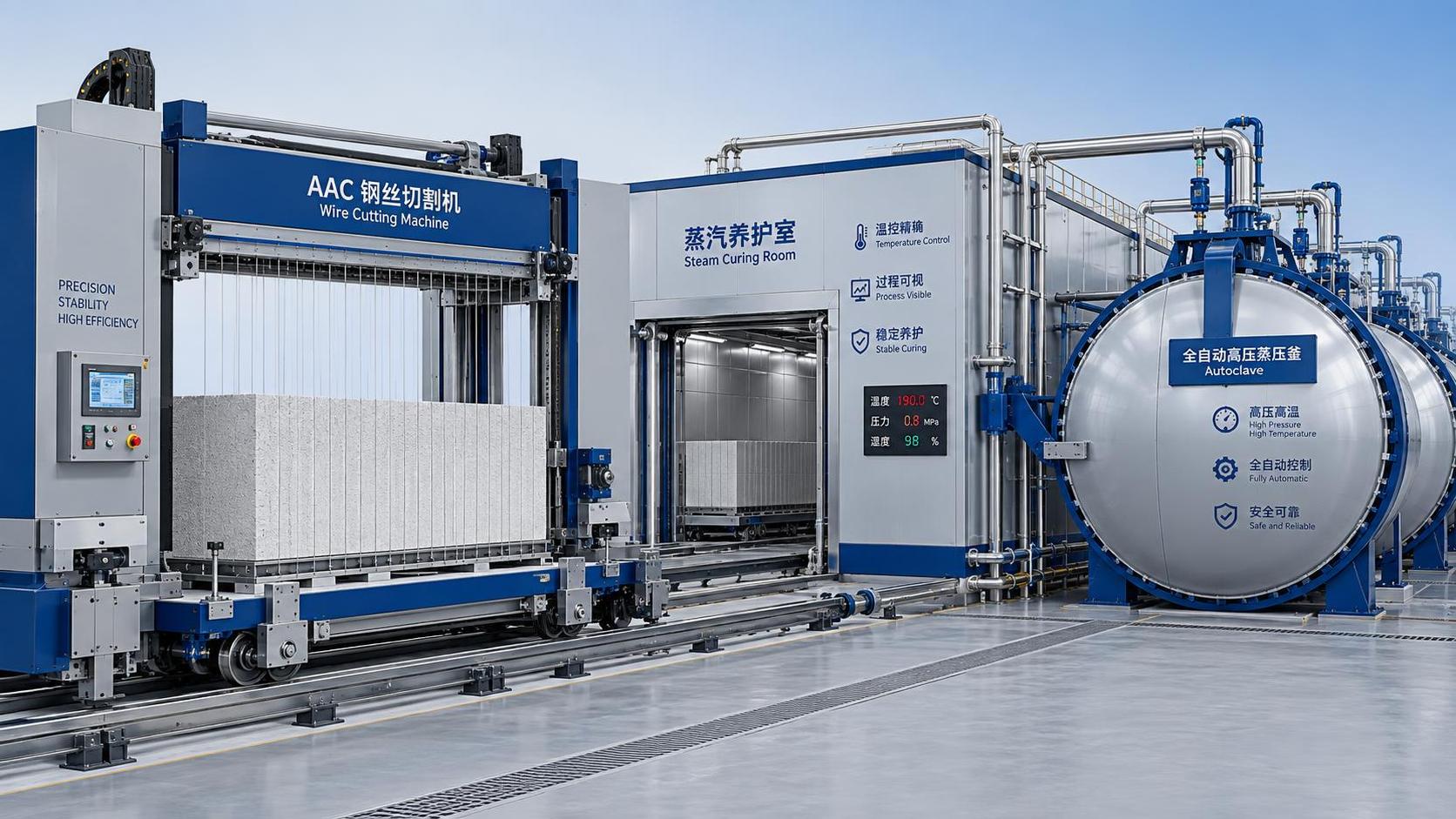
The mold isn’t an isolated component. Its condition affects cutting wire tension, autoclave loading efficiency, and even mixer discharge consistency. When planning replacement, coordinate it with scheduled maintenance windows, raw material deliveries, and batch scheduling—not vendor lead times or budget cycles. At Hongfa, our technical support team works directly with plant engineers to map mold performance trends against actual output data—not theoretical specs—so replacement aligns with real-world production rhythm.
That’s how you move from guessing “how often” to knowing exactly when—and why the cost per cycle stops being a number you estimate, and becomes a metric you control.
Recommend
 Sep 15, 2026
AAC Plant Machinery Compatibility Guide: Matching Cutting, Curing & Autoclave Systems for Consistent Block Density
AAC plant machinery compatibility isn’t optional—it’s the key to consistent block density. Discover how cutting, curing & autoclave systems must integrate as one synchronized unit to eliminate drift and boost yield.
- Sep 16, 2026
How often do AAC molds need replacement—and what’s the typical cost impact per production cycle?
AAC mold replacement frequency and cost: Discover the real-cycle triggers—not calendar dates—and cut hidden operational costs by up to 30%.
- Sep 14, 2026
How flexible is the raw material input for hollow block making machines?
hollow block making machine raw material flexibility unlocks real-world production—adapt to fly ash, RAC, slag & more without sacrificing strength or precision.